
A new macro warning is starting to spread fast on X, and this one is coming from well-known analyst Alex Mason who just dropped a major news that could have serious implications for global stocks over the coming months.
The core issue is Japan.
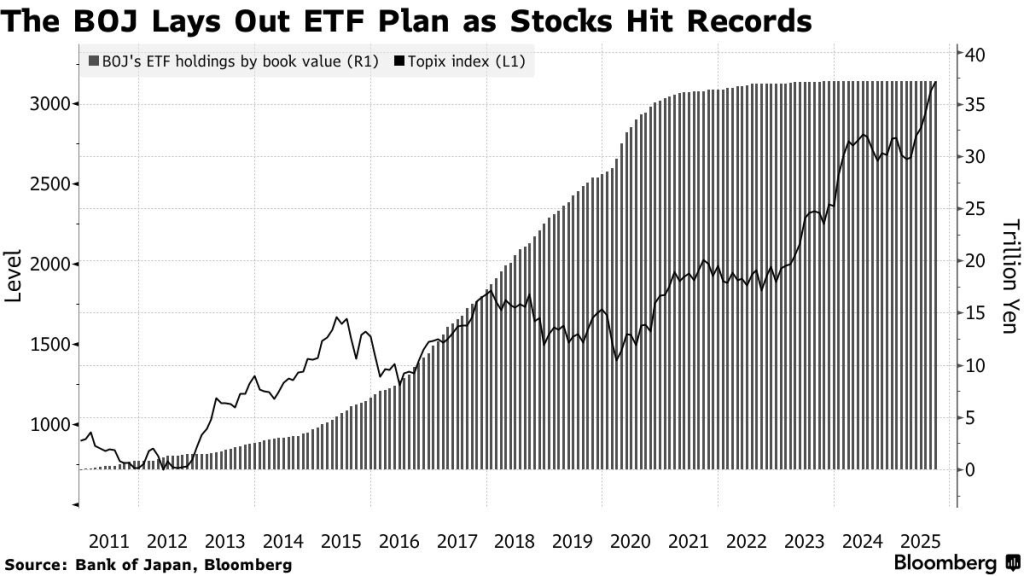
For years, the Bank of Japan has quietly acted as one of the biggest backstops in the equity market, buying stocks indirectly through ETFs. That support has been running in the background for so long that most investors barely think about it anymore.
But Mason points out that the BOJ now holds roughly ¥79.5 trillion in stocks; more than $537 billion worth. That’s not a small position. That’s central-bank-level market influence.
Now comes the part that has markets paying attention.
Japan is reportedly preparing to begin exiting these holdings, potentially starting as early as next month. If that happens, it wouldn’t be a one-time sale. It would introduce persistent supply into the stock market month after month.
And that matters because this isn’t a normal seller.
Source: X/@AlexMasonCrypto
A central bank selling stocks is a completely different kind of pressure. It changes liquidity conditions, affects sentiment, and forces global investors to reprice risk. Japan is deeply connected to international markets, and Japanese institutions hold massive exposure to U.S. equities as well.
If volatility rises and capital begins rotating out of risk, the effects won’t stay contained inside Tokyo. This kind of move has the potential to ripple across global stocks, tighten financial conditions, and create a new wave of uncertainty.
Mason’s point is simple: the pressure may not explode overnight, but it could build quietly in the background while most market participants aren’t even watching.
And historically, when stocks enter a risk-off phase, crypto tends to feel it too.
If Japan truly begins unloading hundreds of billions in equities, global markets could be heading into a very different environment sooner than expected.
Read also: Silver Price Pattern Reappears on XRP Chart and $7 Suddenly Looks Real
Disclaimer: The information on this page may come from third parties and does not represent the views or opinions of Gate. The content displayed on this page is for reference only and does not constitute any financial, investment, or legal advice. Gate does not guarantee the accuracy or completeness of the information and shall not be liable for any losses arising from the use of this information. Virtual asset investments carry high risks and are subject to significant price volatility. You may lose all of your invested principal. Please fully understand the relevant risks and make prudent decisions based on your own financial situation and risk tolerance. For details, please refer to
Disclaimer.
Related Articles
Moody’s cuts the pricing of Bitcoin collateral by 28%, and for the first time sets a forced liquidation trigger mechanism
Moody’s assigns a Ba2 rating to the bonds issued by the Waverose Financial project, using Bitcoin as collateral, showing that Bitcoin is gradually being integrated into the institutional credit framework. In the short term, Bitcoin’s use in the credit market demonstrates its flexibility as a collateral asset, which could influence the design of future credit structures, provide new financing channels, and also bring potential risks.
GateNews3m ago
Grayscale ETF sees net inflows despite the downturn; outflows for Bitcoin and Ethereum ETFs accelerate on the first day of April
April 1, 2026, U.S. spot Bitcoin ETFs saw net outflows of $173.73 million, with cumulative net redemptions of about $500 million in the first quarter, the worst start since 2018. Grayscale products showed diverging performance: the low-fee Bitcoin mini trust attracted inflows, indicating institutional investors are adjusting their strategy. Ethereum ETFs also face pressure, and the market needs to watch future institutional demand and regulatory changes.
GateNews12m ago
Brent crude oil surged 60% in March, marking the biggest increase since 1988
In March 2026, Brent crude oil prices surged by 60%, marking the largest increase since 1988, mainly due to supply concerns triggered by conflicts in the Middle East. The high oil prices intensify global inflation, putting pressure on transportation and manufacturing costs, while also affecting the stock and cryptocurrency markets. Analysts noted that this jump is unusual and said investors should watch how geopolitical developments could potentially impact the market.
GateNews16m ago
New Hampshire Plans $100M Bitcoin-Backed Muni Bond With Ba2 Moody’s Rating
New Hampshire plans to issue $100 million in Bitcoin-backed municipal bonds, rated Ba2 by Moody’s, indicating speculative-grade status. The bonds rely on Bitcoin collateral without state backing, highlighting a mix of crypto and traditional finance principles.
CryptoNewsFlash24m ago
SpaceX files for an IPO: target valuation of over $1.75 trillion, with a chance to list in June
SpaceX submitted a confidential IPO registration draft to the U.S. Securities and Exchange Commission, and is expected to go public in June. The fundraising size could be as much as $75 billion, with a valuation exceeding $1.75 trillion—potentially breaking IPO records. Despite the promising outlook, it still faces market uncertainty, with far-reaching implications for technology investment and the capital markets.
GateNews27m ago
Trump says the Strait of Hormuz will be “naturally open,” and risk-averse sentiment in the market is heating up
In his remarks, Trump said that the U.S. military would complete its strategic mission against Iran, prompting a cautious reaction in the markets. Brent crude oil prices rose, stocks fell, and risk-averse sentiment intensified. Iran has taken a hardline stance and clearly demanded a toll payment; the situation remains unclear, and geopolitical risks may continue to affect the markets.
GateNews28m ago


