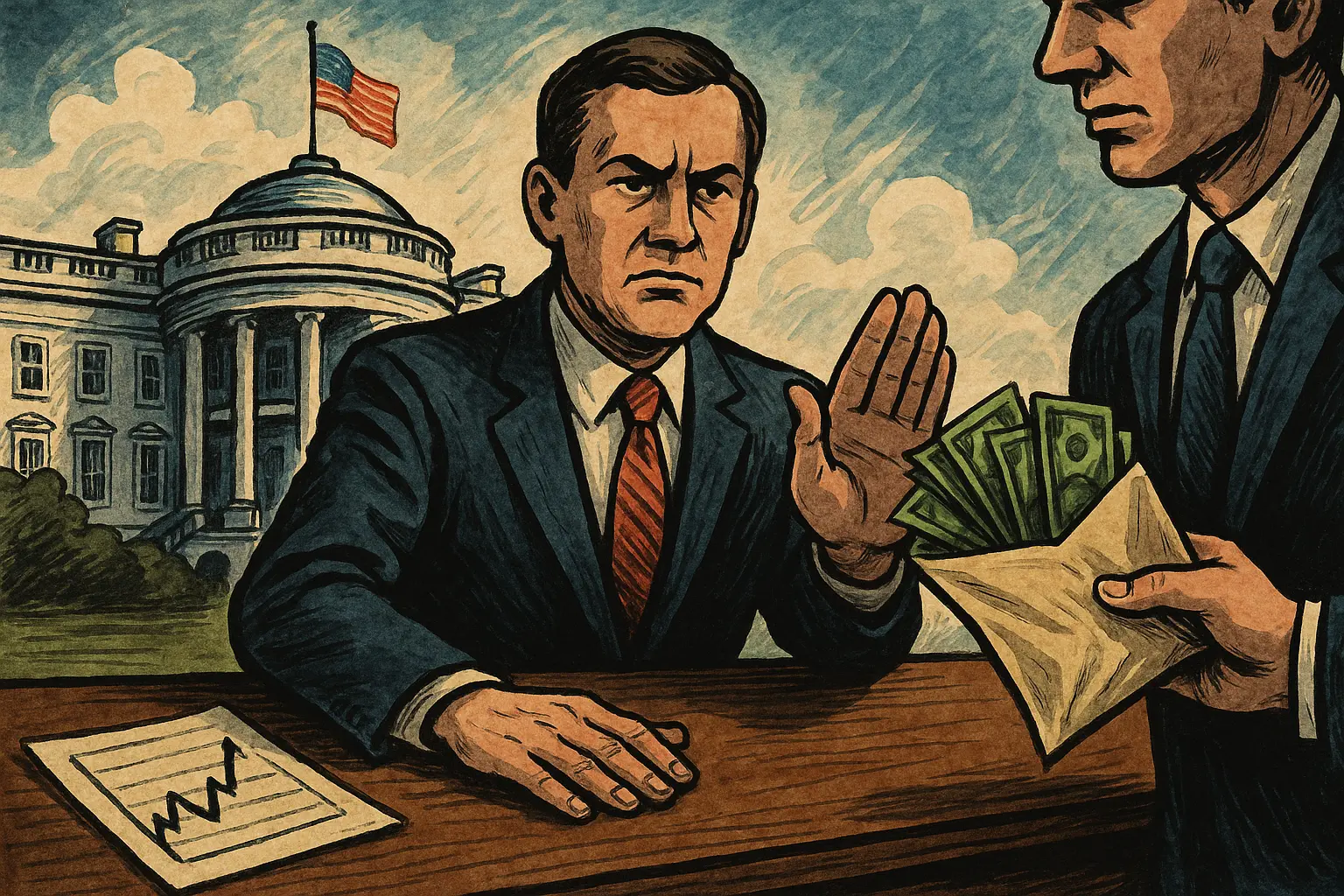
The Wall Street Journal reported on April 10 that on March 23 the Office of the White House Counsel issued an internal warning prohibiting employees from using nonpublic government information to place bets on prediction markets, explicitly stating that this is “a criminal offense.” The warning was issued at exactly the same time as when Trump announced a pause on airstrikes against Iran—about 15 minutes before the decision was announced, the futures market saw a spike in anomalous oil futures trading of more than $760 million, raising widespread concerns about potential insider trading.
Event Timeline: Mysterious Trades Before the Decision Announcement
The event timeline from March 23 has drawn attention. About 15 minutes before Trump posted the airstrike pause announcement via Truth Social, crude oil futures trading volume surged abnormally—according to Dow Jones market data, in less than two minutes, oil futures contracts worth more than $760 million changed hands.
The Office of the White House Counsel later sent an employee warning after the announcement. A CBS News version obtained by CBS shows that a more formal email was sent on March 24 to White House aides. In addition, three accounts on the Polymarket platform accumulated more than $600k in profits by accurately predicting the timing of Iran’s ceasefire this week, further deepening public concerns about information leakage.
Three Core Provisions of the White House Ban
The email obtained by CBS News came from the Office of the White House Counsel and clearly set out the legal basis for the prohibited conduct:
Confirmation of Criminal Risk: “Anyone who uses nonpublic information to buy or sell these contracts is committing a criminal offense,” explicitly drawing a legal red line by categorizing prediction markets such as Kalshi or Polymarket.
Reference to Government Ethics Rules: “Government ethics rules prohibit the use of nonpublic government information to secure private benefits for employees or any other third party,” classifying such conduct as a violation of public service ethics.
Zero-Tolerance Stance: “Misuse of nonpublic information by government employees to obtain economic benefits is a very serious illegal act and will not be tolerated under any circumstances,” instructing employees to consult the Office of White House Counsel if they have questions.
Political Reactions and the White House’s Official Statement
Critics, including several Democrats, immediately pointed out that the anomalous oil futures trading and the precise profits from Polymarket accounts before the ceasefire decision was announced strongly suggest that someone had received information about a policy shift in advance.
White House spokesperson David Engel responded, saying: “President Trump’s position is very clear: he wants a strong and profitable stock market that benefits everyone, but members of Congress and other government officials should not be allowed to use nonpublic information to obtain economic benefits.” Spokesperson Kush Desai added: “Any claims that suggest government officials engage in such activities without providing evidence are baseless and irresponsible.”
The White House confirmed the authenticity of the ban email but emphasized that there is currently no specific evidence pointing to any individual’s wrongdoing.
Frequently Asked Questions
Why does the White House ban employees from participating in prediction markets?
The email from the Office of the White House Counsel states that “recent news reports have raised concerns about government officials using nonpublic government information to bet on online prediction markets such as Kalshi or Polymarket,” and it clearly states that using nonpublic information to conduct such trades is a criminal offense and violates government ethics rules.
How large was the anomalous oil futures trading before the ceasefire announcement?
According to Dow Jones market data, about 15 minutes before Trump announced the decision to pause airstrikes against Iran, in less than two minutes, oil futures contracts worth more than $760 million changed hands, triggering widespread concerns about potential insider trading.
How much did the Polymarket accounts profit in this incident?
According to the report, three accounts on the Polymarket platform accumulated more than $600k in profits by accurately predicting the timing of Iran’s ceasefire, and this figure further deepens the market’s questions about leaks of insider information.
Disclaimer: The information on this page may come from third parties and does not represent the views or opinions of Gate. The content displayed on this page is for reference only and does not constitute any financial, investment, or legal advice. Gate does not guarantee the accuracy or completeness of the information and shall not be liable for any losses arising from the use of this information. Virtual asset investments carry high risks and are subject to significant price volatility. You may lose all of your invested principal. Please fully understand the relevant risks and make prudent decisions based on your own financial situation and risk tolerance. For details, please refer to
Disclaimer.


