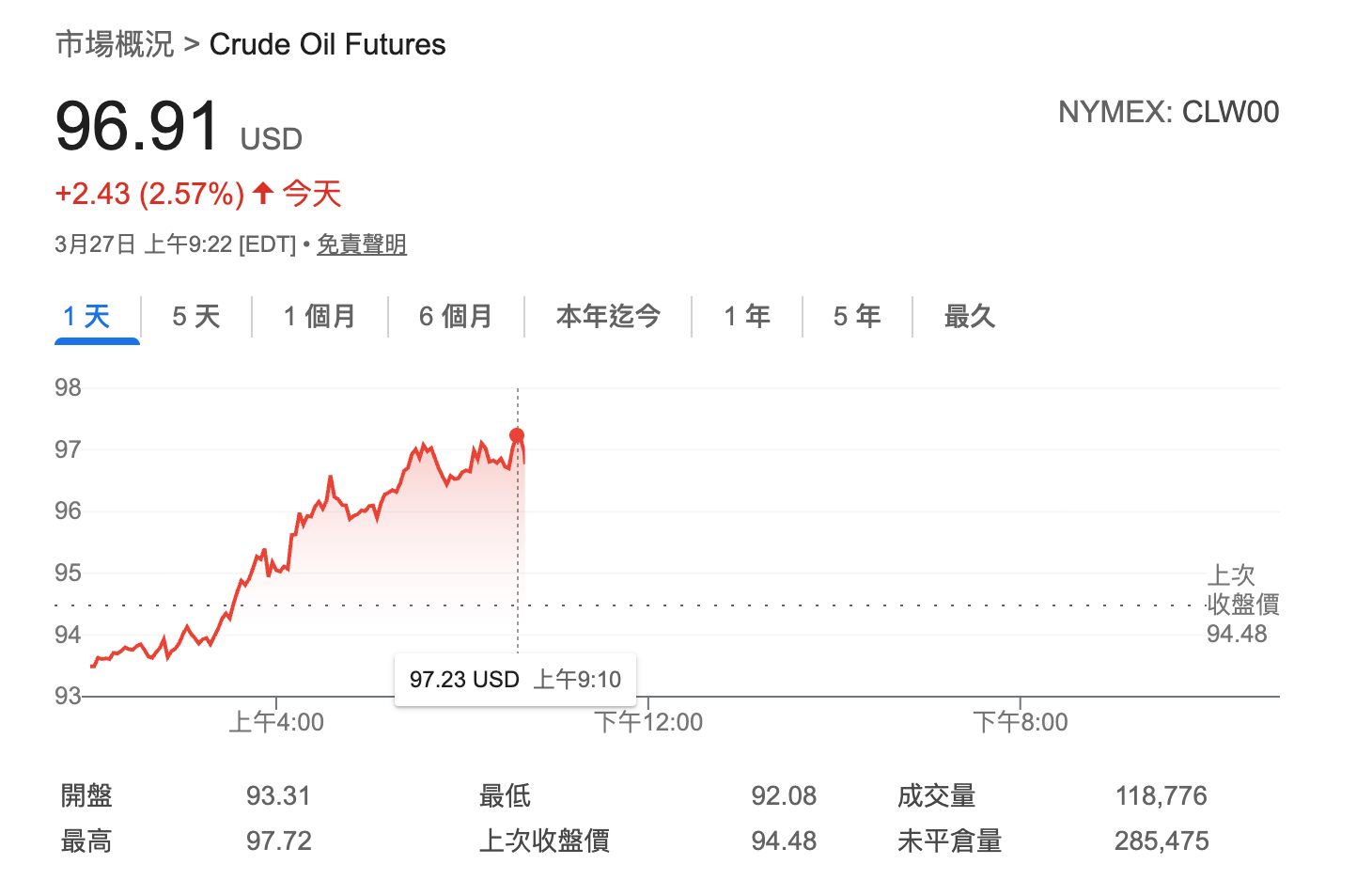
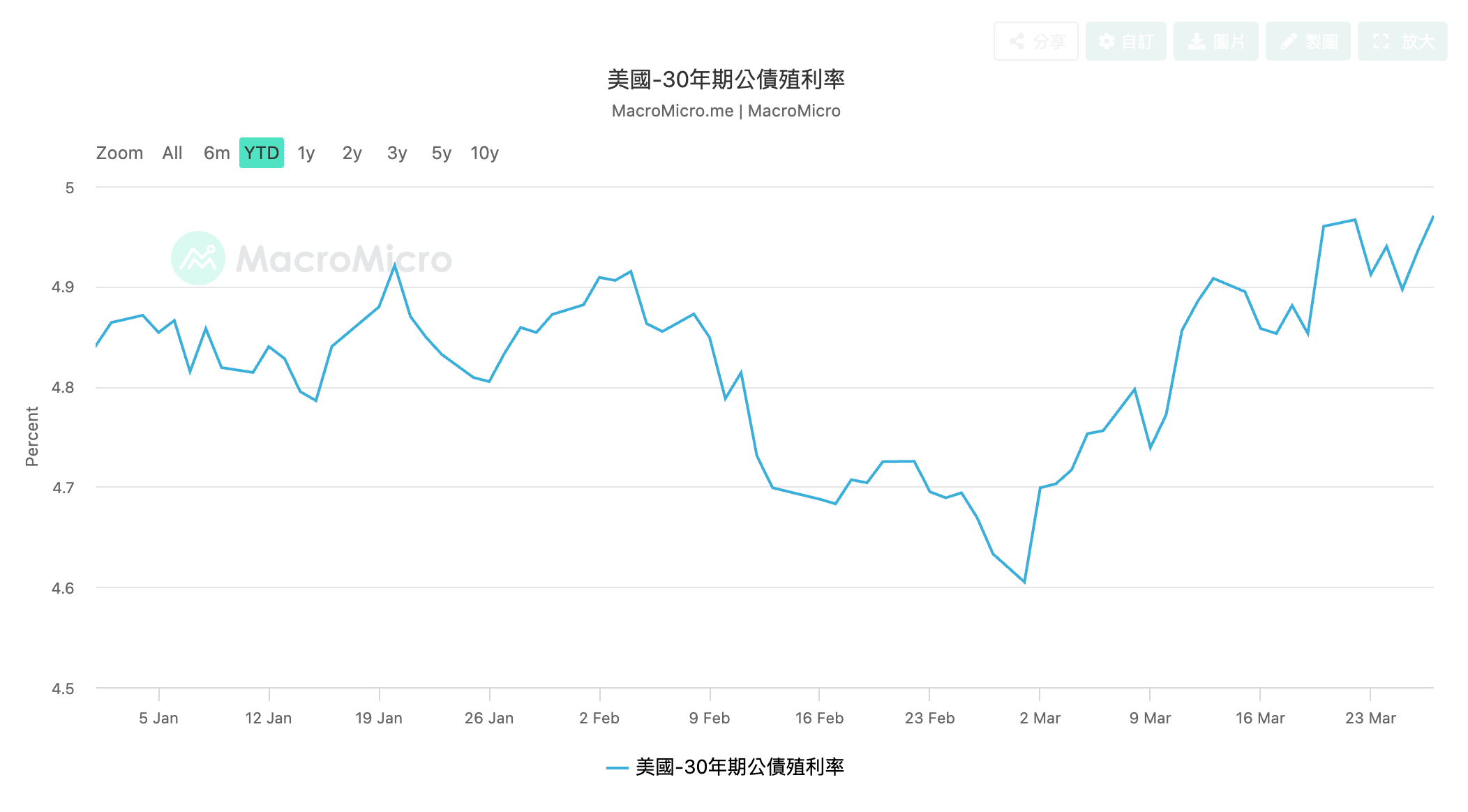
According to the latest market data, influenced by the escalating tensions in the Middle East, WTI crude oil prices surged sharply in the short term, breaking through $97 per barrel and approaching the $98 mark. At the same time, the yield on the U.S. 30-year Treasury bond climbed to 4.986%, reaching a new high since last September.
(Background: Iran’s Speaker counters Trump’s “fake news manipulating oil markets”: No negotiations with the U.S., people demand severe punishment for aggressors)
(Additional context: Goldman Sachs warns of “the largest oil crisis in history”: Is $110 oil price the peak of panic or the foundation of a new normal?)
The geopolitical crisis in the Middle East once again stirs the sensitive nerves of the global financial market. Today (the 27th), as concerns over the escalating conflict continue to grow, both the international energy market and the bond market have experienced significant volatility, reflecting investors’ deep-seated fears of future inflation backlash.
WTI Oil Price Breaks Through $97, Long-term U.S. Treasury Yield Soars
Market data shows that risk aversion and panic sentiment have driven WTI crude oil prices to rise strongly in the short term, breaking through $97 per barrel and nearing the $98 mark, increasing the risk of disruptions in global energy supply.
At the same time, the U.S. bond market also faced a wave of selling, with the yield on the U.S. 30-year Treasury bond soaring to 4.986%, approaching the psychological barrier of 5%, and reaching the highest level since last September.
Inflation Concerns Resurface, Potentially Impacting Capital Momentum in the Crypto Market
The surge in long-term Treasury yields typically indicates that the market’s expectations for long-term inflation and a high-interest-rate environment are heating up. The inflationary pressures brought about by soaring oil prices could compel the Federal Reserve (Fed) to adopt a more cautious stance in future interest rate decisions. With expectations of persistently high borrowing costs, this undoubtedly poses a significant challenge to the capital momentum of high-risk assets like Bitcoin (BTC), and investors need to closely monitor subsequent capital flows and macroeconomic changes.

Disclaimer: The information on this page may come from third parties and does not represent the views or opinions of Gate. The content displayed on this page is for reference only and does not constitute any financial, investment, or legal advice. Gate does not guarantee the accuracy or completeness of the information and shall not be liable for any losses arising from the use of this information. Virtual asset investments carry high risks and are subject to significant price volatility. You may lose all of your invested principal. Please fully understand the relevant risks and make prudent decisions based on your own financial situation and risk tolerance. For details, please refer to
Disclaimer.


