Iranian President Ebrahim Raisi apologized on March 7 in a televised speech to neighboring Middle Eastern countries attacked by Iran. This is extremely rare in Iran’s political history. BBC analysis suggests three possible motivations behind this move: de-escalating regional tensions, stabilizing internal politics to buy time for leadership transition, and projecting a pragmatic image to signal negotiations to the West.
(Background: Trump stated that Iran would only cease hostilities if it “unconditionally surrenders”! Middle East conflict escalates, oil and dollar soar, Bitcoin drops to $68,000)
(Additional context: Dubai has no U.S. military bases—why was it also targeted by Iran? A neutral financial hub sounds the alarm)
Table of Contents
Toggle
-
Motivation 1: Prevent the spread of conflict and de-escalate regional tensions
-
Motivation 2: Stabilize internal situation and buy time for leadership transition
-
Motivation 3: Project a pragmatic image and send negotiation signals to the West
-
Oil prices surge 35% in one week
Iranian President Ebrahim Raisi delivered a televised speech on March 7, publicly apologizing to neighboring Middle Eastern countries attacked by Iran. This is highly unusual in Iran’s political history. BBC conducted an in-depth analysis, suggesting three possible motives behind the apology, which may all be valid simultaneously.
Motivation 1: Prevent the spread of conflict and de-escalate regional tensions
Raisi’s primary goal is to prevent the conflict from escalating further. If Tehran continues to push neighboring countries toward confrontation, Iran risks becoming more isolated regionally. This public apology sends a clear signal: Iran has no intention of allowing the conflict to spread further.
Motivation 2: Stabilize internal situation and buy time for leadership transition
With Supreme Leader Khamenei’s death, Iran’s highest decision-making authority has shifted to an interim committee. Raisi’s apology is seen as a strategic move to stabilize the situation during this power vacuum, aiming to buy time for the new leadership to establish itself.
However, hardliners within Iran have publicly criticized the statement as “too soft,” indicating ongoing internal disagreements over the country’s direction.
Motivation 3: Project a pragmatic image and send negotiation signals to the West
BBC further analyzes that this apology might mark the beginning of a political repositioning within Iran. By demonstrating a pragmatic attitude, Raisi aims to be seen by Western countries as a more negotiable partner, paving the way for future diplomatic negotiations.
Oil prices surge 35% in one week
Market reactions to Iran’s apology go beyond geopolitical concerns; attention is also drawn to oil prices.
U.S. crude oil experienced its largest weekly increase since 1982, soaring 34.5%. Brent crude rose above $93. This figure is significant because it directly influences the Federal Reserve’s interest rate path. If oil prices remain high, inflation expectations could reignite, potentially closing the market’s hoped-for rate cut window in June.
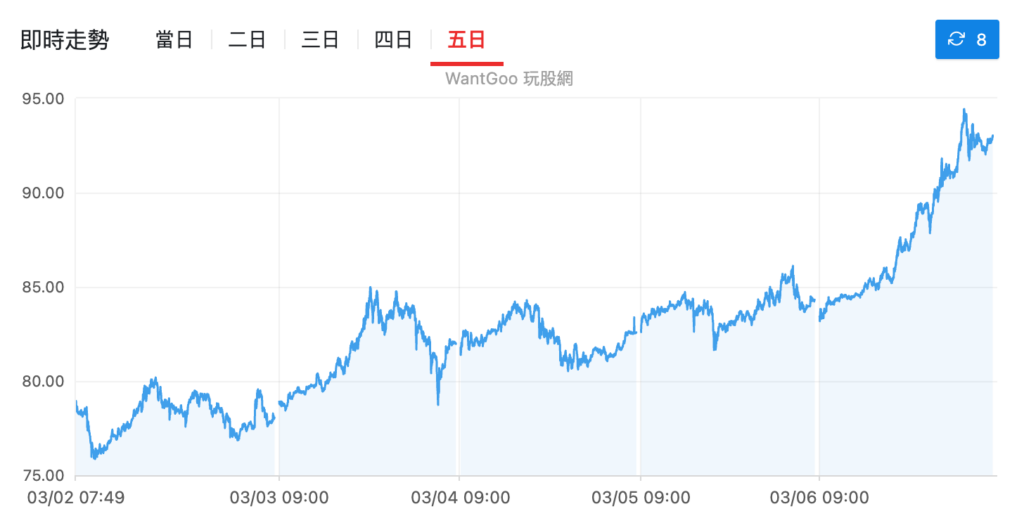
Trump claimed on Truth Social that Iran has “apologized” and demanded total surrender. Analysts predict a ceasefire could occur around March 12. However, Raisi’s wording leaves room for ambiguity: he also criticized the U.S. unconditional surrender demand as “a fantasy that should be buried.”

Disclaimer: The information on this page may come from third parties and does not represent the views or opinions of Gate. The content displayed on this page is for reference only and does not constitute any financial, investment, or legal advice. Gate does not guarantee the accuracy or completeness of the information and shall not be liable for any losses arising from the use of this information. Virtual asset investments carry high risks and are subject to significant price volatility. You may lose all of your invested principal. Please fully understand the relevant risks and make prudent decisions based on your own financial situation and risk tolerance. For details, please refer to
Disclaimer.
Related Articles
U.S. stock market opens with broad declines in the crypto sector, Strategy down 2.01%
On April 13, U.S. stocks opened lower: the Dow Jones fell 0.5%, the S&P 500 fell 0.22%, and the Nasdaq fell 0.26%. Crypto-related stocks were broadly down, with one CEX down 1.66% and Robinhood down 1.65%. msx.com is a decentralized RWA trading platform that has already launched multiple U.S. stock and ETF tokens.
GateNews2h ago
ETH 15-minute rise of 1.24%: On-chain capital outflows and macro risk aversion converge to boost volatility
From 2026-04-13 13:45 to 14:00 (UTC), ETH surged rapidly within a 1.48% amplitude. The price ranged from 2182.61 to 2214.98 USDT, and the return rate in 15 minutes reached +1.24%. This bout of unusual activity has drawn market attention, with active capital inflows and outflows, a marked increase in volatility, and a short-term warming of trading sentiment.
The main driver behind this unusual activity is on-chain capital outflows and changes in the holdings structure. Over the past few weeks, the net positions of the 1k–10k ETH whale cohort and the 10k+ super whale cohort have continued to decline, around April 13, the related
GateNews2h ago
U.S.-Iran talks break down! The U.S. blocks the Strait and is considering restarting airstrikes. Iran: prepared to miss cheap oil
The peace talks between Iran and the United States have broken down. The U.S. has blockaded the Strait of Hormuz and is considering airstrikes, causing international oil prices to break above $100. Bitcoin has fallen below $71,000. Experts warn that the world is facing a severe crude-oil supply shock, and stored oil is about to run out.
CryptoCity3h ago
Bloomberg strategist: Silver, gold, crude oil, and other commodities may face pullback risks by the end of 2026
Bloomberg strategist Mike McGlone says that after a big surge in 2025, Bitcoin could face a sharp pullback, while similar risks exist for silver, gold, copper, natural gas, and crude oil—especially if crude oil prices spike, which could trigger even larger market ripple effects.
GateNews4h ago
CoinShares: Net inflows of $1.1 billion into digital asset investment products last week, the highest single-week level this year
According to CoinShares’ research report, digital asset investment products recorded a net inflow of $1.1 billion last week, the highest in the year to date. Bitcoin saw inflows of $871 million, Ethereum inflows of $196.5 million, and XRP inflows of $19.3 million, with the U.S. driving the dominant inflows. Overall market risk appetite rebounded, reflecting investor demand.
GateNews7h ago
European stocks opened lower across the board; the STOXX Europe 50 index fell 1.02%.
Gate News message: On April 13, European stocks opened broadly lower. The EURO STOXX 50 Index (the benchmark for European blue-chip stocks) fell 1.02%, the German DAX Index (the benchmark for the German stock market) fell 1.42%, the UK FTSE 100 Index fell 0.5%, the Spain IBEX35 Index fell 1.06%, and the France CAC40 Index fell 0.89%.
GateNews9h ago


