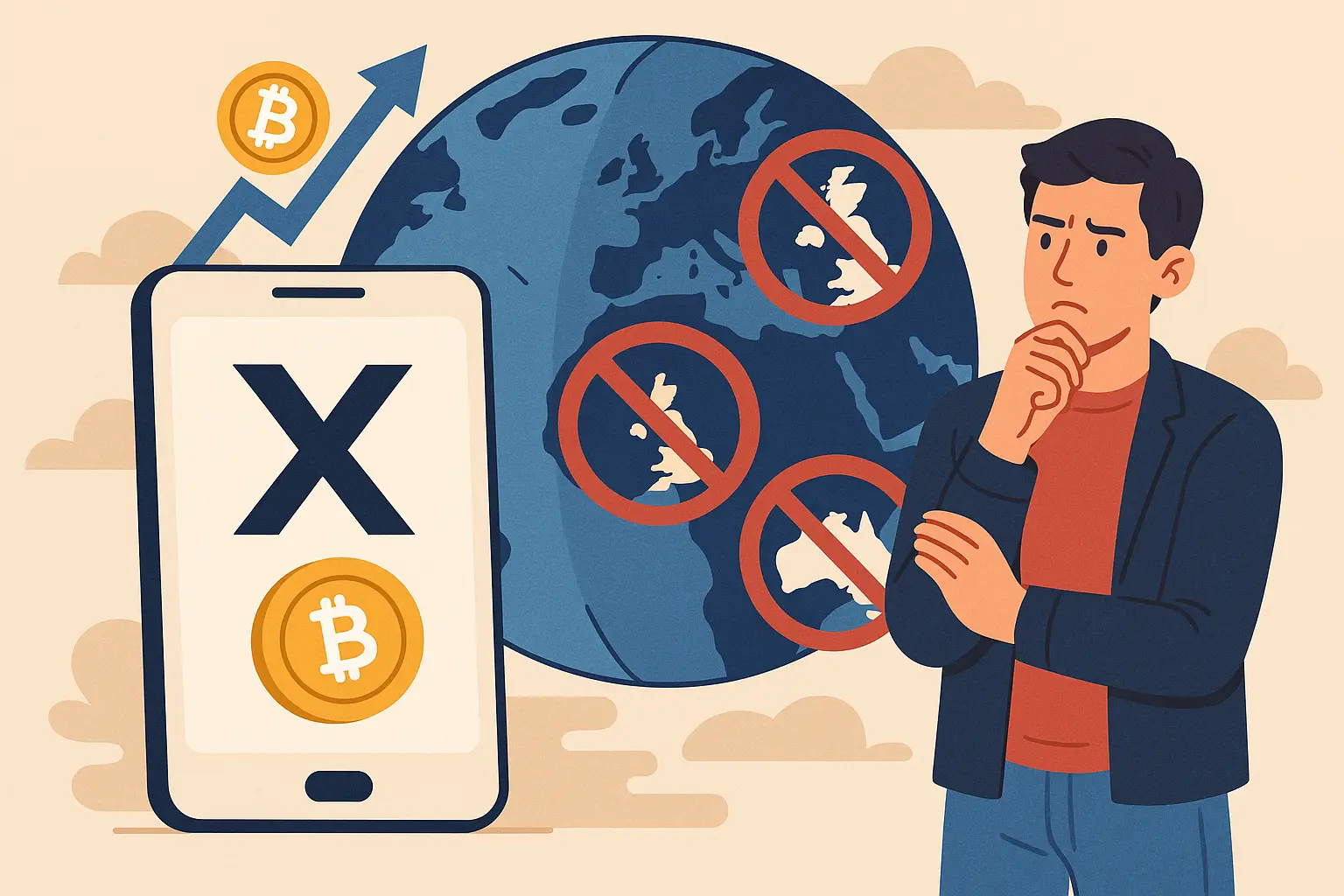
On Sunday, social media platform X announced that under its updated tagging policy, users can now post cryptocurrency promotional content with a “Paid Partnership” label, allowing influencers to profit from crypto-related sponsorship collaborations. However, in markets with strict financial promotion regulations such as the EU, UK, and Australia, crypto advertising remains prohibited. X’s product team stated that the paid partnership label aims to encourage users to build businesses on the platform while maintaining transparency with fans.
How X’s Paid Partnership Tag Works
According to X’s official explanation, “Paid Partnership” is defined as a third-party brand providing compensation or rewards to users (including influencers and content creators) to promote their products or services. The new tagging framework allows such commercial relationships to be publicly disclosed on the platform, requiring clear visibility of the nature of the collaboration to the audience.
Key points of X’s current paid partnership policy:
- Permitted Content: Paid collaborations involving cryptocurrencies and gambling-related content, provided they comply with platform policies and are conducted within compliant markets.
- Prohibited Content Globally: Promotions of products and services such as alcohol, dating platforms, entertainment and prescription drugs, health supplements, tobacco, weapons, and political or social issues for commercial purposes.
- Regional Restrictions: Cryptocurrency promotions in the EU, UK, and Australia are subject to strict financial promotion laws. Influencers are responsible for ensuring that users in these regions cannot see such content.
- User Reporting Mechanism: Anyone can report unmarked paid partnership content to X.
Regional Restrictions and Influencers’ Compliance Responsibilities
The core tension of this policy update is that X has opened the door for crypto paid promotions at the platform level but has shifted regional compliance responsibilities onto the influencers themselves. The EU, UK, and Australia collectively cover a significant portion of active crypto users worldwide. This means many crypto creators must proactively set geographic restrictions or use other technical measures to prevent fans in restricted regions from viewing related promotional content.
This requirement places direct technical demands on creators and raises questions about enforcement effectiveness—if influencers fail to properly block users in restricted areas, they may face legal and compliance risks. X’s policy clauses place legal responsibility on the publishers, not the platform. Long considered a core communication hub for crypto companies, projects, and communities, this policy adjustment offers new commercial pathways for crypto KOLs but also introduces more complex compliance management challenges.
Future Outlook for X Money and Crypto Integration
Alongside this policy update, X is actively advancing its financial services ecosystem. Elon Musk announced on February 11 that X Money, the platform’s payment system, will launch in a “limited beta” within the next two months, followed by global expansion. X Money is a central component of Musk’s “Super App” plan, aiming to integrate social networking, instant messaging, and financial services into a WeChat-like platform.
On February 14, Nikita Bier further announced that X will introduce a “Smart Cash Tag” feature, allowing users to trade stocks and cryptocurrencies directly within the platform. It is still unclear whether cryptocurrencies will be integrated into X Money’s payment infrastructure, but the opening of crypto promotion policies combined with active financial feature expansion indicates a strategic deepening in the crypto domain for the platform.
Frequently Asked Questions
Q: How does X’s paid partnership policy protect audiences from undisclosed advertising?
X requires all sponsored content to display a “Paid Partnership” label and has established a user reporting mechanism for audiences to flag unmarked promotions. The platform states that undisclosed promotions “damage product integrity and erode user trust.” This policy aims to create a systemic framework balancing commercialization with transparency.
Q: How can crypto influencers ensure their promotions are invisible in the EU, UK, and Australia?
Currently, X places the compliance responsibility on influencers, who must proactively use geo-targeting tools or set geographic restrictions when posting restricted content. The specific implementation depends on the advertising management tools used and the technical terms in their agreements with advertisers. Failure to properly execute these restrictions may result in legal and compliance risks borne by the influencers, not X.
Q: What potential impact could X Money’s crypto integration have on the platform ecosystem?
If X Money eventually incorporates crypto trading features, along with the upcoming “Smart Cash Tag” enabling direct crypto transactions within the platform, X could become a one-stop platform covering crypto content dissemination, commercialization, and asset trading—significantly increasing user engagement and monetization potential. However, ongoing regulatory pressures in major markets like the EU and UK may cause regional differences in the timing and manner of this integration.
Disclaimer: The information on this page may come from third parties and does not represent the views or opinions of Gate. The content displayed on this page is for reference only and does not constitute any financial, investment, or legal advice. Gate does not guarantee the accuracy or completeness of the information and shall not be liable for any losses arising from the use of this information. Virtual asset investments carry high risks and are subject to significant price volatility. You may lose all of your invested principal. Please fully understand the relevant risks and make prudent decisions based on your own financial situation and risk tolerance. For details, please refer to
Disclaimer.
Related Articles
7K DeFi Brings Full-Featured DeFi to Your Phone With Sui Network Launch
7K DeFi opens to the public April 9 at 8am UTC with something unusual for mobile: a full suite of decentralized finance tools that don’t require you to hand over your private keys. The platform, built on Sui Network, combines swaps, limit orders, dollar-cost averaging, lending, and yield farming in
BlockChainReporter51m ago
UXLINK Partners With Chain4Energy to Fuel Web3 Social Network Scalability With DEPIN
UXLINK, a Web3 social platform that connects users and developers through social relationships, today announced a strategic partnership with Chain4Energy (C4E), a DEPIN platform designed to enhance energy management and e-mobility applications through AI, tokenization, and IoT. This collaboration en
BlockChainReporter1h ago
Circle Expands Stablecoin Payouts to Singapore in Asia Payments Push
Circle has launched its Stablecoin Payouts service for Singapore partners, enhancing its payment infrastructure in Asia. This service facilitates compliant cross-border transfers using USDC, aiming to streamline fund movement while addressing regulatory concerns.
CryptoNewsFlash3h ago
UBS, Sygnum and PostFinance Join Swiss Franc Stablecoin Sandbox Through 2026
Swiss financial institutions, including UBS and PostFinance, are testing a Swiss franc stablecoin in a controlled sandbox until 2026 to explore blockchain payment systems. The initiative aims to develop a digital money ecosystem while mitigating risks and ensuring compliance.
CryptoNewsFlash4h ago
SBI Ripple Asia Completes XRPL Token Issuance Platform for Business Integrations
SBI Ripple Asia has developed a token issuance platform on the XRP Ledger, allowing businesses to integrate token management via API without overhauling customer interfaces. This approach encourages blockchain adoption by blending seamlessly with existing infrastructure.
CryptoNewsFlash4h ago


