Original Authors: Deng Xiaoyu and Li Haojun
Recently, the Global Decentralized Prediction Market Platform Polymarket launched a Simplified Chinese interface, sparking significant attention in the domestic market.
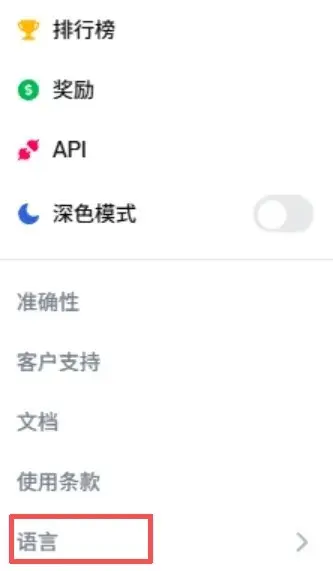
Foreign financial platforms “dressing up” with Chinese interfaces—does this mean opening the door to the Chinese market? The answer is very likely yes.
In the eyes of Chinese regulators, this behavior itself sends a clear signal—the platform intends to target Chinese residents for business, and therefore falls under Chinese law’s jurisdiction and scrutiny.
Polymarket, a foreign prediction platform that has recently attracted attention due to launching a Simplified Chinese version. Users can use cryptocurrencies to “bet” on various event outcomes. Is this kind of gambling-like activity a financial innovation or operating in a legal gray area?
This article will analyze its business model, based on current domestic regulations, to clarify the true legal classification of Polymarket under Chinese law, and clearly reveal: whether you are a regular user or a promoter, participating may involve crossing legal red lines and facing specific risks.
Model Analysis: “Prediction” in Name, “Gambling” in Reality?
On the Polymarket platform, users can use USD stablecoins (such as USDC) to “bet” on the outcomes of various events. But from a Chinese legal perspective, its business structure mainly exhibits the following three key features:
1. “Either-Or” Gambling Structure
Polymarket simplifies event outcomes into “Yes or No” opposing options. Users buy and sell these options, with price fluctuations reflecting market expectations of the event’s probability. After the event concludes, settlement is made in cash based on the result—winners profit, losers lose.
2. Purely Speculative, Luck-Dependent Outcomes
User gains depend entirely on uncertain future events (such as election results, sports wins/losses). The process creates no real value and does not serve as risk hedging; essentially, it is a probability-based speculation.
3. Fully Cryptocurrency-Settled
All fund flows are conducted via cryptocurrencies like USDC on the Polygon blockchain, completely detached from traditional banking and foreign exchange regulation, thus outside China’s financial oversight.
Legal Classification: Financial Innovation or Illegal Activity?
Although in some countries like the US such prediction markets might be regulated, under China’s legal framework, due to lack of licensing and obvious speculative nature, its legal classification is entirely different and more severe.
From China’s legal practice, Polymarket’s business model is very likely to be classified as both “illegal financial activity” and “online gambling,” and it could also serve as a money laundering channel:
1. Illegal Financial Activity
According to the “Notice on Further Preventing and Disposing of Virtual Currency Trading and Speculation Risks” (Yinfa [2021] No. 237) issued by the People’s Bank of China and ten other ministries in 2021:
“Overseas virtual currency exchanges providing services to residents within China via the internet are also considered illegal financial activities. For relevant overseas virtual currency exchanges’ domestic staff, and legal persons or unincorporated organizations who knowingly or should have known they are engaged in virtual currency-related business, providing marketing, payment settlement, technical support, etc., will be held legally responsible.”
As an overseas platform, if Polymarket provides virtual currency-based derivatives trading to domestic residents via a Chinese interface, it clearly falls within the scope of the above prohibitions.
2. Deemed as Online Gambling in Substance
Judicial authorities adopt the principle of “substance over form.” Although the platform is called a “prediction market,” it fully meets the three elements of gambling:
- Investment of funds
- Dependence on chance outcomes
- Existence of monetary gains or losses
Without a financial license and not serving the real economy, its nature is no different from online gambling.
3. New Money Laundering Channel Risks
Due to its anonymity and hedging mechanisms, the platform is prone to being used for “hedge money laundering”: actors can control multiple accounts to bet on opposing outcomes simultaneously, and after paying a small fee, disguise illegal funds as “betting winnings,” thus violating the crime of money laundering under the Criminal Law.
Legal Risks for Mainland Chinese Participants
Depending on the level of involvement and role, mainland Chinese entities (including individuals and organizations) face significant legal risks.
1. Risks for Ordinary Users: Personal Participation
For domestic individuals who access the platform via technical means and conduct personal transactions, the main risks are administrative penalties and fund compliance issues.
- Administrative violations:
Possible detention and fines for participating in gambling with large stakes.
Since Polymarket settles in USDC and other virtual currencies, if users encounter telecom fraud, gambling, or other criminal funds during deposit/withdrawal (OTC transactions), they may be charged with the crime of concealing or disguising criminal proceeds.
- Political and censorship risks:
Participating in predictions involving political figures or sensitive events may attract attention and investigation from relevant authorities.
2. Promoters and Agents: High-Risk Roles
For mainland entities promoting Polymarket via social media, private groups, posting referral links, providing trading guidance, forming signal groups, or offering technical access, the legal risks are extremely high.
-
Gambling crime: If they develop downlines through referral links and take commissions, they are often regarded as “agents for gambling websites” in judicial practice. Serious cases can lead to five to ten years imprisonment.
-
Assisting cybercrime activities: Even without direct profit, providing advertising, technical support, or other assistance knowing the platform is involved in criminal activity may constitute the crime of aiding cybercrime, with potential imprisonment of up to three years.
Regulatory Trends and Compliance Recommendations
Currently, China maintains a strict crackdown on cross-border online gambling and illegal virtual currency trading. The launch of a Chinese interface by Polymarket makes it even easier for regulators to focus on it. Based on the above risk analysis, lawyer Mankun offers the following advice to different groups:
1. For practitioners and promoters: Stay within legal boundaries
Do not act as agents, promoters, or provide any support for such overseas prediction platforms like Polymarket. If you are a social media influencer or community operator, immediately cease related promotions, cut off profit links, and avoid crossing the “casino operation” red line.
2. For ordinary users: Protect your funds
Personal investors should fully understand the legal nature and financial risks of cross-border online gambling, avoiding participation that could lead to bank account freezes by public security authorities or administrative violations affecting personal credit and career development.
3. For platforms and related parties: Clarify legal boundaries
By launching a Chinese interface, Polymarket has clearly demonstrated its intention to serve Chinese users, which makes its operations subject to Chinese law. Even if the operating entity is overseas, the platform and related service providers may still face blacklisting, service blocking, or criminal liability. It is advised that relevant parties carefully assess the legal consequences of涉华业务.
Conclusion
Financial innovation should be conducted within the framework of laws and regulations. Prediction markets, as an emerging economic model, currently lack legitimate access pathways within China. For domestic entities, participation not only lacks legal protection but also involves serious administrative and criminal risks. It is recommended that all market participants remain rational and strictly adhere to compliance boundaries.


