The price of bitcoin sank to roughly $62,200 on Feb. 5, 2026, as a full-blown risk-off mood rippled through global markets, fueled by rising geopolitical strain, economic jitters, and a cascade of forced liquidations across the cryptocurrency sector.
Bitcoin Breaches Key Support as Liquidations Snowball and Stocks Stumble
Roughly $2.06 billion in crypto derivatives positions were wiped out as prices cracked key support levels, quickening the slide into what analysts are calling outright capitulation, with bitcoin now tagged as the most oversold since the COVID crash of 2020.
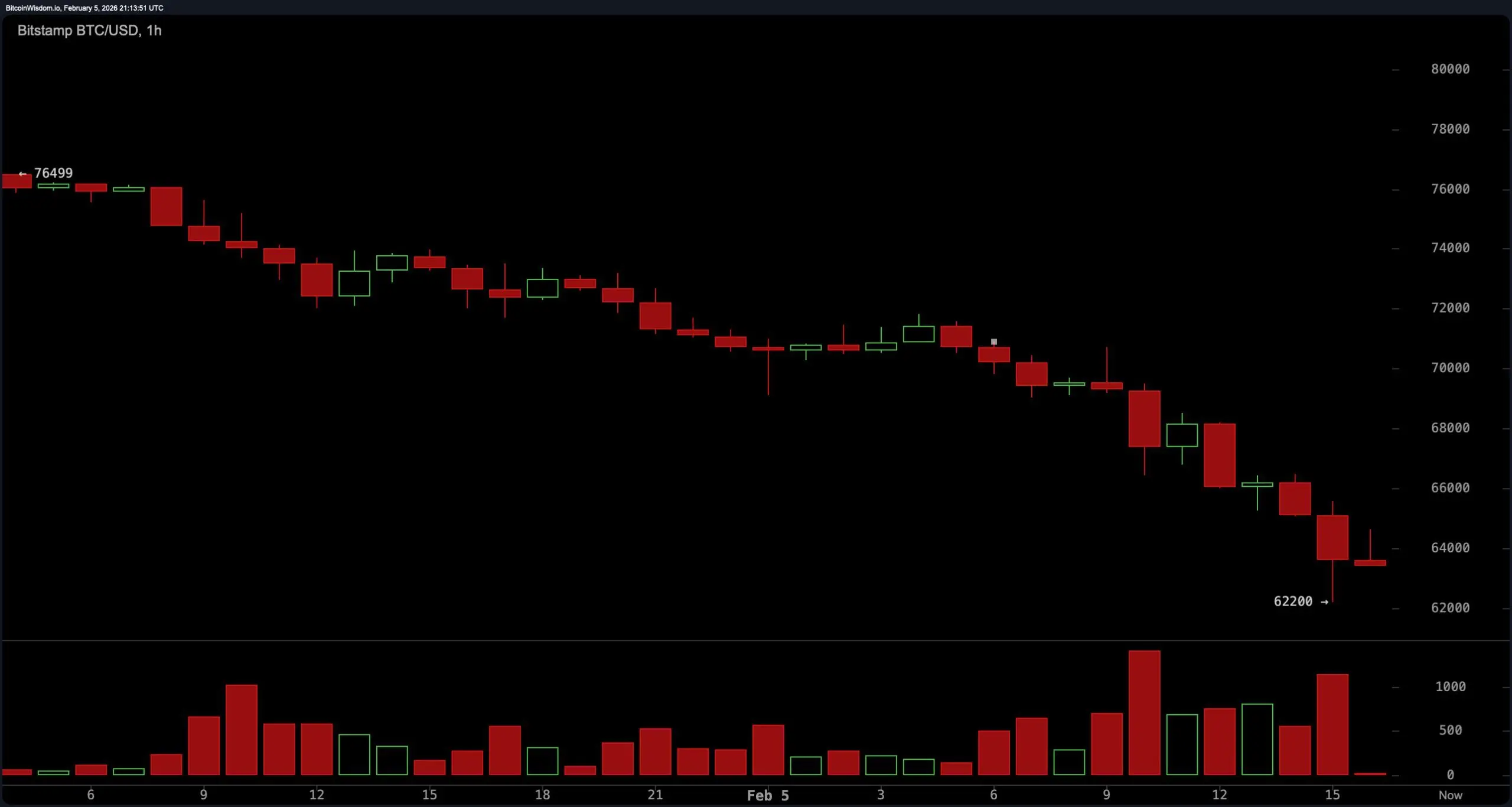 BTC/USD 1-hour chart via Bitstamp on Feb. 5, 2026.
Some see this as the curtain call for the 2023–2025 bull run and the opening act of a bear market, while others frame it as a tempting long-term entry point thanks to deeply stretched conditions. Coinglass.com liquidation data shows 427,278 traders were shown the exit, and of the nearly $2 billion erased, $1.84 billion came from long positions.
BTC/USD 1-hour chart via Bitstamp on Feb. 5, 2026.
Some see this as the curtain call for the 2023–2025 bull run and the opening act of a bear market, while others frame it as a tempting long-term entry point thanks to deeply stretched conditions. Coinglass.com liquidation data shows 427,278 traders were shown the exit, and of the nearly $2 billion erased, $1.84 billion came from long positions.
More than $1 billion of that damage was tied to BTC longs, setting off a domino effect. Much of the carnage across crypto was pinned on U.S. equities tumbling hard. Wall Street slid in lockstep, and there were no safe corners to hide in.
The Nasdaq led the spill, dropping nearly 364 points, while the Dow gave up a bruising 593, trading like a market battling a nasty macro hangover. The NYSE followed with a 277-point loss, and even the S&P 500 couldn’t stay upright, slipping 84 points. It was a clean sweep of red—stocks sagged, confidence thinned, and risk appetite quietly clocked out early.
At present, the crypto economy is off 13.31% and sits at $2.16 trillion. At press time, after 4 p.m. Eastern, bitcoin has managed to rise above the $64,000 range. By 4:15 p.m., it stood at $63,519 per coin, showing an awful lot of movement in small timeframes.
FAQ ❓
- Why did bitcoin fall to $62,200 on Feb. 5, 2026? Bitcoin slid amid a broad risk-off move driven by geopolitical tensions, economic uncertainty, and heavy forced liquidations in crypto derivatives markets.
- **How large were crypto liquidations during the sell-off?**Roughly $2.06 billion in crypto derivatives positions were liquidated, with the vast majority coming from long positions.
- **Why did U.S. stock market losses matter for crypto prices?**Sharp declines across the Nasdaq, Dow, S&P 500, and NYSE added pressure to crypto markets by draining risk appetite globally.
- **Has bitcoin recovered since the capitulation low?**After the sell-off, bitcoin rebounded above the $64,000 level in late trading, though broader market conditions remain fragile.
Disclaimer: The information on this page may come from third parties and does not represent the views or opinions of Gate. The content displayed on this page is for reference only and does not constitute any financial, investment, or legal advice. Gate does not guarantee the accuracy or completeness of the information and shall not be liable for any losses arising from the use of this information. Virtual asset investments carry high risks and are subject to significant price volatility. You may lose all of your invested principal. Please fully understand the relevant risks and make prudent decisions based on your own financial situation and risk tolerance. For details, please refer to
Disclaimer.


