Key Takeaways:
- Vitalik Buterin publicly walked back a 2017 remark dismissing full user self-verification
- Advances in ZK-SNARKs now allow blockchain state verification without replaying all history
- Buterin identifies self-verification as a backup to make Ethereum resistant to failures and censorship
One of the positions discussed by Ethereum co-founder Vitalik Buterin in 2017 and since amended marks an indication of how much Blockchain technology and his own thought in terms of relevance has changed. In a recent post on X, Buterin explained why he no longer agrees with his earlier criticism of full user self-verification, often mocked as a “Mountain Man” approach.
Read More: Vitalik Sides With Critics as Zcash Faces Deepening Rift Over Token-Voting Governance Push
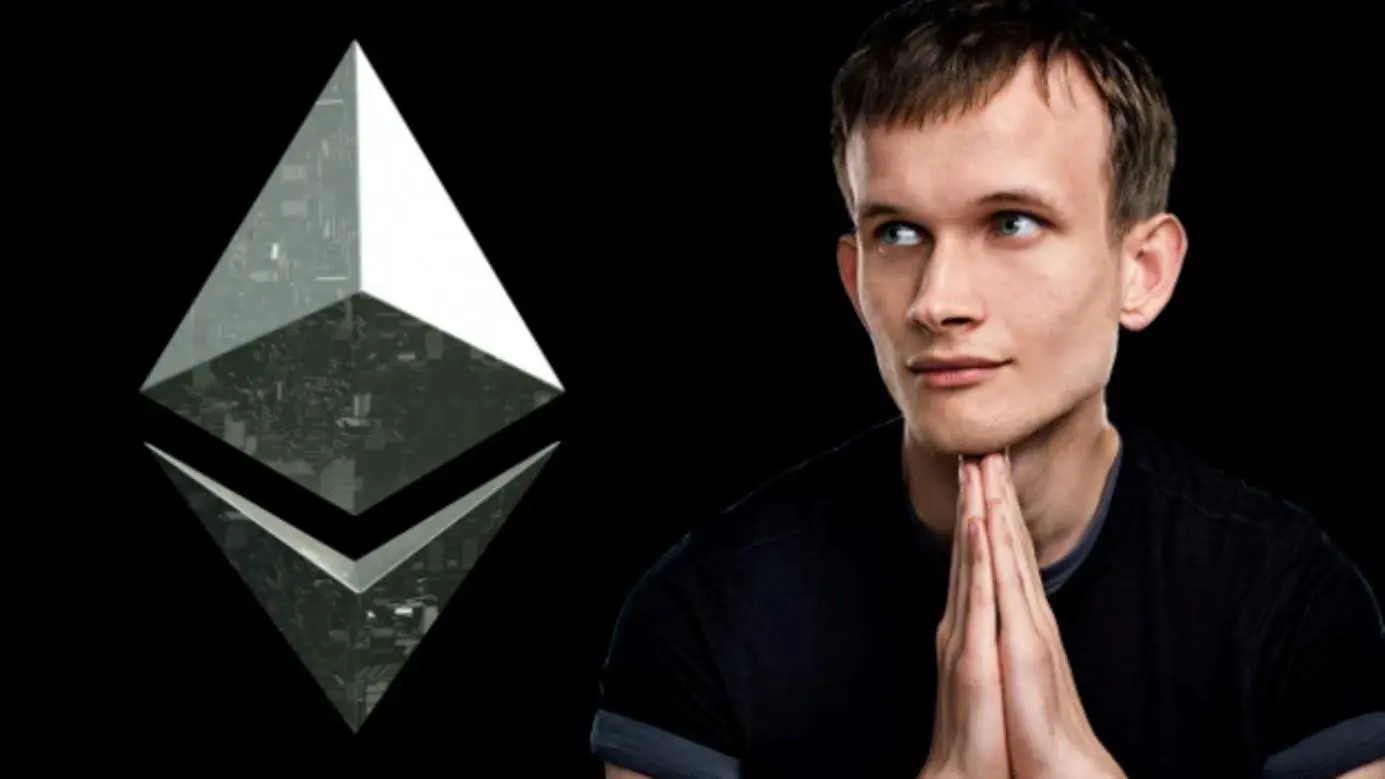
Table of Contents
- Revisiting a 2017 Blockchain Debate
- ZK-SNARKs Change the Cost Equation
- Verification Without Replaying the Chain
- Real-World Failures Shape Ethereum’s Philosophy
Revisiting a 2017 Blockchain Debate
A comment posted by Butterin came as a result of an argument with researcher in blockchain Ian Grigg. Grigg at the time proposed blockchains to capture the order of transactions, but not to make any commitment to the state, including account balances or storing smart contracts. The concept was that, state would be recreated on-demand, instead of being stored on-chain.
Buterin strongly opposed this design. He argued that without committing state to the blockchain, users would face two bad choices: run a full node that processes every transaction from genesis or trust a third-party RPC provider. Ethereum’s approach, which commits state roots to block headers, allowed users to verify specific values using Merkle proofs under an honest majority assumption.
In 2017, Buterin considered the full self-verification to be out of practice with most users due to the high computational cost. His stance was oriented to the technological constraints of that time and tradeoffs developers had to make to ensure that blockchains were practical.
Read More: Vitalik Buterin Sells Two Meme Coins, Scores $114.7K in 13,889 USDC & 28.58 ETH
ZK-SNARKs Change the Cost Equation
The most significant one, as Buterin claims, is the maturation of zero-knowledge proof systems, particularly, ZK-SNARKs. Users can use such tools to check whether the blockchain state is accurate without having to re-run all the transactions in the history.
Buterin described this breakthrough as delivering “the benefits without the costs.” Users no longer have to decide between trust and massive computation, but can use cryptographic proofs to ensure that they are correct at an efficient rate. This, in his words, fundamentally reverses the tradeoffs that are acceptable.
Verification Without Replaying the Chain
ZK-SNARKs enable it to verify that the chain is valid without sacrificing the computational cost which once made self-verification impractical. In the case of Ethereum it opens the path to more robust guarantees related to decentralization with no usability or scaling trade-off.
Buterin holds that the ecosystem needs to have higher expectations and re-evaluate tradeoffs that were present in previous stages of blockchain development with better tools at hand.
Real-World Failures Shape Ethereum’s Philosophy
In addition to cryptography, Buterin stressed on what he learned when things did go wrong in the real world. Peer-to-peer networks may crash, latency may soar and long-established third-party service may just vanish. During such times, it is a weakness that the users rely on the developers or centralized infrastructure.
Other risks identified by him include validator concentration, plausible 51% attacks, and intermediary censorship and refers to incidents such as Tornado Cash restrictions as a reminder that direct chain access may become a necessity.
For Buterin, self-verification is not a daily requirement but a safety mechanism. The “Mountain Man’s cabin” is a retreat users can rely on when systems fail, and its existence alone improves the balance of power. He likened it to BitTorrent’s role in keeping streaming platforms honest.
Disclaimer: The information on this page may come from third parties and does not represent the views or opinions of Gate. The content displayed on this page is for reference only and does not constitute any financial, investment, or legal advice. Gate does not guarantee the accuracy or completeness of the information and shall not be liable for any losses arising from the use of this information. Virtual asset investments carry high risks and are subject to significant price volatility. You may lose all of your invested principal. Please fully understand the relevant risks and make prudent decisions based on your own financial situation and risk tolerance. For details, please refer to
Disclaimer.
Related Articles
Calastone token network access of $68 billion, L&G fund supports same-day settlement
Legal & General Asset Management(L&G AM)announced that it has successfully moved more than £50 billion of its liquidity funds on-chain through a tokenized distribution network built with Calastone, supporting T+0 settlement and multi-currency pricing. This deployment is based on Ethereum, and it plans to expand to more blockchains in the future while ensuring compliance with the regulatory framework.
MarketWhisper2h ago
Ethereum Foundation Member Trent Van Epps Announces Departure
Trent Van Epps has left the Ethereum Foundation after five years, expressing gratitude for his team's collaboration on upgrades and funding. He will still contribute to Protocol Guild and Ethereum's political economy.
GateNews2h ago
Matrixport-Linked Entity Closes 25,000 ETH 20x Long Position After 65 Days, Realizes $17.32M Profit
A Matrixport-linked entity has closed its final 25,000 ETH long position, gaining $17.32 million after 65 days. Previously, it also realized $48.19 million from 1,150 BTC and 95,000 ETH positions, with an unrealized profit of $8.1 million remaining.
GateNews4h ago
Ethereum Futures Open Interest Hits $25.4B as Institutions Build Positions, But Perpetual Funding Rates Signal Caution
Ethereum remains above $2,300, with rising futures open interest and substantial ETF inflows. However, low perpetual contract funding rates and declining DApp revenue indicate waning confidence and potential price pressure amid stiff competition.
GateNews5h ago
Whale Stakes 50,000 ETH on Everstake Worth Over $116.97M
Gate News message, April 15 — According to Onchain Lens, a major whale has staked 50,000 ETH on Everstake, worth approximately $116.97 million.
GateNews13h ago
Bitcoin, Ethereum and Solana ETFs Record Positive Net Inflows on April 15
Gate News message, according to the April 15 update, Bitcoin ETFs recorded a single-day net inflow of 4,566 BTC (approximately $337.41 million) and a 7-day net inflow of 6,753 BTC (approximately $499.04 million). Ethereum ETFs saw a single-day net inflow of 23,405 ETH (approximately $54.37 million)
GateNews15h ago


