


@Mayacrypt @Zircuit Wow Maya, this breakdown hits different pure signal, no noise

Trade
Trading Type
Spot
Trade crypto freely
Alpha
Points
Get promising tokens in streamlined on-chain trading
Pre-Market
Trade new tokens before they are officially listed
Margin
Magnify your profit with leverage
Convert & Block Trading
0 Fees
Trade any size with no fees and no slippage
Leveraged Tokens
Get exposure to leveraged positions simply
Futures
Futures
Hundreds of contracts settled in USDT or BTC
Options
HOT
Trade European-style vanilla options
Unified Account
Maximize your capital efficiency
Demo Trading
Futures Kickoff
Get prepared for your futures trading
Futures Events
Participate in events to win generous rewards
Demo Trading
Use virtual funds to experience risk-free trading
Earn
Launch
CandyDrop
Collect candies to earn airdrops
Launchpool
Quick staking, earn potential new tokens
HODLer Airdrop
Hold GT and get massive airdrops for free
Launchpad
Be early to the next big token project
Alpha Points
NEW
Trade on-chain assets and enjoy airdrop rewards!
Futures Points
NEW
Earn futures points and claim airdrop rewards
Investment
Simple Earn
Earn interests with idle tokens
Auto-Invest
Auto-invest on a regular basis
Dual Investment
Buy low and sell high to take profits from price fluctuations
Soft Staking
Earn rewards with flexible staking
Crypto Loan
0 Fees
Pledge one crypto to borrow another
Lending Center
One-stop lending hub
VIP Wealth Hub
Customized wealth management empowers your assets growth
Private Wealth Management
Customized asset management to grow your digital assets
Quant Fund
Top asset management team helps you profit without hassle
Staking
Stake cryptos to earn in PoS products
BTC Staking
HOT
Stake BTC and earn 10% APR
GUSD Minting
Use USDT/USDC to mint GUSD for treasury-level yields
More

GateUser-df796f3c

No content yet
GateUser-df796f3c
$BTC.b becoming the primary $BTC standard on @stable is a collateral re-rating event, and it’s being driven by @Lombard_Finance.
This is the first time $BTC leverage on this surface is anchored to:
• validator-secured issuance
• protocol-native minting
• deterministic stablecoin conversion
That trifecta removes what traders usually overpay for in $BTC leverage: uncertain failure modes.
Once collateral loss becomes mathematically bounded instead of issuer-dependent, three risk dynamics reprice:
1️⃣ Liquidation topology simplifies:
Multiple wrappers create feedback spirals across venues. A singl
This is the first time $BTC leverage on this surface is anchored to:
• validator-secured issuance
• protocol-native minting
• deterministic stablecoin conversion
That trifecta removes what traders usually overpay for in $BTC leverage: uncertain failure modes.
Once collateral loss becomes mathematically bounded instead of issuer-dependent, three risk dynamics reprice:
1️⃣ Liquidation topology simplifies:
Multiple wrappers create feedback spirals across venues. A singl
BTC-1.9%

- Reward
- like
- Comment
- Repost
- Share
Perps charge more per trade. DEXs make more money.
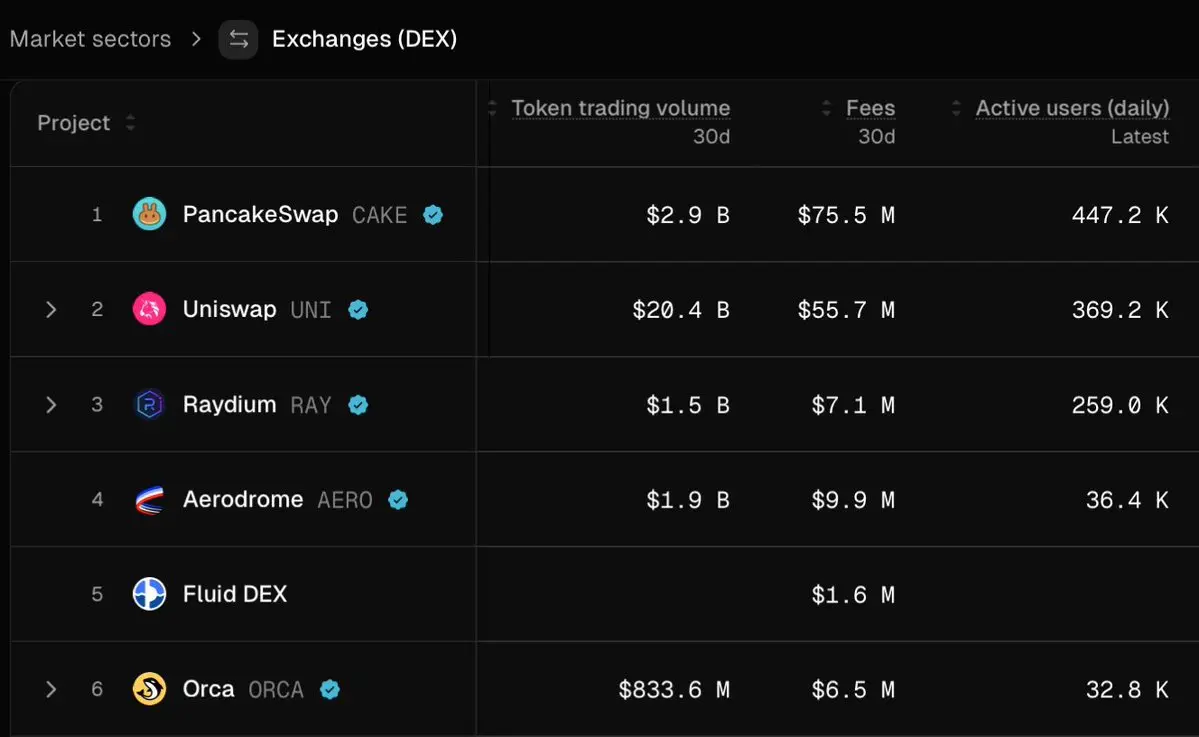
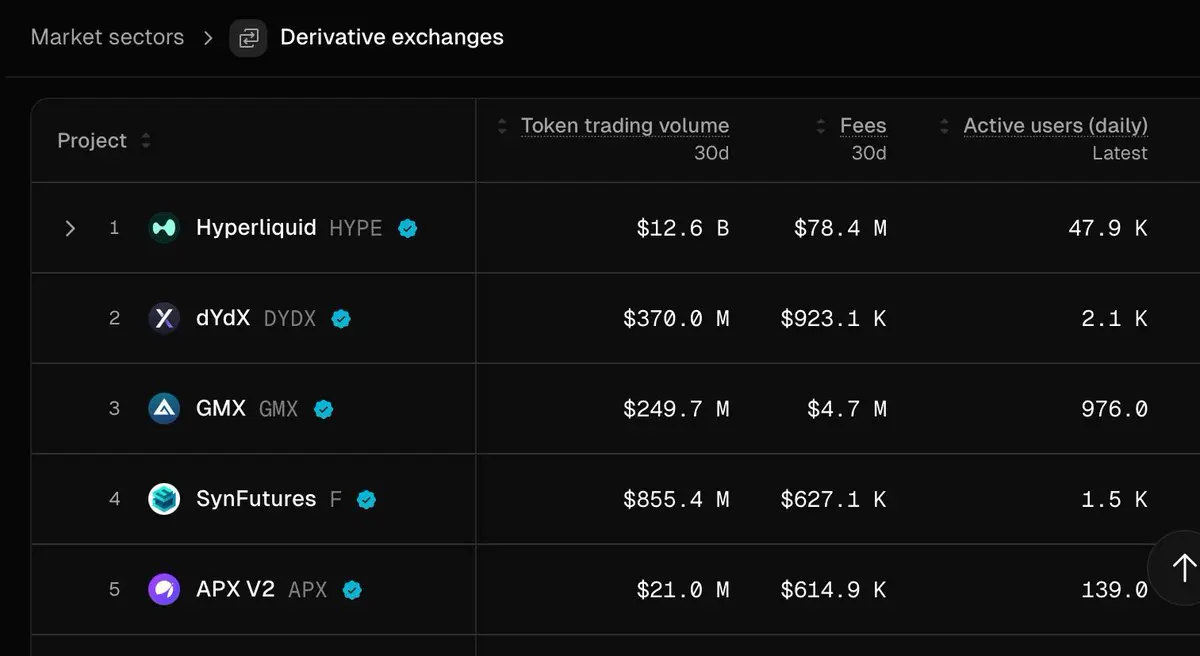
Over the last 30 days:
-> Perpetual futures platforms processed $19.1B of trading activity and earned $87.3M in fees.
-> DEXs processed $228.8B of spot trading activity and earned $224.4M in fees.
Perps monetize harder per dollar.
DEXs monetize at far greater scale.
On fee efficiency alone, perps win:
• 0.46% per dollar traded on perps
• 0.10% per dollar traded on DEXs
But on absolute cash flow, DEXs still dominate:
DEXs earn ~2.6× more total fees than perps
That gap is structural.
Perps compete on leverage, rebates, and tight spreads. They mu
Over the last 30 days:
-> Perpetual futures platforms processed $19.1B of trading activity and earned $87.3M in fees.
-> DEXs processed $228.8B of spot trading activity and earned $224.4M in fees.
Perps monetize harder per dollar.
DEXs monetize at far greater scale.
On fee efficiency alone, perps win:
• 0.46% per dollar traded on perps
• 0.10% per dollar traded on DEXs
But on absolute cash flow, DEXs still dominate:
DEXs earn ~2.6× more total fees than perps
That gap is structural.
Perps compete on leverage, rebates, and tight spreads. They mu
- Reward
- like
- Comment
- Repost
- Share
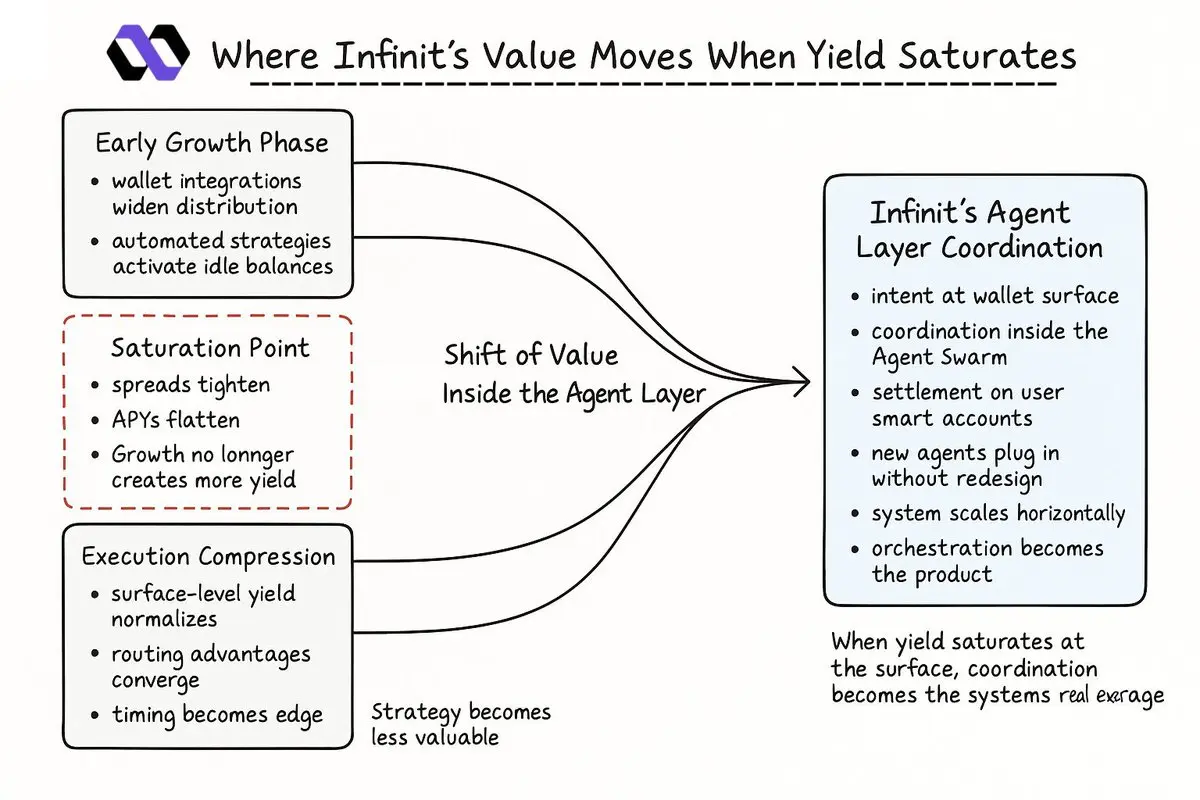
Early adoption for @Infinit_Labs follows a clear arc:
• wallet integrations widen distribution
• automated strategies wake up idle balances
• yield-routing agents capture cross-chain inefficiencies.
In the early phase, every new user helps because the market still has slack.
But that slack eventually disappears. As one-click execution scales, spreads tighten, yields compress, and the system starts to look like any market where too much capital chases the same opportunities. The marginal value of one more wallet falls.
— The Point Where Growth No Longer Helps
This phase is the saturation point:
• wallet integrations widen distribution
• automated strategies wake up idle balances
• yield-routing agents capture cross-chain inefficiencies.
In the early phase, every new user helps because the market still has slack.
But that slack eventually disappears. As one-click execution scales, spreads tighten, yields compress, and the system starts to look like any market where too much capital chases the same opportunities. The marginal value of one more wallet falls.
— The Point Where Growth No Longer Helps
This phase is the saturation point:
IN-1.52%
- Reward
- like
- Comment
- Repost
- Share
The misunderstanding around yield is structural.
Most people still see it as something you “pick,” when the real determinant of performance is how efficiently your capital gets where it needs to be.
APR tables suggest simplicity.
The market does not.
Liquidity now lives across L1s, L2s, appchains, intent routers, and timing-sensitive execution surfaces.
That fragmentation breaks the old model where “highest APR” translated into highest returns.
@Infinit_Labs' value comes from understanding why that break happened and building for the environment that replaced it.
When execution becomes the pro
Most people still see it as something you “pick,” when the real determinant of performance is how efficiently your capital gets where it needs to be.
APR tables suggest simplicity.
The market does not.
Liquidity now lives across L1s, L2s, appchains, intent routers, and timing-sensitive execution surfaces.
That fragmentation breaks the old model where “highest APR” translated into highest returns.
@Infinit_Labs' value comes from understanding why that break happened and building for the environment that replaced it.
When execution becomes the pro

- Reward
- like
- Comment
- Repost
- Share
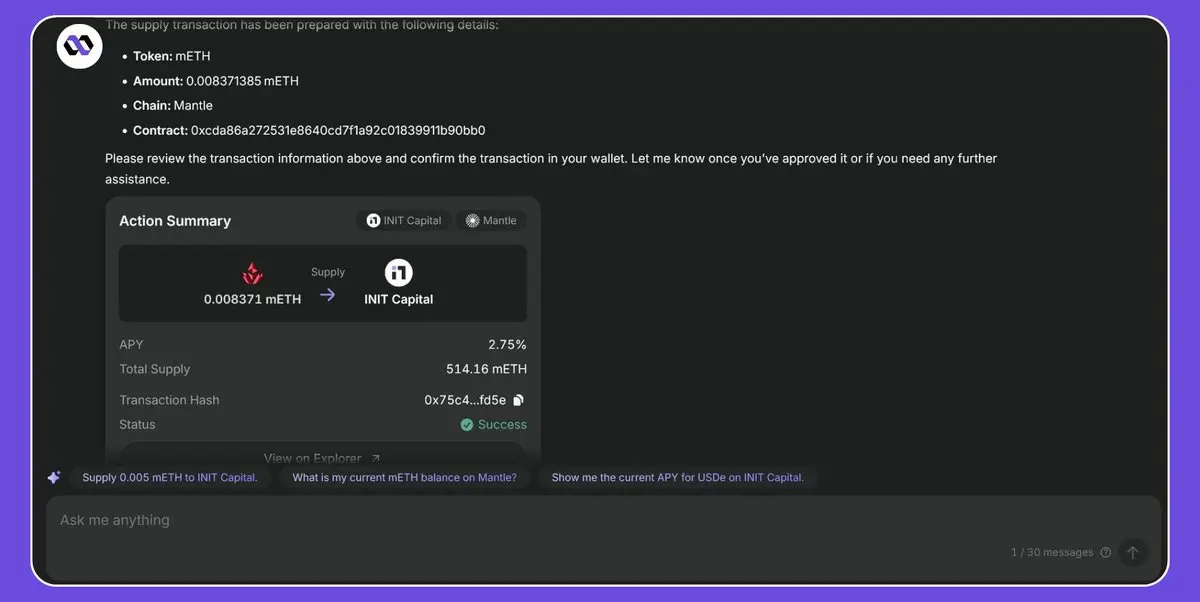
STRATEGY: The Dual-Surface Yield Engine
This strategy uses the two strongest, most stable yield planes on @Mantle_Official that @Infinit_Labs agents can actually execute:
$mETH supply APY and $USDe supply APY inside @InitCapital_.
These two surfaces consistently diverge, because borrower demand pushes $USDe yields up while $mETH stays predictable around 2.7%.
By splitting your position between both, you build a yield engine that captures the higher of the two over time without leverage, LP risk, or restaking.
No loops.
No liquidation risk.
Only the two operations INFINIT supports: Kyber swaps
This strategy uses the two strongest, most stable yield planes on @Mantle_Official that @Infinit_Labs agents can actually execute:
$mETH supply APY and $USDe supply APY inside @InitCapital_.
These two surfaces consistently diverge, because borrower demand pushes $USDe yields up while $mETH stays predictable around 2.7%.
By splitting your position between both, you build a yield engine that captures the higher of the two over time without leverage, LP risk, or restaking.
No loops.
No liquidation risk.
Only the two operations INFINIT supports: Kyber swaps
USDE0.02%
- Reward
- like
- Comment
- Repost
- Share
A fort that stores gold grows slowly.
A port that moves goods grows endlessly.
DeFi vaults are forts. DeFi orchestration is the port.
That distinction captures the structural shift already underway in DeFi.
Capital is moving from static allocation toward dynamic orchestration.
Protocols still built around fixed strategies are effectively pricing yesterday’s market, not the one we trade in today.
@Velvet_Capital is building for the real environment; one defined by constant rotation and unstable edges:
• fragmented liquidity
• shifting yield curves
• MEV-sensitive execution
• cross-chain arbitra
A port that moves goods grows endlessly.
DeFi vaults are forts. DeFi orchestration is the port.
That distinction captures the structural shift already underway in DeFi.
Capital is moving from static allocation toward dynamic orchestration.
Protocols still built around fixed strategies are effectively pricing yesterday’s market, not the one we trade in today.
@Velvet_Capital is building for the real environment; one defined by constant rotation and unstable edges:
• fragmented liquidity
• shifting yield curves
• MEV-sensitive execution
• cross-chain arbitra
VELVET0.51%

- Reward
- like
- Comment
- Repost
- Share
.@Infinit_Labs is small-cap on paper ( $IN = $21M market cap), but it’s building what DeFi actually needs: an execution layer that scales intent.
Most protocols optimize where liquidity sits. Infinit optimizes how it moves using deterministic AI agents that execute multi-protocol operations in a single transaction.
Proof of usage:
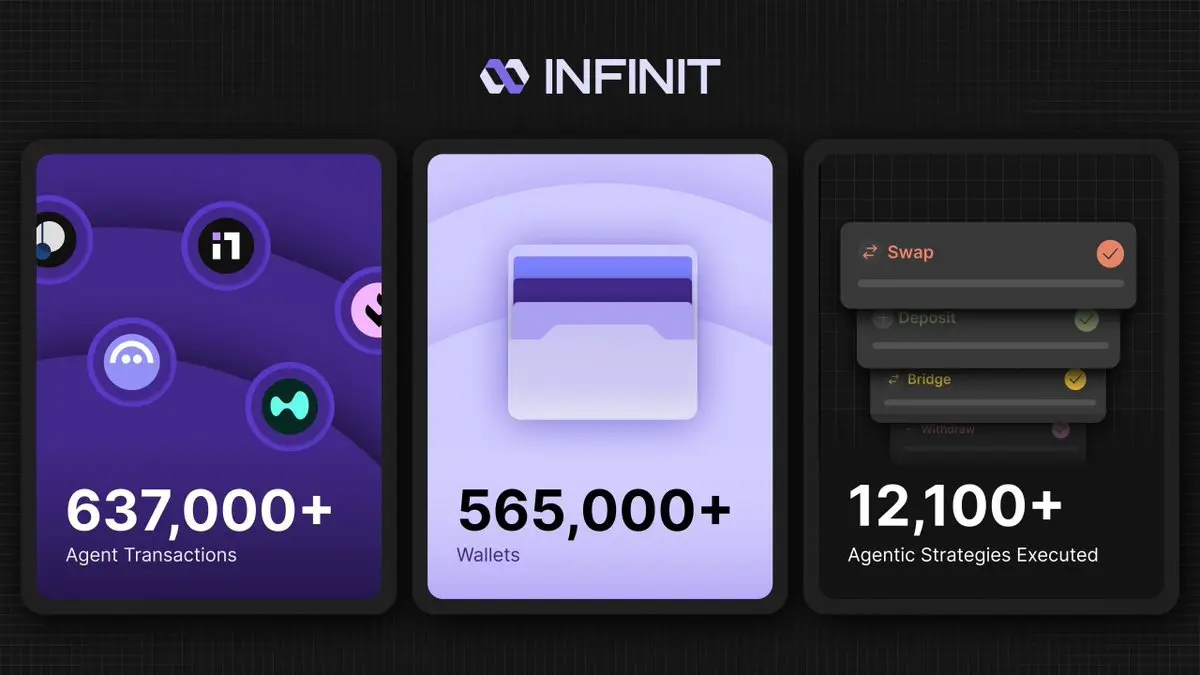
• 637K+ agent transactions processed
• 565K+ wallets connected
• 12K+ strategies executed across seven networks
No yield farming. No bribes. Pure product demand.
It’s not a vault or a dashboard. It’s the engine under both.
Sommelier coordinates validators.
Instadapp
Most protocols optimize where liquidity sits. Infinit optimizes how it moves using deterministic AI agents that execute multi-protocol operations in a single transaction.
Proof of usage:
• 637K+ agent transactions processed
• 565K+ wallets connected
• 12K+ strategies executed across seven networks
No yield farming. No bribes. Pure product demand.
It’s not a vault or a dashboard. It’s the engine under both.
Sommelier coordinates validators.
Instadapp
IN-1.52%
- Reward
- like
- Comment
- Repost
- Share
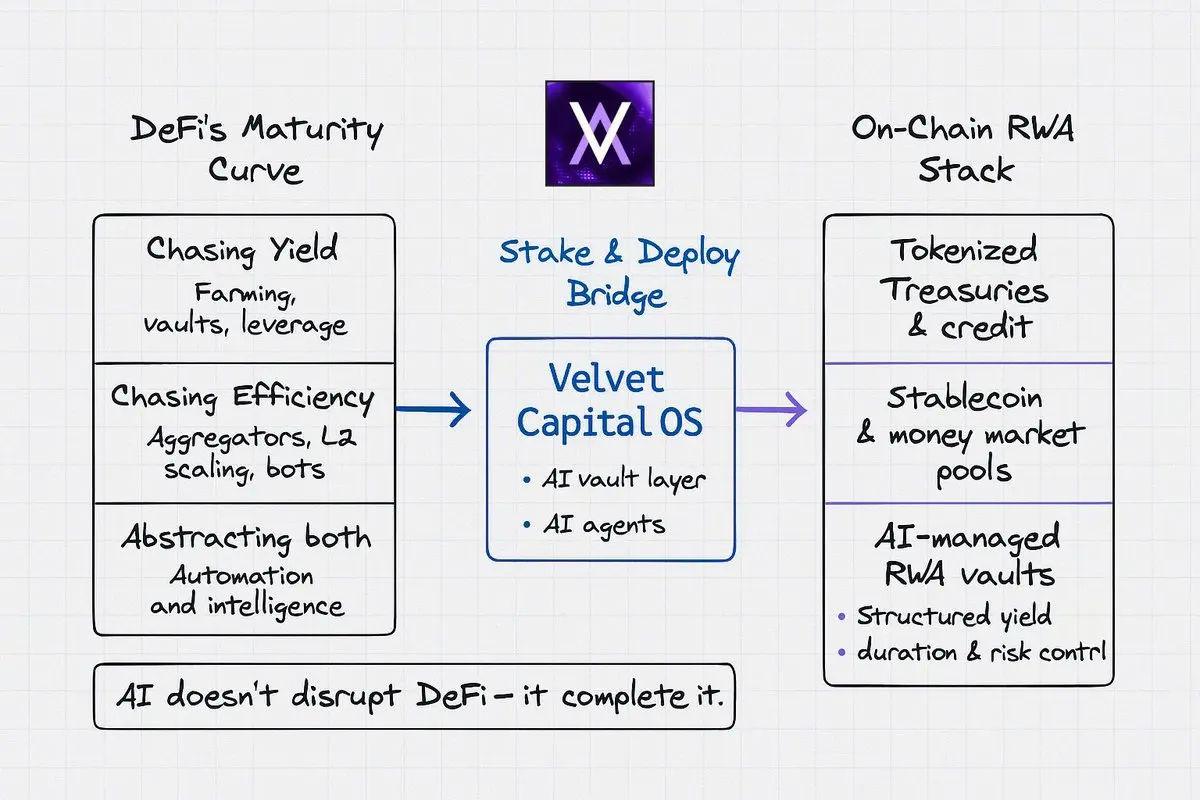
Every DeFi cycle runs the same script.
> First, they chase yield.
> Then, they chase efficiency.
> Finally, they abstract both.
@Velvet_Capital sits at that third phase; where capital stops being moved and starts moving itself.
Its DeFAI OS already runs autonomous vaults that trade, rebalance, and deploy liquidity through AI agents.
The next step is obvious: extend that logic to tokenized real-world assets.
Think about it, RWAs behave like DeFi instruments; yield-bearing, composable, rule-based.
Once those assets live on-chain, AI agents can manage them directly.
@Velvet_Capital's modular vaul
> First, they chase yield.
> Then, they chase efficiency.
> Finally, they abstract both.
@Velvet_Capital sits at that third phase; where capital stops being moved and starts moving itself.
Its DeFAI OS already runs autonomous vaults that trade, rebalance, and deploy liquidity through AI agents.
The next step is obvious: extend that logic to tokenized real-world assets.
Think about it, RWAs behave like DeFi instruments; yield-bearing, composable, rule-based.
Once those assets live on-chain, AI agents can manage them directly.
@Velvet_Capital's modular vaul
VELVET0.51%
- Reward
- like
- Comment
- Repost
- Share
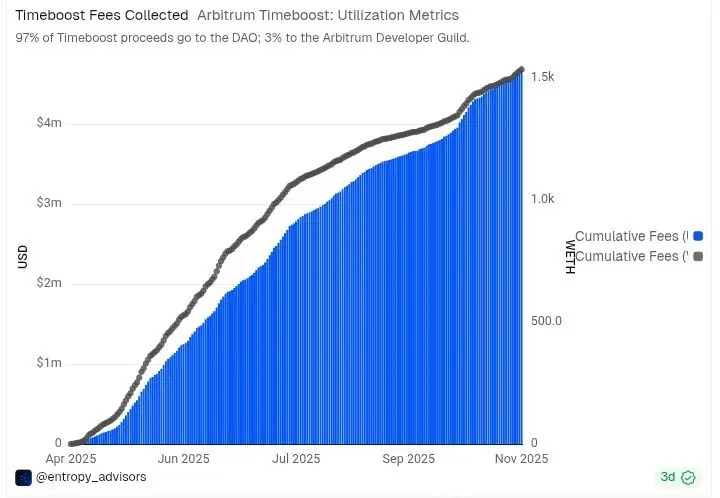
Arbitrum just proved blockspace can pay its own bills.
Since April, TimeBoost; @arbitrum's MEV auction system has redirected 1,500 ETH (~$4.6M) straight into the DAO treasury.
What used to leak out as silent arbitrage now flows back as yield.
That’s a big shift: MEV isn’t a tax anymore. It’s income.
Every block priority bid now funds the network that made it possible.
And that loop: usage → auction → treasury → grants → more usage, quietly turned Arbitrum into one of the first self-financing rollups.
This isn't emissions. This is sustainable yield baked into the protocol.
MEV used to extract v
Since April, TimeBoost; @arbitrum's MEV auction system has redirected 1,500 ETH (~$4.6M) straight into the DAO treasury.
What used to leak out as silent arbitrage now flows back as yield.
That’s a big shift: MEV isn’t a tax anymore. It’s income.
Every block priority bid now funds the network that made it possible.
And that loop: usage → auction → treasury → grants → more usage, quietly turned Arbitrum into one of the first self-financing rollups.
This isn't emissions. This is sustainable yield baked into the protocol.
MEV used to extract v
- Reward
- like
- Comment
- Repost
- Share
- Reward
- like
- Comment
- Repost
- Share
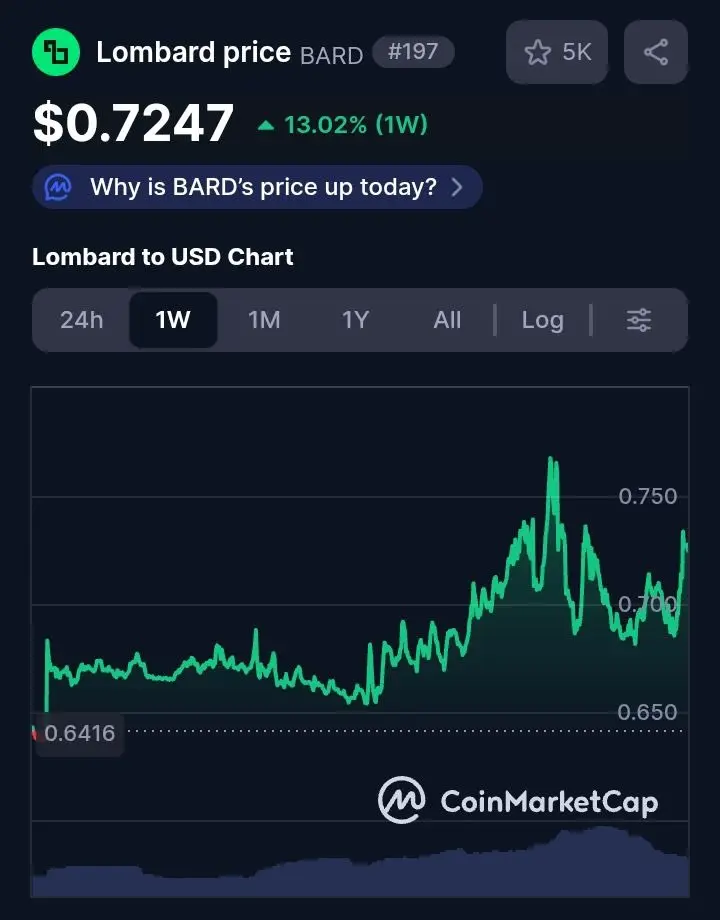
While most of the market chops sideways, $BARD is up +13% this week, trading at $0.72 with $26.8M in 24h volume.
Market cap sits at $162.9M.
That’s still tiny compared to what it underwrites.
✅ Restaking
✅ Institutional credit
✅ Synthetic money markets (lend, borrow, and trade)
These are all being built on @Lombard_Finance infrastructure. And $BARD backs the whole stack.
Flows create trust. Trust creates value.
That loop now runs through $BARD.
Market cap sits at $162.9M.
That’s still tiny compared to what it underwrites.
✅ Restaking
✅ Institutional credit
✅ Synthetic money markets (lend, borrow, and trade)
These are all being built on @Lombard_Finance infrastructure. And $BARD backs the whole stack.
Flows create trust. Trust creates value.
That loop now runs through $BARD.
BARD-11.36%
- Reward
- like
- Comment
- Repost
- Share