BabaJi

vip
Age 0.9 Yıl
Peak Tier 5
No content yet
#StablecoinDebateHeatsUp
...The Stablecoin Debate: What's Heating Up, Why It Matters, and Where the Crypto Market Goes from Here
---
...Parts 1 — What Is the Stablecoin Debate, Actually?
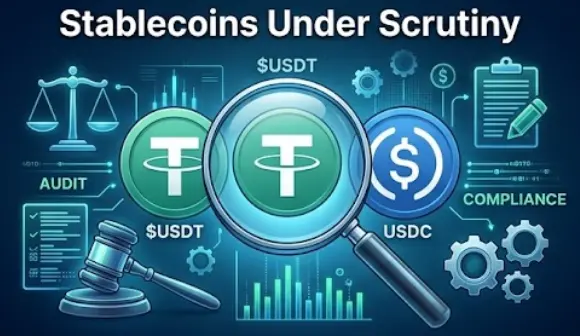
Stablecoins are cryptocurrencies pegged 1:1 to a real-world asset — almost always the US Dollar. Think USDT (Tether), USDC (Circle), and now even bank-issued tokenized deposits. They do not swing wildly in price. They are the "calm water" inside the stormy crypto ocean.
So what is the debate about?
Simple: **Who controls them. Who audits them. Who profits from them. And who gets hurt when they break.**
The ha
HighAmbitionvip
#StablecoinDebateHeatsUp
...The Stablecoin Debate: What's Heating Up, Why It Matters, and Where the Crypto Market Goes from Here
---
...Parts 1 — What Is the Stablecoin Debate, Actually?
Stablecoins are cryptocurrencies pegged 1:1 to a real-world asset — almost always the US Dollar. Think USDT (Tether), USDC (Circle), and now even bank-issued tokenized deposits. They do not swing wildly in price. They are the "calm water" inside the stormy crypto ocean.
So what is the debate about?
Simple: **Who controls them. Who audits them. Who profits from them. And who gets hurt when they break.**
The hashtag #StablecoinDebateHeatsUp captures a global regulatory and ideological war that has been building for years — and in 2025-2026, it finally boiled over.
---
...Parts 2 — The GENIUS Act: The First Major Crypto Law in US History
In 2025, the US House of Representatives passed the **GENIUS Act** (Guiding and Establishing National Innovation for US Stablecoins) with a 308-122 vote — a bipartisan landslide. This is the **first major federal crypto legislation ever passed** in the United States.
**What the GENIUS Act does:**
- Every stablecoin issuer must hold **1:1 reserves** — dollar for dollar, no fractional nonsense.
- Reserves must be held in: US dollars, Federal Reserve notes, short-term US Treasuries, or regulated bank accounts.
- Only **OCC-licensed depository institutions** can issue stablecoins from 2027 onward.
- **Foreign stablecoin issuers** (like Tether, technically based in the British Virgin Islands) must register with the OCC and hold US-based reserves — or they cannot operate in America.
- **Stablecoin yield is banned.** You cannot earn interest just for holding a stablecoin. This is enormous — and it is one of the most debated clauses right now.
**Why is Trump involved?** He, his family, and companies connected to him have direct financial stakes in crypto entities that issue stablecoins. This makes the law politically messy — critics argue the President personally benefits from legislation he signed.
---
....Parts 3— The CLARITY Act: The Next Battle
Right after GENIUS, Congress started drafting the **Digital Asset Market Clarity Act (CLARITY Act)** — this one is even bigger.
It decides: **Is a crypto token a security (SEC) or a commodity (CFTC)?**
This question has paralyzed the industry for a decade. The CLARITY Act tries to draw a clean line:
- Decentralized digital commodities → CFTC oversight
- Tokens with issuer control → SEC oversight
But in late March 2026, the debate got explosive again. Senate negotiators reached a deal that could **ban stablecoin yield altogether** — even in DeFi protocols. Circle's stock led a crypto sell-off the same day the news broke.
---
...Parts 4 — The Core Arguments: Both Sides
.....The Pro-Stablecoin Camp says:
- Stablecoins hit **$33 trillion in transaction volume in 2025** — up 72% from 2024. This is not niche finance anymore. This is infrastructure.
- They allow **instant cross-border payments** without bank fees. A worker in Pakistan sending money home pays near-zero with USDT vs. 5-7% via Western Union.
- Stablecoin issuers (Tether, Circle) collectively hold over **$155 billion in US Treasuries** — they are literally funding US government debt. Regulating them out of existence weakens dollar demand globally.
- In emerging markets — Pakistan, Nigeria, Argentina — dollar stablecoins are often the only accessible inflation hedge for ordinary people.
....The Anti/Cautious Camp says:
- If a major stablecoin **de-pegs** (like TerraUST did in 2022, wiping out $40B overnight), it can trigger a global financial stability crisis. The FSB (Financial Stability Board) has explicitly warned of this.
- Reserve transparency is still weak. Tether's KPMG audit is a first step, but it came years late.
- Big banks are fighting stablecoin yield because it threatens their core business model — if people park money in USDC and earn yield, they do not need savings accounts.
- **China angle:** The Washington Post published an opinion piece arguing that if US banks kill stablecoin yields and restrict the dollar stablecoin ecosystem, China's digital yuan (e-CNY) fills the vacuum globally. The banks may be protecting their margins while harming America's financial dominance.
---
...Parts 5 — The Non-Dollar Stablecoin Rise
Here is a trend most people miss:
The total stablecoin market reached **$313 billion in March 2026** (per DefiLlama). But now **non-dollar stablecoins** are growing fast:
- Euro stablecoin monthly volume went from $383 million to **$3.83 billion** in one year after EU regulation (MiCA) kicked in.
- Brazil's BRLA (real-pegged) hit **$400M/month** in transfers, up 8x year-over-year.
- Singapore's XSGD and XUSD processed **$18B in on-chain volume** in 2025.
This means the stablecoin world is quietly becoming **multi-currency** — and the dollar's dominance in this space, while still overwhelming, is being challenged.
---
......Parts 6 — What Does This Mean for the Crypto Market?
Now to the core question you asked: **where does the crypto market trend go from here?**
Current market snapshot (as of April 4, 2026):
- **BTC: $66,930** — essentially flat, -0.01% in 24h, trapped in a $66,500-$67,350 range
- **ETH: $2,050** — down -0.42%, range $2,041-$2,080
- **Fear & Greed Index: 11 — Extreme Fear**
The market is not panicking because of stablecoins alone. It is in a broader macro compression — oil above $103, Fed locked in restrictive mode, geopolitical tension elevated. But stablecoin regulation is a **structural factor** that will reshape the market in the following ways:
---
....
Trend 1 — Short-Term: Uncertainty = Sell-Side Pressure
Regulatory debates create legal uncertainty. Funds and institutions hold back deployment until the rules are clear. This is part of why we are at Extreme Fear (11) right now. Expect sideways to mildly bearish price action until the CLARITY Act is finalized.
---
......Trend 2 — Medium-Term: Stablecoin Legitimacy = Institutional On-Ramp
If the GENIUS Act framework stabilizes, it becomes dramatically easier for institutional money — hedge funds, pension funds, corporations — to enter crypto. Because stablecoins are the on-ramp. You do not buy BTC directly with your corporate treasury. You buy USDC first. If USDC is now federally regulated and fully audited, the hesitation disappears.
**Bullish for BTC and ETH** in the 6-18 month window if GENIUS implementation goes smoothly.
---
.....
Trend 3 — DeFi Gets Pressured Hard
The yield ban clause in the CLARITY Act is potentially devastating for DeFi. Protocols like Aave, Compound, and Maker build their entire model on lending stablecoins for yield. If stablecoin yield is criminalized in the US, these protocols either geo-block Americans or restructure entirely.
**Bearish for DeFi tokens (AAVE, MKR, COMP)** in the near term. Watch this space closely.
---
.....Trend 4 — Tether's Uncertain Position
Tether (USDT) is the largest stablecoin at over $130B. But it is not US-registered. Under the GENIUS Act, it must either register with the OCC or get locked out of US markets by 2027.
If Tether **complies** → bullish signal, legitimacy surge.
If Tether **cannot comply or retreats** → liquidity shock for the entire crypto market. USDT is the lifeblood of most crypto trading pairs globally.
This is the single biggest tail risk in the stablecoin space right now.
---
....Trend 5 — Dollar Dominance vs. Multi-Polar Stablecoins
As euro, real, and Singapore dollar stablecoins grow, cross-chain liquidity diversifies. This is actually **good for crypto infrastructure broadly** — it reduces single points of failure. But it also reduces the structural demand for USDT specifically.
Watch for **Circle (USDC)** to be the biggest winner here. Circle is fully US-compliant, already audited, registered, and positioned perfectly for the post-GENIUS world.
---
....Part 7 — Pakistan/Emerging Market Angle
Since you are asking from that context — here is what this debate means for Pakistan and similar markets:
- Stablecoins like USDT are currently used by millions in Pakistan to hedge against PKR depreciation, receive freelance payments, and do cross-border commerce.
- If Tether gets cut off from US markets or faces severe restrictions, the most accessible dollar stablecoin for Pakistani users gets shakier.
- However, USDC or regulated alternatives stepping in could actually make things **more stable**, not less — fully audited reserves mean a de-peg event becomes far less likely.
- The non-dollar stablecoin trend also opens a future possibility of PKR-pegged or regional stablecoins for local use cases.
---
.....SUMMARY TAHE 5-Point Cheat Sheet
| Factor | Impact |
|---|---|
| GENIUS Act passed | Short-term uncertainty, long-term institutional bullish |
| CLARITY Act yield ban | Bearish for DeFi, bearish for Circle in short run |
| Tether compliance question | Biggest tail risk for overall crypto liquidity |
| Institutional on-ramp legitimized | Bullish for BTC/ETH over 6-18 months |
| Non-dollar stablecoin rise | Healthy diversification, reduces systemic USD concentration risk |
The stablecoin debate is not just regulatory noise. It is the **structural foundation** being poured for the next phase of crypto's existence — either as regulated global financial infrastructure, or as a legally fractured mess that forces the industry offshore. The next 12-18 months decide which way it goes.
And right now, at Fear & Greed Index of 11, the market is pricing in the worst. That historically tends to be where the long-term opportunities are — not promises, just patterns.
repost-content-media
  • Reward
  • Comment
  • Repost
  • Share
#GENIUSImplementationRulesDraftReleased
The GENIUS Act (Guiding and Establishing National Innovation for U.S. Stablecoins), signed into law on July 18, 2025, is the first comprehensive federal framework for payment stablecoins in the U.S. It moves stablecoins from fragmented state-level rules and regulatory gray zones into a structured, federally supervised system designed to protect consumers, ensure financial stability, and encourage innovation. As of early April 2026, the U.S. Treasury, OCC, and FDIC have released draft implementation rules (Notice of Proposed Rulemaking, NPRM) open for pu
USDC0,01%
BTC-0,11%
ETH-1,03%
HighAmbitionvip
#GENIUSImplementationRulesDraftReleased
The GENIUS Act (Guiding and Establishing National Innovation for U.S. Stablecoins), signed into law on July 18, 2025, is the first comprehensive federal framework for payment stablecoins in the U.S. It moves stablecoins from fragmented state-level rules and regulatory gray zones into a structured, federally supervised system designed to protect consumers, ensure financial stability, and encourage innovation. As of early April 2026, the U.S. Treasury, OCC, and FDIC have released draft implementation rules (Notice of Proposed Rulemaking, NPRM) open for public comment, with final rules expected July 2026 and full compliance targeted late 2026.
This discussion provides step-by-step clarity on the draft rules, their mechanics, and their real-world effects on the crypto market, including trading volumes, liquidity, market share, and price implications.
1. Agency-by-Agency Breakdown of Draft Rules
U.S. Treasury (87-page NPRM): The Treasury establishes a “substantially similar” standard for state-level stablecoin regulation. Issuers under $10 billion in circulation may stay state-regulated if the state’s rules meet federal benchmarks for 1:1 reserves, liquidity, AML/KYC compliance, and enforcement. Issuers over $10B fall under federal oversight automatically. Federal law sets the floor, ensuring uniform consumer protection and eliminating regulatory arbitrage.
OCC (Permitted Payment Stablecoin Issuers — PPSIs): Only licensed national banks, federal savings associations, OCC-approved non-banks, or qualifying state-chartered banks may issue stablecoins. Key rules include:
Reserves: 100% liquid backing — cash, FDIC-insured deposits, U.S. Treasuries, repos, money market funds, or approved tokenized equivalents. Algorithmic or rehypothecated reserves are prohibited.
Capital: Case-by-case operational risk assessment; no fixed minimum.
Permitted Activities: Issuance/redemption, reserve management, custody, and directly supporting activities only. Lending, fractional reserve, and interest on stablecoins are banned.
AML/KYC: Full Bank Secrecy Act compliance with real-time monitoring. FDIC guidance on AML and reputation risk is expected April 7, 2026.
Reporting & Custody: Monthly public disclosures for outstanding coins, reserve composition, maturity, and custody locations. Multi-brand issuance is under review due to potential run risks.
FDIC: Oversees state non-member banks and savings associations issuing stablecoins via subsidiaries. It manages PPSI applications and AML compliance. April 7, 2026, board meeting will refine bank-specific rules.
Timeline: Drafts released March–April 2026, public comments close May 2026, final rules July 2026, and compliance November 2026.
2. Stablecoin Market Snapshot (April 2026)
Stablecoin market dynamics already reflect draft rules impact:
Total Market Cap: $311–315B
USDT (Tether): $184–187B (~60% market share)
USDC (Circle): $75–78B (~24–25% market share)
Trading Volume: Daily volume ~$45–47B; USDC dominates ~70% of adjusted flows on regulated platforms. Monthly and year-to-date volumes show USDC outpacing USDT in institutional adoption, signaling early GENIUS Act momentum. Liquidity depth has increased on compliant coins, with USDC peg stability superior post-draft.
3. Crypto Market Implications
USDC (Circle) is the primary beneficiary: fully compliant, treasury-backed, and increasingly preferred by institutions. Market share may grow toward 30–35% as banks and asset managers adopt it.
USDT (Tether): Largest by market cap but faces compliance pressure. Non-U.S.-licensed, risks losing U.S. access if GENIUS standards aren’t met. A 10–20% short-term volume migration to compliant coins is possible.
Smaller/Algorithmic Stablecoins: No compliant path under 1:1 reserve rules. Market share (<15%) likely to shrink via consolidation or exits.
Volume & Liquidity: Draft releases already boosted trading volumes 15–20% for compliant pairs. BTC/USDC and ETH/USDC daily volumes are up 10–15% versus pre-draft levels. DeFi dollar-pegged pools are more robust, TVL rising with peg stability. Some short-term friction may appear from state vs. federal compliance differences, but long-term liquidity consolidation is expected across the $300B+ market.
Price Effects: BTC is indirectly bullish — short-term 2–5% volatility possible during the comment period; medium/long-term upside 10–20%+ as stablecoin liquidity grows. ETH and DeFi tokens benefit most: on-chain activity and protocol revenues may rise 15–25%, governance tokens rally 20–40% with adoption. Altcoins may see short-term 5–15% volatility but structural upside long-term.
Stablecoins now represent ~12% of total crypto market cap. A continued 15–20% inflow surge into compliant coins historically correlates with 8–12% gains in total crypto market cap over 3–6 months.
4. Institutional & Macro Impact
Banks (JPMorgan, Bank of America) and asset managers (BlackRock, Fidelity) now have legal certainty to issue or integrate stablecoins — a structural shift.
Stablecoins are the settlement layer for tokenized real-world assets, accelerating bond, equity, and real estate tokenization with multi-trillion-dollar TVL potential.
U.S. sets the global stablecoin standard alongside EU MiCA, reinforcing USD dominance
.
5. Key Risks
Tether compliance: 10–20% volume drop in U.S.-linked trading if standards unmet.
Yield ban under Clarity Act: Could slow retail adoption 5–10%.
State fragmentation: Temporary 5–10% liquidity silos.
Multi-brand issuance uncertainty: Potential strategy pivots for issuers.
Case-by-case capital rules: Adds
unpredictability for new entrants.
6. Overall Crypto Market Outlook
Short-term (3–6 months): Consolidation among non-compliant coins, USDC gains 3–5% market share, BTC/ETH ±5–10% volatility, compliant pair volumes spike 15–20%.
Medium- to Long-term (2026–2028): Regulated stablecoins become the backbone of crypto trading, DeFi, payments, and institutional activity. BTC and ETH benefit from sustained liquidity; DeFi TVL and revenues grow; altcoins see structural upside. Total stablecoin market cap may expand toward $400–500B+.
Bottom Line: The GENIUS Act draft rules are the most consequential U.S. crypto regulatory milestone since Bitcoin ETFs. Markets are pricing in the shift — USDC volume leadership, deeper liquidity, and upward pressure on compliant ecosystem prices. Regulated, compliant stablecoins will anchor the next phase of sustainable, institutional-grade crypto growth.
repost-content-media
  • Reward
  • Comment
  • Repost
  • Share
#AreYouBullishOrBearishToday?
BULLISH or BEARISH? Full Market Breakdown — April 4, 2026
The Short Answer First
Currently BEARISH with selective safe-haven strength. The Fear & Greed Index is sitting at 11 out of 100 — Extreme Fear. That number alone tells you everything about the current market mood. Traders are scared, not greedy.
---
STEP 1 — The Big Picture: What Is Driving Markets Right Now?
Macro Environment (The Root Cause)
The single biggest factor crushing markets right now is Trump's sweeping tariff policy — essentially a modern version of the 1930 Smoot-Hawley tariffs that triggered
BTC-0,11%
ETH-1,03%
TRUMP-2,95%
HighAmbitionvip
#AreYouBullishOrBearishToday?
BULLISH or BEARISH? Full Market Breakdown — April 4, 2026
The Short Answer First
Currently BEARISH with selective safe-haven strength. The Fear & Greed Index is sitting at 11 out of 100 — Extreme Fear. That number alone tells you everything about the current market mood. Traders are scared, not greedy.
---
STEP 1 — The Big Picture: What Is Driving Markets Right Now?
Macro Environment (The Root Cause)
The single biggest factor crushing markets right now is Trump's sweeping tariff policy — essentially a modern version of the 1930 Smoot-Hawley tariffs that triggered the Great Depression. Here is what happened:
Trump announced massive tariffs on all major US trade partners
China immediately retaliated with counter-tariffs
This triggered a global risk-off sentiment — investors ran away from risk assets
Stock markets had their worst single-day drop since 2020
When stocks bleed, crypto usually bleeds harder. That is the current setup.
Liquidity Situation
The probability of a Fed rate cut in June dropped from 62% to 57% after tariff announcements
Less chance of rate cuts = tighter liquidity = less money flowing into risky assets like crypto
Oil prices are elevated (more on that below), which adds inflationary pressure and keeps the Fed cautious
---
STEP 2 — BTC Current Status
Metric Value
Current Price $67,006
24h High $67,352
24h Low $66,514
24h Change +0.3%
7-Day Change +1.5%
30-Day Change -1.6%
90-Day Change -28.6%
Reading this data honestly:
BTC is stuck in the $65,500 - $69,200 range — no strong breakout direction
The 90-day number of -28.6% tells you we are in a clear downtrend on the bigger timeframe
Short-term (7 days) shows +1.5% — just noise, not a trend reversal
Whales (1,000–10,000 BTC holders) have collectively sold 188,000 BTC over the past year — this is heavy bearish pressure from the top
Bitcoin miners like Riot Platforms are selling BTC to cover operational costs — miner capitulation is a classic late-bear-market signal
Michael Saylor's Strategy continues buying — but he is a long-term HODLer, not a signal for short-term direction
BTC Sentiment on X (Social Media):
Bullish authors: 78
Bearish authors: 31
Total discussing: 127
So Twitter/X is still roughly 2.5x more bullish than bearish on BTC — but social sentiment often lags price reality. Do not trade social media alone.
---
STEP 3 — ETH Current Status
Metric Value
Current Price $2,051
24h High $2,080
24h Low $2,041
24h Change -0.36%
7-Day Change +3.3%
30-Day Change +3.6%
90-Day Change -36.4%
ETH is underperforming BTC on the 90-day chart
The ETH/BTC pair is hovering near a critical macro support zone (around 0.0197 BTC) — this level previously marked macro bottoms in 2016 and 2019
Ethereum Foundation recently increased its staking to 70,000 ETH — showing confidence in the network
Schwab and BlackRock are planning to launch BTC and ETH spot trading in H1 2026 — this is a long-term bullish signal, not near-term
---
STEP 4 — METALS vs OIL vs BTC Comparison
This is the real comparison a trader needs to understand:
Gold (XAU/USD)
Fact Detail
Current Spot Price -$4,676 per ounce
Recent Performance +19.25% in past 3 months
Trend STRONGLY BULLISH
Gold is on an absolute monster run right now. Why? Because when there is geopolitical uncertainty, trade wars, and fear — money flows into gold as the ultimate safe haven. Institutions, governments, and retail traders are all piling into gold. Gold is doing its classic job perfectly.
Key message: Gold is the king of this current risk-off environment.
---
Crude Oil (WTI)
Fact Detail
Current WTI Price -$60–68 per barrel (near-term)
Trend BEARISH/WEAK
Key Driver Trade war fears crushing demand outlook
Oil is in a complicated spot:
Trade wars reduce global economic activity, which reduces oil demand
JP Morgan already cut its 2025 Brent forecast to $66/barrel (from $73)
OPEC+ supply decisions add further uncertainty
High oil prices hurt inflation → hurts crypto indirectly because the Fed stays hawkish
Oil is not a buy here for most traders — it is caught between supply pressure and weak demand outlook.
---
BTC vs Gold vs Oil — Who Wins in This Environment?
Asset Current Trend Safe Haven Status Short-Term
Gold Bullish Yes, classic Strong
Oil Weak/Bearish No Cautious
BTC Sideways/Bearish Partial (developing) Uncertain
BTC is trying to become a safe haven like gold, but it is not there yet. In a risk-off environment, gold wins. BTC still trades partly like a tech stock — when stocks fall, BTC falls with them. The 90-day -28.6% chart confirms this.
---
STEP 5 — Fear & Greed Index = 11 (Extreme Fear)
This is the most important single number right now.
What does 11/100 mean for a trader?
The market is oversold emotionally — people are panic-selling
Historically, extreme fear zones are buying opportunities, not selling zones — but timing matters
The legendary Warren Buffett principle: "Be greedy when others are fearful"
However: fear can stay at extreme levels for weeks or months before a reversal
Do NOT catch a falling knife just because fear is high
---
STEP 6 — TRADING TIPS for Trader Hazrat
If You Want to Trade RIGHT NOW — Here Is the Honest Advice:
Scenario A: You Want to Go LONG (Buy)
Wait for BTC to hold above $66,500 and show at least 2–3 daily closes above $68,000
Entry zone only if price breaks and holds above $70,000 — that would signal a real trend change
Use strict stop-loss below $65,000 — no exceptions
Position size should be maximum 20-30% of your trading capital — this is not the time for full size
Target: $72,000–$74,000 for a swing trade if breakout confirms
Scenario B: You Want to Go SHORT (Sell/Bearish Trade)
The trend on the 90-day chart is your friend
If BTC loses $65,000 support, short toward $60,000 is a valid thesis
Stop-loss above $68,500
Confirmation signal: BTC drops below $65,000 with high volume
Scenario C: You Are Unsure (Most Honest Answer for Current Market)
Stay in stablecoins (USDT) and wait for clarity
Use this time to set price alerts — if BTC breaks above $70,000, consider long; if it breaks below $65,000, consider short or wait
Capital preservation in extreme fear environments is a trade in itself
---
STEP 7 — Overall Verdict: Bullish or Bearish?
Timeframe Verdict Confidence
Right Now (hours) Neutral/Weak Bearish Medium
Short-term (1–2 weeks) Bearish High
Medium-term (1–3 months) Uncertain, watching $65K Medium
Long-term (6–12 months) Cautiously Bullish Medium
Bottom Line for the Trader
The market is in Extreme Fear with a bearish macro backdrop — trade wars, miner selling, whale distribution, and tight liquidity are all aligned against bulls right now. Gold is the clear winner in this environment. BTC is holding its ground but lacks the catalyst to break higher.
Do not FOMO into longs. Do not panic sell without a level. Have a plan, set alerts, protect your capital. The best trades in bear markets are often the ones you do NOT take.
> There will be clear opportunities — but right now, patience is the trade.
repost-content-media
  • Reward
  • Comment
  • Repost
  • Share
#Web3SecurityGuide
Since the inception of blockchain technology, 1,740 publicly recorded security incidents have caused cumulative losses of $33.744 billion. In 2024 alone, 369 incidents cost users $2.308 billion — roughly one major exploit every single day.
The most alarming insight from Gate Research Institute: private key leaks accounted for 62.3% of all losses in 2024. These are largely preventable, and yet most users continue to fall victim due to lack of awareness, improper wallet usage, or phishing attacks.
Web3 security is not about memorizing cryptography — it is about understanding
BTC-0,11%
DEFI-5,76%
TOKEN-0,73%
HighAmbitionvip
#Web3SecurityGuide
Since the inception of blockchain technology, 1,740 publicly recorded security incidents have caused cumulative losses of $33.744 billion. In 2024 alone, 369 incidents cost users $2.308 billion — roughly one major exploit every single day.
The most alarming insight from Gate Research Institute: private key leaks accounted for 62.3% of all losses in 2024. These are largely preventable, and yet most users continue to fall victim due to lack of awareness, improper wallet usage, or phishing attacks.
Web3 security is not about memorizing cryptography — it is about understanding the ecosystem, recognizing attack vectors, and using the right protective measures. Platforms like Gate.com have developed multi-layered security systems that address both user-level risks and platform-level threats.
What Is Web3 Security?
Web3 security is the practice of safeguarding decentralized digital infrastructure: blockchains, wallets, smart contracts, DeFi protocols, NFT platforms, and DAOs. Unlike traditional finance, there is no central authority to reverse damage. Once an exploit occurs or a wallet is drained, transactions are final.
Gate.com frames Web3 security as “strengthening infrastructure robustness against malicious attacks”, protecting:
User data from unauthorized access
Transaction authenticity and immutability
Wallets and smart contracts from exploitation
DeFi alone accounted for 76% of all major crypto thefts in 2021, illustrating why security cannot be an afterthought.
History and Evolution of Web3 Security
2013–2017: Early Blockchain Era
Minimal security awareness; Mt. Gox lost ~$450M in Bitcoin.
No audits, no protective frameworks, users fully exposed.
2017–2019: ICO and Scam Era
Rapid DeFi and token proliferation, untested smart contracts, exit scams.
Billions lost to phishing, rug pulls, and code vulnerabilities.
2020–2022: DeFi Explosion
Multi-billion-dollar smart contracts became primary targets.
Flash loans, oracle manipulation, and reentrancy exploits dominated.
Notable hacks: Ronin Bridge ($625M), Wormhole ($320M).
2023–2025: Professionalization
Smart contract audits and AI threat detection became standard.
Security-focused DAOs emerged.
Gate Research Institute formalized ecosystem monitoring and incident reporting.
Full Threat Landscape
Private Key & Seed Phrase Theft
Core risk: whoever holds your private key controls your funds.
Attack vectors: malware, fake wallet apps, social engineering, insecure storage.
Absolute rule: Never share your seed phrase.
Phishing Attacks
Fake websites, popups, Discord/Telegram scams.
Signature approvals and NFT airdrop phishing are increasingly sophisticated.
Smart Contract Vulnerabilities
Permanent, immutable code; cannot be patched post-deployment.
Risks: reentrancy, integer overflow, access control flaws, logic errors, unchecked external calls.
Always interact with audited contracts.
Rug Pulls & Exit Scams
Deliberate liquidity theft by project teams.
Red flags: anonymous teams, no audit, mint functions under team control, unrealistic APY promises.
Flash Loan Attacks
Single-block uncollateralized exploits, manipulating prices or oracles.
Example victims: Pancake Bunny, Harvest Finance.
Cross-Chain Bridge Exploits
Bridges are high-value targets due to cross-chain liquidity.
Largest hacks: Ronin ($625M) and Wormhole ($320M).
Oracle Manipulation
Exploiting low-liquidity feeds or single-source oracles to drain protocols.
Mitigation: TWAP and multiple independent oracles.
Front-Running & MEV
Bots reorder pending transactions for profit.
Affects execution prices, slippage, and DeFi yields.
Social Engineering & Impersonation
Non-technical scams: fake support, job offers, investment schemes.
Exploit trust, urgency, and lack of knowledge.
Wallet Security — Your First Line of Defense
Wallet Types:
Type
Description
Security
Use Case
Hot Wallet
Software, always online
Medium
Daily use, small funds
Cold Wallet
Hardware, offline
Very High
Long-term, high-value storage
Custodial
Exchange holds keys
Depends on provider
Beginners or frequent trading
Non-Custodial
User holds keys
User-dependent
Advanced, full control
Gate Web3 Wallet Features:
Cloud Backup: Password-protected recovery without seed phrase loss.
ECDH Encryption: End-to-end cryptographic protection.
“Sign As You See”: Full transparency on every transaction.
Ledger Integration: Hot-cold wallet hybrid convenience.
Exchange-Level Security (Gate.com Example)
Cold Storage: 95% of funds offline.
2FA & Fund Password: Separate verification for withdrawals.
Penetration-Tested Trading System: Continuous auditing, SAST/SCA/DAST scanning.
Network Defense: TLS encryption, WAF, DDoS mitigation, DNS security.
Zero-Trust Internal Architecture: Role-based access, least privilege principle.
Proof of Reserves: Publicly verifiable 1:1 backing of all user funds.
Gate combines user-level and platform-level defenses for a multi-layered security ecosystem.
Smart Contract Security Practices
Automated Tools: Slither, MythX, Echidna for rapid detection.
Manual Audits: Certik, Trail of Bits, OpenZeppelin for deep review.
Bug Bounties: Platforms like Immunefi incentivize ethical vulnerability disclosure.
Formal Verification: Mathematical proof of contract correctness for critical protocols.
Decentralized Identity & Authentication
Wallet signatures replace usernames/passwords.
Pros: No central credential storage, user sovereignty, interoperable.
Cons: Losing keys = permanent loss, phishing attacks, malicious signatures.
Latest Trends (2024–2025)
AI/ML Threat Detection: Real-time anomaly identification.
Security-Focused DAOs: Shared audit initiatives, community governance.
Advanced Auditing Tools: Multi-step scenario simulation.
Cross-Chain Security Protocols: Bridges and interoperability protection.
ERC-4337 Account Abstraction: Social recovery, spending limits, programmable wallets.
Zero-Knowledge Proofs: Privacy-preserving verification without exposing data.
Market Impact
Strong security increases investor confidence, developer adoption, and user retention.
Weak security can stall adoption and invite regulatory scrutiny.
Historical trend: adoption accelerates as audit culture, 2FA, and cold storage standards improve.
Practical Web3 Security Checklist
Account Security:
Enable 2FA, unique strong passwords, withdrawal/fund passwords, review API keys.
Wallet Security:
Never share seed phrases, use hardware wallets, utilize cloud backup, revoke unused approvals.
Transaction Security:
Verify addresses, test small transactions, inspect signatures fully.
Research:
Check audits, team credibility, liquidity locks, and bug bounty programs.
Operational Hygiene:
Dedicated devices, updated software, monitor holdings, avoid unverified software.
Conclusion: Security Is Non-Negotiable
Web3 empowers financial sovereignty, user ownership, and trustless transactions — but mistakes are final.
Gate’s model demonstrates multi-layered defense:
Cold storage, proof of reserves, fund passwords
ECDH encryption, “sign as you see,” Ledger integration
Yet most losses stem from user errors: seed phrase mishandling, phishing, unlimited approvals, or trusting fake support.
Web3 security is shared responsibility, and awareness is the ultimate protective tool. Platforms, tools, and research have matured rapidly — the difference between victim and protected user now comes down largely to knowledge and behavior.
repost-content-media
  • Reward
  • Comment
  • Repost
  • Share
#GateSquareAprilPostingChallenge
The $300B Power Struggle That Will Decide Crypto’s Future
This is no longer just a policy discussion.
This is a financial power war — over control, liquidity, and the future of money itself.
Stablecoins — led by Tether and USD Coin — have quietly become the backbone of crypto, processing trillions in volume and acting as the gateway between traditional finance and digital assets.
Now governments want control.
And the market is reacting.
The Trigger: The GENIUS Act Changes Everything
The United States just flipped the board.
The GENIUS Act forces stablecoins in
BTC-0,11%
ETH-1,03%
AAVE-3,26%
HighAmbitionvip
#GateSquareAprilPostingChallenge
The $300B Power Struggle That Will Decide Crypto’s Future
This is no longer just a policy discussion.
This is a financial power war — over control, liquidity, and the future of money itself.
Stablecoins — led by Tether and USD Coin — have quietly become the backbone of crypto, processing trillions in volume and acting as the gateway between traditional finance and digital assets.
Now governments want control.
And the market is reacting.
The Trigger: The GENIUS Act Changes Everything
The United States just flipped the board.
The GENIUS Act forces stablecoins into a fully regulated financial framework:
1:1 hard-backed reserves (no exceptions)
Only licensed institutions can issue stablecoins
Foreign issuers must comply or exit the US market
No yield allowed on stablecoins
This last point is explosive.
Because yield is not just a feature — it’s the core engine of DeFi.
The Next Shockwave: The CLARITY Act
Now comes the bigger fight.
The CLARITY Act aims to decide whether crypto falls under SEC or CFTC control — but hidden inside is a potential full-scale attack on stablecoin yield, even inside DeFi.
When this news hit, markets didn’t crash — but they tightened instantly.
Liquidity hesitated.
Risk appetite dropped.
And fear spiked.
The Market Right Now — Calm on the Surface, Tension Underneath
BTC hovering near $66.9K
ETH holding around $2K
Fear & Greed Index: 11 (Extreme Fear)
This isn’t panic.
This is uncertainty compression.
Big money is waiting.
What’s Really Being Fought Over
At its core, this debate comes down to four things:
1. Control — Governments vs crypto-native issuers
2. Transparency — Real reserves vs trust-based systems
3. Profit — Banks vs DeFi protocols
4. Global dominance — US dollar vs rising multi-currency stablecoins
This is not small.
This is system-level restructuring.
The 5 Market Trends That Actually Matter
1 — Short Term: Pressure & Sideways Movement
Regulatory fog slows capital deployment.
Expect choppy, hesitant markets until rules finalize.
2 — Mid Term: Massive Institutional Inflow Potential
If regulation stabilizes, stablecoins become trusted financial rails.
That unlocks:
Hedge funds
Pension funds
Corporate treasury flows
Bullish for BTC & ETH over 6–18 months.
3 — DeFi Under Direct Threat
Protocols like Aave and MakerDAO rely on stablecoin yield.
If yield gets restricted:
Models break
US users get blocked
Liquidity fragments
Short-term bearish for DeFi tokens.
4 — The Tether Question (Biggest Risk in Crypto)
Tether sits at the center of global liquidity.
Two scenarios:
Compliance → Massive legitimacy boost
Non-compliance → Liquidity shock across the entire market
There is no middle ground here.
5 — Rise of Non-Dollar Stablecoins
Quietly, a shift is happening:
Euro stablecoins expanding fast
Regional currencies gaining traction
Cross-border flows diversifying
This reduces dependence on USD — but also creates a multi-polar stablecoin system.
Emerging Markets Angle (Critical)
In countries like Pakistan:
Stablecoins are used for savings, remittances, and freelance income
They act as a real-world hedge against currency devaluation
If regulation removes weak players → system becomes safer
If liquidity gets disrupted → access becomes harder
This balance will define adoption.
The Bottom Line
This debate is not noise.
It is the foundation layer of the next crypto cycle.
Short term → uncertainty, hesitation, pressure
Long term → legitimacy, capital inflow, expansion
Right now, the market is sitting at Extreme Fear (11) —
and historically, that’s where positioning begins, not where it ends.
No hype. No guarantees.
Just structure, signals, and what the market is quietly preparing for.
repost-content-media
  • Reward
  • Comment
  • Repost
  • Share
#GateSquareAprilPostingChallenge
ETH Trade Setup
📌 Current Price: ~$2,048
📊 Market Structure & Levels
🔹 Support Zones:
$2,000 — strong psychological support
$1,920 — key demand zone
🔸 Resistance Zones:
$2,120 — first barrier
$2,200 — liquidity zone
$2,300 — breakout level
👉 Break above $2.3K = strong bullish expansion
👉 Break below $1.9K = deeper correction risk
📈 Current Market Condition
Right now, Ethereum is moving in a sideways consolidation ($1.9K–$2.3K). The market looks calm, but pressure is building underneath.
• Momentum is slow → no clear trend
• Buyers are cautious → no agg
ETH-1,03%
HighAmbitionvip
#GateSquareAprilPostingChallenge
ETH Trade Setup
📌 Current Price: ~$2,048
📊 Market Structure & Levels
🔹 Support Zones:
$2,000 — strong psychological support
$1,920 — key demand zone
🔸 Resistance Zones:
$2,120 — first barrier
$2,200 — liquidity zone
$2,300 — breakout level
👉 Break above $2.3K = strong bullish expansion
👉 Break below $1.9K = deeper correction risk
📈 Current Market Condition
Right now, Ethereum is moving in a sideways consolidation ($1.9K–$2.3K). The market looks calm, but pressure is building underneath.
• Momentum is slow → no clear trend
• Buyers are cautious → no aggressive push
• Smart money likely accumulating quietly
Liquidity is forming on both sides, which often leads to a sharp breakout move.
👉 This is a compression phase — big move loading
📊 Technical Bias
• Pattern: Sideways / Range
• Structure: Consolidation
• Bias: Neutral → Slight bearish (short-term)
Indicators are giving mixed signals (RSI & MACD), confirming a choppy environment.
🚀 Trading Plan
🟢 Bullish Setup
• Entry: $2,000 – $2,050 (dip / bounce)
• Targets: $2,120 → $2,200 → $2,300+
• Stop-Loss: Below $1,920
👉 Breakout above $2.3K = strong upward continuation
🔴 Bearish Setup
• Entry: Rejection near $2,120 – $2,300
• Targets: $2,050 → $2,000 → $1,920
• Stop-Loss: Above $2,300
👉 Breakdown below $1.9K = further downside
🧠 Final Insight
The market is in “calm before the storm” mode. No need to rush — either trade the range or wait for confirmation.
👉 In this zone, discipline > prediction
👉 Smart entries + risk control = the real edge 🔥
repost-content-media
  • Reward
  • Comment
  • Repost
  • Share
The Global Core Tech Assets Futures Challenge is now live on Gate. Check in daily and share 200,000 USDT in total rewards. Simple trading, exciting airdrops – don't miss out. https://www.gate.com/campaigns/4457?ref_type=132
HighAmbitionvip
The Global Core Tech Assets Futures Challenge is now live on Gate. Check in daily and share 200,000 USDT in total rewards. Simple trading, exciting airdrops – don't miss out. https://www.gate.com/campaigns/4457?ref_type=132
repost-content-media
  • Reward
  • Comment
  • Repost
  • Share
#GateSquareAprilPostingChallenge
Gate Booster #5: Post & Earn 800 $MEZO
🔹 Users who complete the posting task and pass content review will receive 800 $MEZO each
🔹 Supported platforms: X & YouTube & Facebook
🔹 Simple workflow, transparent rules, fair rewards
🔹 Steps: Apply as a Booster → Claim task → Publish post → Submit back link → Await review & rewards
📅 End: April 17 at 06:00 AM (UTC)
Claim your task now: https://www.gate.com/booster/10030?pid=allPort&ch=sE961tM3
More info: https://www.gate.com/announcements/article/50549
MEZO-1,05%
HighAmbitionvip
#GateSquareAprilPostingChallenge
Gate Booster #5: Post & Earn 800 $MEZO
🔹 Users who complete the posting task and pass content review will receive 800 $MEZO each
🔹 Supported platforms: X & YouTube & Facebook
🔹 Simple workflow, transparent rules, fair rewards
🔹 Steps: Apply as a Booster → Claim task → Publish post → Submit back link → Await review & rewards
📅 End: April 17 at 06:00 AM (UTC)
Claim your task now: https://www.gate.com/booster/10030?pid=allPort&ch=sE961tM3
More info: https://www.gate.com/announcements/article/50549
repost-content-media
  • Reward
  • Comment
  • Repost
  • Share
#GateSquareAprilPostingChallenge
..DOGE Full Analysis - April 4, 2026
.... Current price
**$0.09094** --- down -0.18% in 24h. Range today was $0.09075 low to $0.09258 high. Not much drama, just grinding sideways with very low volume.
---
..... TECHNICAL Analysis - What Charts Are Saying
**Daily Trend --- Bearish Structure**
- MA7 (0.0912) < MA30 (0.0932) < MA120 (0.1130) --- full bearish alignment on daily timeframe
- Price is sitting below MA20, which technically flips short-term momentum to weak
- RSI at 44.9 on daily --- below 50, no bullish strength showing yet
**But wait --- Two Silver
DOGE-1,97%
BTC-0,11%
ETH-1,03%
QUBIC-2,63%
HighAmbitionvip
#GateSquareAprilPostingChallenge
..DOGE Full Analysis - April 4, 2026
.... Current price
**$0.09094** --- down -0.18% in 24h. Range today was $0.09075 low to $0.09258 high. Not much drama, just grinding sideways with very low volume.
---
..... TECHNICAL Analysis - What Charts Are Saying
**Daily Trend --- Bearish Structure**
- MA7 (0.0912) < MA30 (0.0932) < MA120 (0.1130) --- full bearish alignment on daily timeframe
- Price is sitting below MA20, which technically flips short-term momentum to weak
- RSI at 44.9 on daily --- below 50, no bullish strength showing yet
**But wait --- Two Silver Linings**
1. **MACD Bullish Divergence** on both 15-min and Daily --- price made new lows BUT MACD histogram is rising. Classic early sign of potential reversal, though not confirmed yet
2. **SAR (Parabolic Stop & Reverse)** is still below price on daily, meaning the daily trend hasn't fully flipped bearish by SAR definition --- long positions stop-trail technically intact
**Volume Warning**
Price had a minor tick up but volume was well below the 7-day average (24h volume: 129M vs 7-day avg: -249M). Low volume on upticks = "price rise without conviction" --- traders should not chase.
---
### Forecast & Price Targets
No one can guarantee prices, but here's what's being discussed in the community right now:
- **Conservative range:** $0.085 -- $0.10 (current consolidation zone, likely range-bound)
- **Mid-term recovery target:** $0.12 -- $0.15 if BTC stabilizes above $82K
- **Bull case (community narrative):** Some traders on X are throwing around $0.25 or even $1 if BTC hits $150K --- this is high-conviction speculation, not base case
- **Bear case:** If BTC dumps further, DOGE can slide to $0.080 -- $0.075 support
---
### Sentiment & Fear/Greed
**Fear & Greed Index: 11 --- Extreme Fear**
Market is absolutely shaking right now. This number doesn't lie. People are scared.
**Social Sentiment:**
- Bullish posts: 27% --- Bearish posts: 9% --- the rest neutral
- Discussion heat is actually cooling down (post count dropped 19% vs prior 3 days)
- Zero KOL posts in the last 24h --- only retail voices
- 7 bullish vs 2 bearish active authors on X today
Despite fear in the air, retail community is not fully throwing in the towel on DOGE.
---
.....What Are Traders Thinking Right Now
Here's the raw street talk from X today:
**Bulls saying:**
- "If BTC hits $150K, DOGE hits $1 --- it's technical necessity"
- "DOGE can do 14x this cycle"
- "Active addresses just hit 73,000 --- 3-month high. Network is alive"
- "Ignore the bear noise"
**Bears saying:**
- Crypto Tony (notable trader): *"Good short opportunity coming soon on DOGE"* --- he sees a short setup forming
- DOGE ETF flows have been zero consistently --- no institutional money flowing in via ETF route
**Neutral/Watching:**
- Most are asking: "Can DOGE hit $0.25 again?" --- the debate is very much alive
---
### Fundamental Catalysts - News Worth Watching
**1. Qubic Integration (Bullish)**
DOGE mining network kicked off a major upgrade on April 1, 2026 with QUBIC integration. Full production expected by end of April. This is a real utility upgrade, not just hype.
**2. X Money by Elon Musk (Bullish - Medium Term)**
Elon Musk confirmed X Money (payments on X platform) rolls out to early public users next month --- supports transfers, deposits, and borrowing. DOGE community sees this as a direct catalyst since Musk has historically linked DOGE with X.
**3. ETF Flows = Zero (Neutral/Bearish short-term)**
While BTC and ETH ETFs saw inflows/outflows, DOGE ETF had zero flow on both March 31 and April 1. Institutions are sitting this one out for now.
---
...Trading Strategy - What Makes Sense
**If you're already holding:**
- Sit tight if your entry is below $0.09. Stop loss can be placed at $0.080 (below recent support)
- This is not the moment to add aggressively --- let the MACD divergence confirm with a volume spike
**If you want to enter fresh:**
- Wait for a confirmed bounce with volume above the 7-day average
- Ideal entry zone: $0.085 -- $0.088 (if BTC dips pull DOGE down)
- Or wait for daily close above $0.095 with strong volume before buying the breakout
**If you want to trade actively:**
- CryptoTony flagged a short setup --- scalp traders can watch for rejection near $0.093 -- $0.095
- MACD divergence on 15-min gives a counter-trade long opportunity near $0.090 with tight stop at $0.088
**Risk note:** Market is in Extreme Fear territory (11/100). This can mean either capitulation bottom is near, or more pain ahead. Position sizing matters a lot right now.
---
.....SUMMARY in One Line
DOGE is in a bearish structure, sitting in consolidation, sentiment is fearful, but MACD divergence + Qubic upgrade + X Money catalyst give bulls reasons to stay patient --- not the time to panic sell, but also not the moment to go all-in.
---
Keep stop losses tight, watch BTC for direction, and don't let X hype override your risk management.
repost-content-media
  • Reward
  • Comment
  • Repost
  • Share
#CreatorLeaderboard
#CreatorLeaderboard — Full Discussion
What Is CreatorLeaderboard?
The Creator Leaderboard is a ranking system used on platforms (like crypto communities, content hubs, or exchanges such as Gate-style ecosystems) to measure creator performance based on activity, quality, and engagement.
It’s basically a gamified system where creators compete to earn points and rank higher.
How Points Are Earned
Points usually come from multiple sources, not just posting:
1. Content Creation
Articles, threads, analysis posts
High-quality, original content = more points
Spam or low-effort = l
HighAmbitionvip
#CreatorLeaderboard
#CreatorLeaderboard — Full Discussion
What Is CreatorLeaderboard?
The Creator Leaderboard is a ranking system used on platforms (like crypto communities, content hubs, or exchanges such as Gate-style ecosystems) to measure creator performance based on activity, quality, and engagement.
It’s basically a gamified system where creators compete to earn points and rank higher.
How Points Are Earned
Points usually come from multiple sources, not just posting:
1. Content Creation
Articles, threads, analysis posts
High-quality, original content = more points
Spam or low-effort = little or no points
2. Engagement
Likes, comments, shares
The more interaction your content gets, the more points you gain
Viral posts = huge boost
3. Consistency
Daily or frequent posting
Active creators are rewarded more than inactive ones
4. Accuracy & Value
Informative, data-driven, or educational content earns higher weight
Misleading or low-value content may reduce ranking impact
5. Events / Campaigns
Special hashtags (like #CreatorLeaderboard campaigns)
Bonus points for participating in challenges
Types of Points (Common Structure)
Depending on the platform, points may include:
Base Points → For posting content
Bonus Points → For engagement or trending posts
Campaign Points → From special events
Referral / Community Points → Inviting or helping others
Why It Matters
1. Rewards
Cash prizes, tokens, or bonuses
Exclusive perks or airdrops
2. Visibility
Top creators get featured
More reach → more followers → more influence
3. Authority Building
Higher rank = more credibility
People trust top leaderboard creators more
Ranking Factors (What Really Decides Position)
Not just points — usually a combination:
Total points accumulated
Engagement rate (not just raw numbers)
Content quality score (AI/manual review sometimes)
Recent activity (fresh content matters more)
Winning Strategy
If you want to dominate the leaderboard:
1. Focus on Quality > Quantity
1 strong post > 10 weak posts
2. Timing Matters
Post when audience is active
3. Trend-Based Content
Use trending topics (BTC, ETH moves, breaking news)
4. Strong Hooks
First 2 lines decide engagement
5. Data + Opinion Combo
Charts + insights = high-performing content
6. Stay Consistent
Daily posting builds momentum
Common Mistakes
Spamming low-quality posts
Copy-paste content
Ignoring audience engagement
Posting without structure or clarity
Final Insight
The Creator Leaderboard isn’t just about posting — it’s about influence, consistency, and value creation.
The creators who win are not the loudest — they are the most useful and engaging.
repost-content-media
  • Reward
  • Comment
  • Repost
  • Share
#CreatorLeaderboard
#GateSquareAprilPostingChallenge
SOL is sitting at $79.93, barely holding its head above water. Year-to-date it has shed over 37% from January's $127 open, and the past 90 days alone have been brutal — a 42% drawdown. The market is not being kind right now, and there are several converging reasons why.
---
The Drift Disaster — Biggest Shadow Over SOL Right Now
This is the headline that is still rocking the Solana ecosystem. On April 1-2, 2026, Drift Protocol — one of Solana's largest decentralized derivatives platforms — was hit by what is being called the second-largest
SOL-2,22%
DRIFT7,61%
USDC0,01%
BTC-0,11%
HighAmbitionvip
#CreatorLeaderboard
#GateSquareAprilPostingChallenge
SOL is sitting at $79.93, barely holding its head above water. Year-to-date it has shed over 37% from January's $127 open, and the past 90 days alone have been brutal — a 42% drawdown. The market is not being kind right now, and there are several converging reasons why.
---
The Drift Disaster — Biggest Shadow Over SOL Right Now
This is the headline that is still rocking the Solana ecosystem. On April 1-2, 2026, Drift Protocol — one of Solana's largest decentralized derivatives platforms — was hit by what is being called the second-largest exploit in Solana's history.
Here is what happened:
Attackers used compromised security council access and pre-signed "durable nonce" transactions — meaning this was not a spur-of-the-moment hack but an 8-day planned operation
Drift's main vault was drained from $309M down to $41M in minutes — roughly $270M to $285M gone
Stolen assets included JLP tokens, USDC, wrapped BTC, and SOL itself
Attacker immediately began bridging funds from Solana to Ethereum via Circle's CCTP
Drift suspended all deposits and withdrawals; investigation is ongoing
The impact? Circle also came under fire because approximately $230M in stolen USDC flowed through their system largely unchecked. This is not just a Drift story — it is an ecosystem trust story. When a major Solana DeFi protocol loses 50% of its total value locked overnight, confidence across the whole Solana DeFi stack takes a hit.
---
Price Action: Technically Broken Across All Timeframes
The technical picture is uniformly bearish — no sugar coating here.
Multi-timeframe trend alignment:
15-minute, 4-hour, and daily MAs are all in full bearish (death) alignment — MA7 below MA30, MA30 below MA120 on every timeframe
4-hour ADX sitting at 26.97 with MDI (23.89) dominating PDI (14.56), confirming that the downtrend has real momentum, not just drift
Price is trading below its 20-day EMA — analysts note that whether SOL can reclaim this level will set the tone for April
One detail that stands out — the MACD bottom divergence:
On the daily chart, SOL's price made a lower low but the MACD histogram rose — this is a classic bullish divergence signal
Daily WR (Williams %R) at -80 is in oversold territory
Daily CCI also flashing oversold
Bottom line: the chart is bearish at the macro level, but momentum indicators are suggesting the selling may be getting exhausted near current prices. That does not mean a bounce is guaranteed, but it means the easy short trade is getting crowded.
Key levels to watch:
Immediate support: $78.87 (daily SAR level, last swing low)
Overhead resistance: $80.13 (4-hour MA30) → $81.11 (daily MA7)
If $78-79 breaks cleanly, next meaningful zone is around $67-70 based on prior structure
---
Capital Flows — Not What Bulls Want to See
On March 30, US spot SOL ETFs (alongside BTC and ETH) saw net outflows — BTC lost $263M, ETH $103M. SOL ETF flows have been flat to zero on most days, meaning institutional money is neither buying nor actively fleeing, but the lack of inflows in a down market is passive pressure downward.
The one genuinely intriguing counter-signal: Circle minted a combined $750M to $1B+ in USDC on Solana in late March. On-chain analysts flagged this as unusual velocity — "something big is brewing" was the phrase circulating. Historically, large stablecoin mints on a chain can precede increased activity. But given the Drift hack that followed days later, that liquidity context now looks more complicated.
---
Market Sentiment: Divided, Not Panicking
Social discussion around SOL has increased 40% over the past 3 days compared to the prior 3-day period (216 posts vs 154). The tone is split:
Positive sentiment: 47% — bulls pointing to oversold technicals, long-term fundamentals, and the USDC liquidity signal
Negative sentiment: 37% — bears citing the Drift hack, ongoing ETF outflows, and weak price action
The overall crypto fear & greed index is at 11 — extreme fear territory, which historically tends to be a zone where longer-term buyers get interested
Notably, no KOL activity was detected in recent SOL discussion — the conversation is driven entirely by retail. That can mean institutional positioning is quiet (both ways).
---
The Macro Overhang
SOL does not trade in a vacuum. The broader backdrop includes:
Federal Reserve maintaining a hawkish stance, limiting cheap liquidity that historically fueled crypto bull runs
A geopolitical overhang (Iran-related tensions) adding risk-off pressure across assets
Bitcoin itself has been volatile, and SOL has been underperforming BTC by -0.41% on a 24-hour basis — a pattern that tends to persist in weak markets for altcoins
---
Where Does SOL Go From Here?
Bear case: If macro pressure intensifies and Drift-related confidence damage spreads further across Solana DeFi, a test of the $67-70 range is plausible. Liquidity has reportedly crashed toward bear-market levels, and leverage in the system is still reportedly elevated.
Bull case: Oversold technicals + potential stabilization of the Drift situation + renewed USDC on-chain activity could set up a relief bounce toward $88-95. A full reclaim of $100+ would likely need either a BTC catalyst or tangible recovery news from the Solana DeFi ecosystem. Longer-term projections (purely as reference from third-party analysts, not guarantees) target a $250-300 range for 2026 if macro conditions turn supportive.
The honest read: SOL is in a repair phase. The Drift exploit is a serious reputational event for the ecosystem, the chart is technically weak, and capital is not yet flowing back in. The oversold signals suggest the bottom may not be far off, but "not far" and "here" are different things — and the exact timing of a turn is impossible to call.
Position sizing and stop-loss discipline matter a lot here. Chasing a bounce without protecting your downside in a trending bear structure is how accounts get hurt.
---
There is one detail in the data I find genuinely worth digging into further — the $750M+ USDC mint on Solana just days before the Drift attack, and the question of how much of that liquidity moved through the exploited vaults. This could meaningfully reshape the picture of how deep the DeFi damage actually is. Want me to do a deep-dive on that specifically?
repost-content-media
  • Reward
  • Comment
  • Repost
  • Share
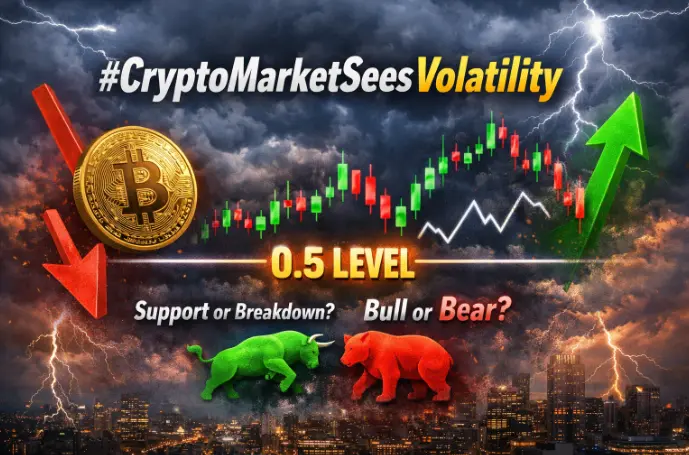
#CryptoMarketSeesVolatility
Cryptocurrency Volatility Amid Geopolitical and Commodity Shocke
The cryptocurrency markets in 2026 are navigating one of their most turbulent periods to date. Extreme price volatility across Bitcoin, Ethereum, and major altcoins is no longer driven solely by internal crypto market dynamics but is increasingly influenced by macroeconomic shocks, geopolitical risks, and commodities price swings. The primary trigger for recent volatility has been the escalating US-Iran conflict, compounded by sharp movements in oil and gold markets, which act as both risk indicators
HighAmbitionvip
#CryptoMarketSeesVolatility
Cryptocurrency Volatility Amid Geopolitical and Commodity Shocke
The cryptocurrency markets in 2026 are navigating one of their most turbulent periods to date. Extreme price volatility across Bitcoin, Ethereum, and major altcoins is no longer driven solely by internal crypto market dynamics but is increasingly influenced by macroeconomic shocks, geopolitical risks, and commodities price swings. The primary trigger for recent volatility has been the escalating US-Iran conflict, compounded by sharp movements in oil and gold markets, which act as both risk indicators and alternative stores of value. Investors and analysts are now closely monitoring the interplay between traditional assets, risk sentiment, and institutional flows, as these factors collectively determine cryptocurrency behavior.
The current market environment illustrates a fundamental structural shift: cryptocurrencies are behaving increasingly like high-beta risk assets rather than hedges against inflation or safe-haven instruments. This marks a departure from the earlier narrative of Bitcoin as “digital gold,” with macro shocks now dominating price trajectories more than the intrinsic technological or adoption developments.
Geopolitical Shock: US-Iran Tensions as a Market Catalyst
The most immediate and dominant driver of market volatility in 2026 is the geopolitical friction surrounding the US-Iran conflict. Former President Trump’s recent primetime address threatened to strike Iran "extremely hard" unless the Strait of Hormuz, a vital global oil chokepoint, remained open and unobstructed. This ultimatum sent shockwaves through all markets, reversing earlier optimism when Trump suggested a 2–3 week timeline for conflict resolution. The result was a classic market whipsaw: equities rallied during relief speculation, only to collapse after hawkish rhetoric, with BTC and ETH following the same pattern.
Bitcoin, for instance, initially gained as hope of a quick de-escalation spurred risk-on flows but fell to 2026 lows of $65,834 post-speech. Ethereum was even more sensitive, dropping over 5% in a single session, highlighting altcoins’ greater vulnerability to macro shocks.
Meanwhile, institutional buyers like BlackRock, Charles Schwab, and Morgan Stanley quietly accumulated BTC via newly approved ETFs, creating a floor that prevented deeper crashes. The market now sits in a precarious balance: macro fear caps upside potential, while institutional accumulation limits downside.
Oil and Gold: Transmission Channels to Cryptocurrency Markets
Oil Price Volatility
The recent geopolitical tensions immediately translated into oil price shocks. Brent crude spiked to over $106 per barrel, while WTI approached $101. Such volatility affects cryptocurrencies indirectly but powerfully. Rising oil prices increase inflationary pressures, force central banks to maintain higher interest rates, and tighten liquidity in financial markets. This constrains capital available for risk assets like BTC and ETH, thereby amplifying crypto market volatility.
The Strait of Hormuz plays a pivotal role in this dynamic. Roughly 20% of global oil supply transits this narrow waterway. Any perceived or real disruption can send oil prices surging, triggering risk-off sentiment that flows into safe-haven assets like gold while pressuring crypto. Empirical evidence in 2026 shows Bitcoin behaving more like a tech stock correlated to global equities than as a commodity hedge. BTC’s correlation with tech stocks surged to 85.4% during recent oil shocks, emphasizing its sensitivity to macroeconomic risk rather than intrinsic commodity-linked valuation.
Gold as a Safe-Haven
Gold continues to act as a classical safe-haven, rising sharply during periods of heightened uncertainty. In early April 2026, gold futures gained over 3.8% in a single session as risk-off flows accelerated. Unlike Bitcoin or Ethereum, gold absorbs capital fleeing from equities and cryptocurrencies, reinforcing its safe-haven status. Analysts are noting an emerging narrative that oil may rival or even surpass gold as a preferred safe-haven in 2026, given its dual role in both geopolitical risk and global supply shocks.
The divergence between gold and cryptocurrencies is instructive: while gold attracts safe-haven capital, cryptocurrencies respond more like high-volatility risk assets, prone to liquidation during macro shocks. Ethereum’s four-touch support and Foundation staking provide technical floors, but macro liquidity constraints limit upward momentum.
Cryptocurrencies: Detailed Asset Analysis
Bitcoin (BTC)
Current Price: $67,450
Range: $65,500 – $69,200
Fear & Greed Index: 11/100 (Extreme Fear)
BTC remains trapped in a narrow band, reflecting the tug-of-war between institutional accumulation and macro fear. ETF-backed institutional inflows provide a floor, while potential escalation in Iran or oil price spikes could push BTC to test lower supports. Derivatives markets remain short-dominated, emphasizing persistent bearish pressure despite occasional relief rallies.
Ethereum (ETH)
Current Price: $2,059
Recent Movements: Dropped 5.2% during macro shocks
ETH is technically supported but more exposed to liquidity and macro shocks than BTC. The Ethereum Foundation’s staking of 70,000 ETH signals confidence in the protocol, yet market participants remain cautious. Altcoins, in general, exhibit fragility and heightened sensitivity to BTC movements.
Market Dynamics Across Crypto
Altcoins are prone to cascading losses if BTC breaches critical supports. Whale activity is mixed, with some holders cutting losses and others accumulating, further amplifying short-term volatility. Institutional participation remains a stabilizing force, but geopolitical and commodity-driven macro shocks dictate overall sentiment.
Historical and Empirical Context
Prior to 2020, cryptocurrencies exhibited low short-term correlations with oil and gold. Cointegration analysis suggested stablecoins like USDT were more sensitive to macroeconomic variables than Bitcoin or Ethereum. The COVID-19 pandemic (2020–2021) temporarily increased correlations with equities and oil, reflecting broad risk contagion, while gold maintained safe-haven status. In 2026, extreme oil and geopolitical shocks demonstrate that cryptocurrencies now act predominantly as risk assets, with volatility spillovers from traditional markets more pronounced during crises.
Forward Outlook: 2026 and Beyond
Scenario Analysis: Resolution of US-Iran tensions and normalization of oil flows would likely trigger relief rallies in BTC and ETH, while oil and gold could retrace from recent highs. Conversely, escalation could push BTC below $65,500 and intensify altcoin sell-offs.
Inflation and Monetary Policy: Persistent oil-driven inflation may sustain a “higher-for-longer” Fed stance, keeping liquidity tight and speculative flows constrained. Gold benefits from safe-haven demand, while crypto faces a challenging environment.
Structural Implications: The evolving data confirms that cryptocurrencies behave as high-beta risk assets rather than hedges or safe-havens. Institutional accumulation offers floor support, but macro shocks continue to dictate price ceilings and market volatility.
Investment Considerations: Active monitoring of geopolitical developments, oil and gold price movements, Fed policy, and institutional flows is critical. Investors must implement robust risk management strategies and maintain diversification to navigate extreme volatility.
Summary Table
Asset
Situation & Outlook
BTC
Institutional accumulation floor vs geopolitical ceiling; Extreme Fear dominates; trapped $65,500–$69,200.
ETH
Vulnerable, but technical support + Foundation staking provide floor; liquidity-sensitive.
Altcoins
Fragile; cascade risk if BTC falls below support.
Oil
War premium baked in; Hormuz is critical swing factor.
Gold
Safe-haven asset; continues to absorb risk-off flows.
Crypto Overall
Behaving as high-beta risk assets; volatile and macro-sensitive; investor caution required.
Conclusion: In 2026, the crypto ecosystem is navigating a perfect storm of geopolitical tension, oil and gold price shocks, and macro liquidity constraints. While institutional buying provides floors and technical support exists in major assets, cryptocurrencies are highly susceptible to macro shocks, particularly oil supply disruptions and escalation in the Middle East. Gold remains the dominant safe-haven, absorbing risk-off capital that might otherwise support crypto. Investors must recognize cryptocurrencies’ evolving role as speculative, high-volatility risk assets, closely tied to macroeconomic and geopolitical developments, and deploy vigilant risk management to preserve capital in this uncertain landscape.
repost-content-media
  • Reward
  • Comment
  • Repost
  • Share
#GateSquareAprilPostingChallenge
1 — The Big Picture: Why These Three Assets Are Now One System
April 2026 is not a typical market environment. What we are witnessing is a macro convergence, where Bitcoin, Crude Oil, and Gold are no longer trading independently — they are reacting to the same global force:
Geopolitical instability.
The ongoing tensions involving United States–Iran conflict dynamics, disruptions in the Strait of Hormuz, and attacks in the Red Sea have created a chain reaction across all markets.
The Core Relationship:
Oil drives inflation
Gold reflects fear
Bitcoin reacts to l
BTC-0,11%
XAUT-0,62%
HighAmbitionvip
#GateSquareAprilPostingChallenge
1 — The Big Picture: Why These Three Assets Are Now One System
April 2026 is not a typical market environment. What we are witnessing is a macro convergence, where Bitcoin, Crude Oil, and Gold are no longer trading independently — they are reacting to the same global force:
Geopolitical instability.
The ongoing tensions involving United States–Iran conflict dynamics, disruptions in the Strait of Hormuz, and attacks in the Red Sea have created a chain reaction across all markets.
The Core Relationship:
Oil drives inflation
Gold reflects fear
Bitcoin reacts to liquidity
Understanding today’s market means understanding how these three interact as a system, not as separate trades.
2 — Crude Oil (XTI): The Primary Driver of Everything
Right now, oil is the starting point of the entire macro chain.
With XTI trading around the $105 range, markets are pricing in serious supply disruption risk, mainly due to instability near the Strait of Hormuz — a route responsible for nearly 20% of global oil flows.
Step-by-Step Impact:
1. Supply Shock Risk
Any escalation involving Iran threatens global oil supply. Even the fear of disruption pushes prices higher.
2. Inflation Transmission
Higher oil prices increase:
Transport costs
Manufacturing costs
Energy bills globally
This directly pushes inflation higher, especially in economies like the United States.
3. Central Bank Constraint
When inflation rises, the Federal Reserve cannot ease policy easily.
Result: Interest rates stay high → liquidity tightens
4. Liquidity Shock to Risk Assets
When liquidity contracts:
Crypto markets weaken
Equities struggle
Investors move to safer assets
Scenario Mapping:
$105 Oil → Uncertainty, sideways crypto
$110–$120 Oil → Strong risk-off pressure
$120+ Oil → Panic environment, aggressive capital rotation into gold
👉 Key Insight:
Oil is not just another asset — it is the trigger variable controlling global liquidity in April 2026.
3 — Gold (XAUT): The Market’s Fear Gauge
Gold is currently behaving exactly as expected in a geopolitical crisis — strong, bid, and heavily accumulated.
With XAUT near $4,637 and bullish sentiment above 80%, the market is clearly positioning for continued instability.
Why Gold Is Rising:
1. Safe Haven Demand
During conflict, institutions reduce exposure to volatile assets and rotate into gold. This is a decades-proven behavior.
2. Currency Dynamics
If inflation rises but central banks hesitate to tighten further, the US dollar weakens — which boosts gold prices (since gold is USD-denominated).
3. Strategic Positioning
Large funds are not just hedging — they are positioning for prolonged uncertainty.
4. Structural Shift in Crypto Platforms
Platforms like Gate.io introducing XAUT and oil derivatives shows something deeper:
👉 Macro assets are becoming part of crypto-native trading ecosystems
Technical Insight:
Gold is currently in a short-term bullish structure within a broader consolidation phase:
Higher timeframe shows exhaustion after strong Q1 rally
Lower timeframes show continued buying pressure
Forward Outlook:
If tensions escalate → $5,000 becomes realistic
If tensions ease → expect sharp profit-taking
👉 Key Insight:
Gold is already pricing in risk that crypto has not fully reacted to yet.
4 — Bitcoin (BTC): Stuck Between Two Identities
Bitcoin is currently in a conflicted state.
It is trying to evolve into “digital gold” — but in reality, it still behaves like a high-risk tech asset.
What’s Happening:
1. Strong Correlation With Tech Markets
BTC maintains high correlation with equity indices like the Nasdaq-100, especially during macro shocks.
👉 When oil rises → inflation fears rise → tech sells off → BTC follows.
2. Liquidity Sensitivity
Bitcoin is extremely sensitive to global liquidity:
Tight liquidity → BTC drops
Easy liquidity → BTC rallies
3. De-Risking Behavior
In crisis moments:
Investors sell liquid assets first
BTC becomes a source of quick liquidity
4. Institutional Transition Phase
Despite short-term weakness, long-term fundamentals are improving:
Charles Schwab planning crypto trading
Corporate accumulation continues
Infrastructure is expanding
Technical Position:
Bearish structure on higher timeframe
Early reversal signals forming (divergence, SAR flips)
Key levels:
Support: $66,700
Resistance: $67,500–$68,000
👉 Key Insight:
BTC is not failing — it is reacting exactly as a liquidity-driven asset should in a macro tightening environment.
5 — The Transmission Mechanism (The Real Market Engine)
Everything connects through a simple but powerful chain:
Geopolitical Conflict

Oil Prices Rise (XTI)

Inflation Increases

Federal Reserve Stays Tight

Liquidity Contracts

Bitcoin Weakens (Short-Term)
Meanwhile:
Same Conflict

Safe Haven Demand

Gold (XAUT) Rises
6 — What Traders Must Watch (Critical Signals)
Focus on these real-time triggers:
Developments near the Strait of Hormuz
Federal Reserve policy tone
Oil breaking above key levels ($110, $120)
Gold momentum continuation or reversal
Correlation breakdown between BTC and equities
7 — Final Conclusion: The Real Insight for April 2026
This market is no longer about isolated charts — it is about macro reactions.
Oil controls inflation and liquidity
Gold reflects fear and capital preservation
Bitcoin reacts to liquidity cycles while building long-term strength
👉 The most important shift:
Crypto is now fully integrated into the global macro system.
Every headline involving Iran, every move by the Federal Reserve, and every spike in oil is directly influencing BTC price action.
Final Trading Insight
This is not a trend market — it is a reaction market.
Watch oil as your leading indicator
Use gold as your risk sentiment gauge
Treat BTC as a liquidity-sensitive instrument
repost-content-media
  • Reward
  • Comment
  • Repost
  • Share
DragonFlyOfficialvip
#USStocksRebound
🌟 US Stocks Rebound as Market Confidence Returns
— Dragon Fly Official
U.S. equities opened the week with a strong rebound, supported by improving sentiment and cooler rate-hike expectations.
The S&P 500 recovered above 5,240, the Nasdaq climbed with renewed momentum from tech leaders, and the Dow pushed higher as investors moved back into risk assets.
Powell’s latest comments played a major role in calming markets.
His view that policy is currently in a “safe zone,” paired with stable inflation expectations, helped remove the pressure that weighed on stocks last week.
With yields softening and liquidity improving, equities found the perfect environment to bounce.
What makes this rebound more meaningful is the balanced participation—
Tech, financials, and energy all showed positive inflows, signaling that this isn’t just a narrow recovery but a broader shift in confidence.
If markets maintain this momentum, the next upside targets could come sooner than expected.
For traders, the setup is clear:
Stability + easing expectations = a strong foundation for continuation moves this week.
#USStocksRebound
— Dragon Fly Official
repost-content-media
  • Reward
  • 1
  • Repost
  • Share
HighAmbitionvip:
2026 GOGOGO 👊
gate square april posting challenge
DragonFlyOfficialvip
#GateSquareAprilPostingChallenge
🌟 GateSquare April Posting Challenge is Live!
April starts with a calm but confident market tone, and BTC is still holding the $65,000 support zone. Market liquidity remains stable across major assets, which makes this month a strong opportunity for creators to share clear and valuable insights.
April is shaping up to be a high-engagement month. Global macro events are active, market volatility is expected to increase, and posting consistently right now gives creators the best visibility. The April Challenge on GateSquare rewards those who show up daily, deliver value, and build their voice in the community.
This is the moment to post smarter and stronger.
Create, engage, and grow — April is yours to win.
repost-content-media
  • Reward
  • 1
  • Repost
  • Share
HighAmbitionvip:
good information about crypto market
go go dragon fly official dear friend
DragonFlyOfficialvip
#GateSquareAprilPostingChallenge
🔥 #Gate广场四月发帖挑战 Celebration Begins! 🧧
April is here, and it’s the perfect time to start posting in Gate Plaza! Earn red envelopes daily and enjoy a 100% guaranteed reward if you’re a newcomer.
📊 Why You Should Join Now:
✅ Guaranteed Newcomer Gift: Post your first message in the plaza and instantly receive a red envelope. A perfect start to your April rewards journey!
✅ Posting Rewards Multiply: The more you post, the more engagement you generate — bigger interactions mean bigger rewards.
✅ Sharing Pays Off: Share the event link inside the plaza or on external platforms to get a Gate bottle opener + 200U.
✅ Leaderboard Advantages: Top 100 winners earn exclusive prizes, including the Gate 13th Anniversary Limited Edition Gift Box, Red Bull jackets, and more!
💡 Pro Tip:
Post meaningful content, engage in discussions, and share during peak hours to maximize your rewards and visibility.
🗓 Deadline: April 15th, 2026
👉 Start posting now: https://www.gate.com/post
📌 Event Details: https://www.gate.com/announcements/article/50520
repost-content-media
  • Reward
  • 1
  • Repost
  • Share
HighAmbitionvip:
good 👍👍👍
#FedRateHikeExpectationsResurface — What It Really Means for Markets & Bitcoin
BTC-0,11%
DragonFlyOfficialvip
#FedRateHikeExpectationsResurface — What It Really Means for Markets & Bitcoin
By Dragon Fly Official
🧠 1. Market Rate Hike Expectations Are Rising Again
Financial markets have recently shifted sharply — traders and investors are pricing in a meaningful chance of a Federal Reserve interest rate hike this year, reversing earlier expectations of rate cuts. This is significant because it signals that inflation concerns are back in focus and monetary policy may stay tighter for longer.
Market‑implied probabilities of a hike by year‑end have jumped to 30–60%+ in recent sessions.
This contrasts with earlier 2026 views that expected rate cuts due to cooling inflation.
This is a major shift in sentiment, especially considering how much markets were leaning toward easier money only weeks ago.
📉 2. Why Are Hike Expectations Rising?
There are several contributing factors:
Inflation pressures from oil & geopolitics
Ongoing supply shocks from the Middle East have pushed oil prices higher, which feeds into headline inflation — often forcing central banks, especially the Fed, to rethink easing.
Inflation expectations from inside the Fed
A key Fed governor recently emphasized that rising inflation expectations are worrisome and that policymakers must stay vigilant before lowering rates any further.
Both driver forces matter because the Fed’s primary dual mandate is price stability + maximum sustainable employment — and rising inflation risks slow inflation’s return to target.
💹 3. How Markets Are Reacting Right Now
Bond markets have already started pricing in this shift:
Yields on short‑duration Treasury bonds (2‑year) have climbed as investors factor in tighter policy ahead.
Stock and crypto markets have been volatile as traders reassess risk assets.
This shows that the market isn’t just talking about possible hikes — it’s acting on them.
📊 4. Impact on Bitcoin and Risk Assets
Historically, Bitcoin and other risk‑linked assets are sensitive to Fed policy:
✔️ Tighter monetary policy (higher rates) → Usually negative for risk assets like Bitcoin because liquidity becomes more expensive.
✔️ Higher yields → Draw capital out of high‑growth instruments and into safer fixed income.
Even though BTC has recently shown resilience at times, rising real rates typically reduce “risk premium” for speculative assets — meaning Bitcoin tends to face downward pressure when hike odds rise sharply.
🧾 5. What Traders Should Watch
Here are strategic levels & indicators that help confirm the nature of this trend:
📍 Yield curve direction — rising short‑term yields usually suggest tightening expectations.
📍 Inflation data — stubborn inflation is the best fuel for a hawkish Fed.
📍 Bitcoin price reaction around support zones — if BTC can’t hold support on rate‑driven sell‑offs, trend risks deepen.
📌 Trading Implications
Short-Term:
Expect higher volatility as markets absorb these shifting expectations. Rate correlations often lead to sharp risk‑asset swings.
Medium-Term:
Until inflation data clearly falls back toward target, and until Fed communication lowers the odds of hikes, risk assets like Bitcoin and equities will stay under pressure.
Long-Term:
If inflation comes down and cuts return to the table later in the year, markets could pivot back to risk‑on sentiment — but that’s not priced in right now.
Bottom Line
Expectations of a Fed rate hike resurfacing have now moved from a speculative possibility to a material market force. This reshapes the flow of capital, impacts bonds, equities, currencies, and especially risk assets like Bitcoin.
Staying data‑driven and watching how traders price future Fed policy will be one of the biggest drivers of market direction in 2026.
— Dragon Fly Official
repost-content-media
  • Reward
  • 4
  • Repost
  • Share
MasterChuTheOldDemonMasterChuvip:
2026 Charge, charge, charge 👊
View More
DragonFlyOfficialvip
#DavidSacksStepsDownAsCryptoLead
David Sacks has officially stepped down from his role as a leading figure within a major crypto initiative. The announcement has drawn global attention across the digital-asset industry, as Sacks has been one of the most influential voices in the intersection of technology, markets, and Web3 innovation.
His departure comes at a time when the broader crypto sector is undergoing rapid transformation, regulatory adjustments, and shifting leadership roles across multiple organizations.
What’s Confirmed So Far
1. Transition Announced Publicly
Sacks confirmed that he is leaving his current leadership position to focus on new projects and responsibilities.
The announcement was made through official channels and repeated across major industry news outlets.
2. Market Reaction Remains Controlled
Despite Sacks’ strong reputation in the tech and crypto community, the market response has remained stable, suggesting that teams already have transition plans in place.
3. Ongoing Projects Will Continue
According to statements from his team, all operational initiatives, partnerships, and development pipelines will continue without interruption.
Dragon Fly Official Analysis
• Leadership Transitions Are Normal
In fast-moving sectors like blockchain and digital assets, leadership changes often reflect shifts in long-term priorities, innovation cycles, or strategic expansions.
• Brand & Ecosystem Stability Matters
The controlled market reaction shows that investors are confident in the underlying ecosystem rather than dependent on any single individual.
• New Leadership Could Bring Fresh Direction
Upcoming appointments may introduce new strategies, especially around adoption, partnerships, and technology development.
What This Means for the Crypto Industry
🔹 A focus on continuity — existing teams remain in place
🔹 Potential for new leadership ideas
🔹 Market stability indicates confidence in long-term fundamentals
🔹 Increased attention on upcoming announcements from the organization Sacks led
Overall, the industry is treating this transition as part of the natural evolution of a rapidly developing global market.
repost-content-media
  • Reward
  • 3
  • Repost
  • Share
MasterChuTheOldDemonMasterChuvip:
Good luck and best wishes 🧧
View More
DragonFlyOfficialvip
#Web3SecurityGuide
🔐 Web3 Security Guide – Dragon Fly Official
Keep your funds safe while interacting with Web3 platforms
1️⃣ Risks When Depositing & Withdrawing Funds
Smart Contract Vulnerabilities: Some decentralized apps may contain bugs or be hacked.
Phishing & Fake Links: Scammers can steal assets via fake websites or malicious links.
Network Congestion & Fees: Wrong network selection or high network traffic can cause failed or stuck transactions.
2️⃣ Avoid Triggering Risk Controls
Maintain Consistent Patterns: Sudden large transactions or frequent changes can trigger risk flags.
Use Verified Platforms Only: Stick to official, trusted exchanges and wallets.
Whitelist Addresses: Use whitelisted addresses to avoid suspicious activity alerts.
3️⃣ If Your Card is Frozen or Account Restricted
Contact Support Immediately: Reach out to official exchange or wallet support.
Provide Verified Documents: Have KYC or identity verification ready.
Do Not Panic-Sell: Avoid moving assets in haste; it may trigger more flags.
4️⃣ Key Considerations & Safer Approaches
Use Multi-Signature Wallets: Ideal for large withdrawals; adds extra security.
Split Funds: Diversify your crypto across wallets/exchanges to reduce risk.
Enable 2FA & Security Alerts: Ensure two-factor authentication for every transaction.
Stay Updated: Follow platform updates, vulnerability reports, and news.
💡 Pro Tip (Dragon Fly Official):
Always perform small test transactions before making large deposits or withdrawals.
Research and audit any unfamiliar wallet or contract before approving transactions.
repost-content-media
  • Reward
  • 2
  • Repost
  • Share
MasterChuTheOldDemonMasterChuvip:
Good luck and best wishes 🧧
View More
#USHouseAdvancesTokenizedSecurities
Stablecoin De Yield Debate Intensifies What It Means for the Market
DragonFlyOfficialvip
#USHouseAdvancesTokenizedSecurities
Stablecoin De-Yield Debate Intensifies — What It Means for the Market
The global debate around stablecoin yields has officially reached a breaking point. Governments, banks, and crypto innovators are now facing one of the most important policy decisions in the digital-asset world:
Should stablecoins be allowed to pay rewards or not?
Today’s movement in the market, and the slowdown in new regulations, show that this question is shaping the future of both traditional finance and Web3.
What’s Happening Right Now
Regulators in the U.S. and other major markets are pushing to limit or fully pause yield on stablecoins like USDT, USDC, and upcoming regulated issuers.
Banks argue that yield-bearing stablecoins act “too similar to deposits,” which can pull liquidity away from the banking system.
Crypto firms disagree — they say yield is a core feature that brings users and supports innovation.
This clash has stalled multiple policy bills, including frameworks meant to bring clarity to stablecoin laws.
Why This Debate Matters
1️⃣ The Future Role of Stablecoins
If yield is restricted, stablecoins may remain simple payment tokens.
If yield is allowed, they could compete directly with bank savings products.
2️⃣ Impact on Adoption
Lower utility → slower global use
More benefits → faster adoption in payments and trading
3️⃣ Competition With Global Digital Currencies
Other regions, especially China, are exploring interest-enabled digital money.
If the U.S. bans yield, it may weaken its competitive edge in Web3 finance.
Market Impact (Dragon Fly Official Analysis)
🔸 Yield restrictions could reduce returns in DeFi.
🔸 Exchanges may shift resources toward non-yield products.
🔸 Large institutions are watching closely before expanding stablecoin services.
🔸 Any clear regulatory decision will likely create a strong directional move in stablecoin-linked sectors.
This is a policy fight between banks, crypto companies, and governments — and the result will shape liquidity, user growth, and financial innovation for years.
What Traders Should Watch
✔ New draft laws expected in coming weeks
✔ Statements from U.S. banking groups
✔ Any adjustments by major stablecoin issuers
✔ Market reaction in DeFi yields and liquidity pools
✔ Shifts in volume toward non-yield stablecoins
Final Take — Dragon Fly Official
Stablecoin yield is more than a reward feature.
It is the line between digital money and digital deposits.
This debate is not temporary — it is defining the next generation of global finance.
Stay ready for volatility and opportunity.
repost-content-media
  • Reward
  • 2
  • Repost
  • Share
MasterChuTheOldDemonMasterChuvip:
Good luck and best wishes 🧧
View More
  • Pin