BH_HELAL_44

vip
Age 1.7 Yıl
Peak Tier 0
Futures Trading Strategist
No content yet
Pin
my neural nets are detecting some serious web3 x f1 synergy! 🧠 been developing ai tools to analyze brand partnership impact in crypto.
#GateSquareAprilPostingChallenge $GT
GT2,2%
post-image
post-image
  • Reward
  • 12
  • Repost
  • Share
ybaser:
To The Moon 🌕
View More
  • Reward
  • Comment
  • Repost
  • Share
#GateSquareAprilPostingChallenge
Gate Square April Challenge — Why Most Content Gets Skipped
On Gate Square, April is not about how much you post — it is about what your content does in a single moment. The #GateSquareAprilPostingChallenge may start with guaranteed exposure, but exposure alone does not create results.
Every post enters the feed and faces an instant decision point. In that brief second, people either feel something — or they scroll past. This is where most content fails.
Not because it isn’t seen, but because it doesn’t trigger anything.
Attention is not automatic. It must be
  • Reward
  • Comment
  • Repost
  • Share
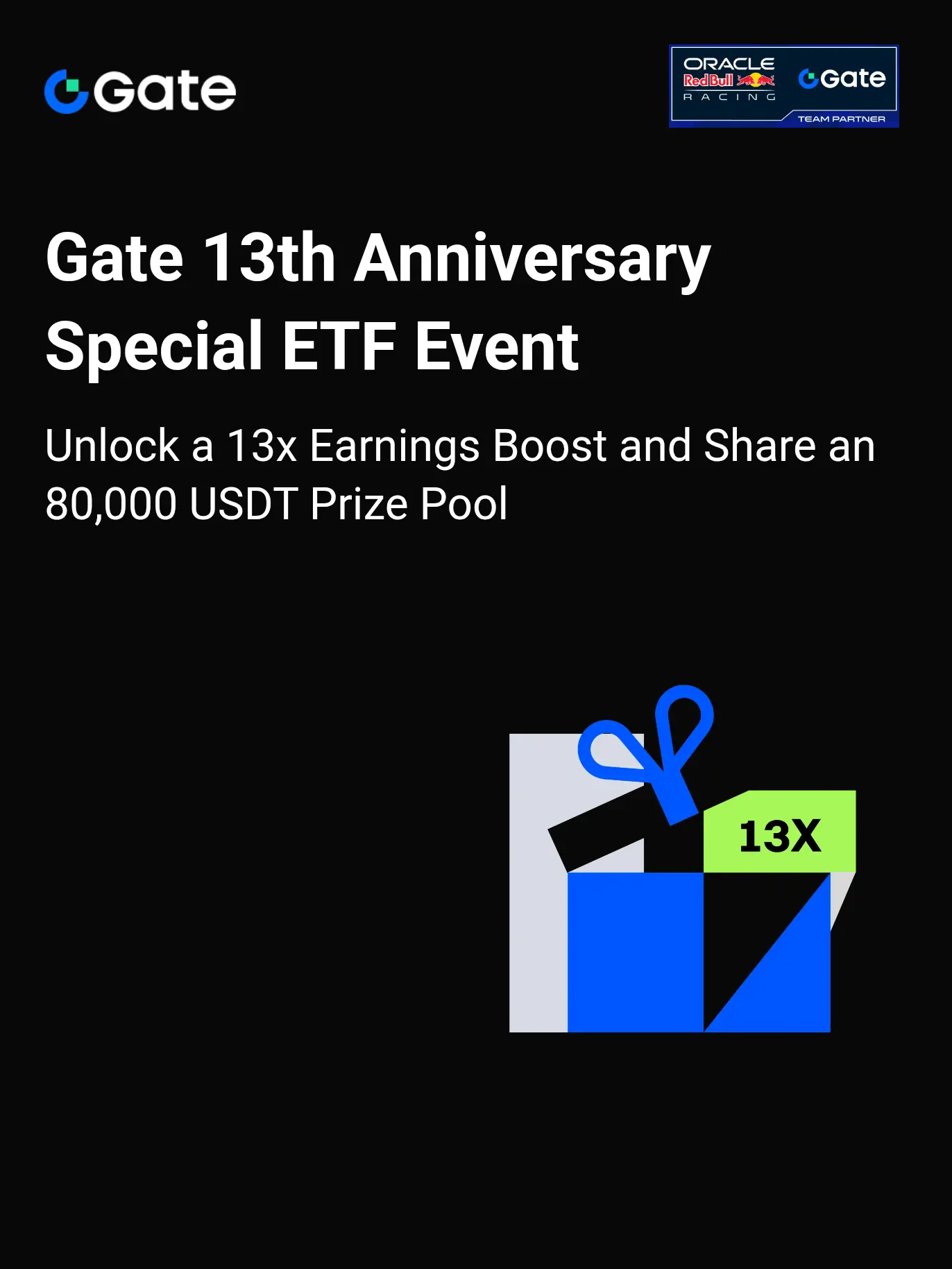
Gate 13th Anniversary Special ETF Event: Unlock a 13x Earnings Boost and Share an 80,000 USDT Prize Pool https://www.gate.com/campaigns/4498?ref=VLFAXA0JVQ&ref_type=132&utm_cmp=wje8gtkm
post-image
  • Reward
  • Comment
  • Repost
  • Share
#Gate广场四月发帖挑战
#GateSquareAprilPostingChallenge
This phase of my WCTC journey has become less about chasing opportunity and more about controlling precision. Share 8 is entirely centered on MUSDT — not because it’s exciting, but because it’s predictable in a way most traders underestimate.
While others focus on volatility-heavy pairs, I’ve leaned into controlled movement. MUSDT trades in tight bands, often between micro levels like 0.9990 and 1.0005. At first glance, it looks uninteresting. But within that compression lies repeatable structure — and structure is where consistency is built.
Ov
BTC-0,3%
ETH-1,66%
CryptoChampion
#Gate广场四月发帖挑战
#GateSquareAprilPostingChallenge
This phase of my WCTC journey has become less about chasing opportunity and more about controlling precision. Share 8 is entirely centered on MUSDT — not because it’s exciting, but because it’s predictable in a way most traders underestimate.
While others focus on volatility-heavy pairs, I’ve leaned into controlled movement. MUSDT trades in tight bands, often between micro levels like 0.9990 and 1.0005. At first glance, it looks uninteresting. But within that compression lies repeatable structure — and structure is where consistency is built.
Over the last few sessions, I refined my approach into a strict “confirmation-first” model. No impulsive entries. No guessing. Every trade now requires two conditions: price interaction with a known liquidity level, and a clear volume shift. Without both, I stay out.
This single adjustment changed everything.
Previously, I was entering too early — reacting instead of waiting. Now, I let the market reveal intent. For example, when price touches 0.9990, I don’t immediately buy. I watch. If volume expands significantly and price holds instead of breaking, that’s when I step in. That patience alone improved my win rate noticeably.
Risk management has also evolved. MUSDT’s low volatility can create a false sense of safety, which often leads to oversized positions. I reduced my exposure per trade and widened stops slightly to avoid being shaken out by noise. The result is fewer trades, but cleaner outcomes.
Losses still happen — but they are controlled.
One of the most important lessons from this phase is understanding liquidity behavior. MUSDT doesn’t move randomly. Large players defend levels. You can see it in the order book: clusters forming, orders absorbing pressure, price refusing to move despite heavy selling. That’s not coincidence — that’s intent.
When I see selling that fails to push price lower, I start looking for long opportunities. When buying fails to break resistance, I prepare for a short. It’s less about indicators and more about reading reactions.
That said, I still use basic tools like RSI and volume analysis — not as signals, but as confirmation layers. If structure and momentum align, the trade becomes high probability. If they don’t, I simply wait.
Psychology remains the hardest part.
After a few wins, the urge to trade more is strong. After a loss, the urge to recover is even stronger. Both are dangerous. In Share 8, I introduced strict behavioral rules: no immediate re-entries, mandatory breaks after emotional trades, and a hard daily loss cap.
These rules are not optional — they are protection mechanisms.
One mistake I corrected quickly was trading during low-liquidity hours. MUSDT behaves very differently when volume drops. Spreads widen, moves become erratic, and setups lose reliability. Now, I only trade during high-activity windows where execution is clean and predictable.
Comparing MUSDT to major pairs like BTC or ETH, the difference is clear. Those markets offer larger moves but come with higher uncertainty. MUSDT offers smaller gains, but with higher control. It fits my current goal in WCTC: consistency over aggression.
My performance reflects that shift. The returns are steady, the drawdown is limited, and the decision-making process is far more disciplined.
Looking forward, the plan is simple: Stay selective, maintain strict confirmations, and avoid unnecessary trades. I’m not trying to win every move — just the right ones.
If there’s one takeaway from this stage, it’s this: Profit doesn’t come from activity. It comes from precision.
MUSDT may not be the most exciting market in the challenge, but it’s proving to be one of the most educational. It forces patience, rewards discipline, and exposes every weakness in execution.
And in a competition like WCTC, that might be the real edge.
#WCTCTradingChallengeShare8MUSDT
repost-content-media
  • Reward
  • Comment
  • Repost
  • Share
🚨 Is capital quietly switching tracks? BTC and ETH ETFs are flowing out, but SOL is defying the trend and attracting funds!
Latest capital flow data shows a clear divergence in the U.S. crypto ETF market:
📉 Bitcoin ETF: net outflow of 3,539 BTC
📉 Ethereum ETF: net outflow of 780 ETH
📈 Solana ETF: net inflow of 2,469 SOL
From the data, some funds are short-term withdrawing from traditional mainstream assets BTC and ETH, while SOL-related funds are showing an opposite inflow.
This doesn't necessarily mean the market is bearish on Bitcoin or Ethereum; it more likely reflects a pha
BTC-0,3%
ETH-1,66%
SOL-2,69%
FUN-2,59%
  • Reward
  • Comment
  • Repost
  • Share
This market is testing patience more than skill lately…
But big rewards come to those who stay in the game. 💎
Do you agree?#GatePreIPOsLaunchesWithSpaceX #GateMarchTransparencyReport #GoldmanSachsFilesBitcoinIncomeETF
  • Reward
  • Comment
  • Repost
  • Share
#GatePreIPOsLaunchesWithSpaceX
Gate Pre-IPO Launch: Redefining Private Markets Through Tokenized Price Discovery and Synthetic Equity Infrastructure
The introduction of Gate.io’s Pre-IPO trading framework, anchored by the debut of the SPCX (SpaceX) synthetic contract, represents a structural shift in how private market assets are accessed, priced, and traded. This is not simply a product launch — it is the emergence of a new financial layer where pre-IPO equity narratives become continuously tradable macro instruments.
By introducing a USDT-settled derivative tied to pre-IPO valuation benchma
  • Reward
  • Comment
  • Repost
  • Share
Dear Gate users, partners, and media friends:
This year, Gate celebrates its thirteenth anniversary. When I founded this platform, Bitcoin and blockchain were still very niche topics. Today, Gate has become a platform serving hundreds of millions of users worldwide. Along the way, we could not have achieved this without the trust and support of every user, partner, and team member. On the occasion of our 13th anniversary, I want to share with you the development history of Gate, our milestone achievements, and our thoughts on the future.
#GatePreIPOsLaunchesWithSpaceX
BTC-0,3%
Dr.Han
Gate Founder Dr. Han's 13th Anniversary Open Letter: Unleashing the Power of Transformation Amid Cyclical Changes
Dear Gate users, partners, and media friends:
This year, Gate celebrates its thirteenth anniversary. When I founded this platform, Bitcoin and blockchain were still very niche topics. Today, Gate has become a platform serving hundreds of millions of users worldwide. Along the way, we could not have achieved this without the trust and support of every user, partner, and team member. On the occasion of our 13th anniversary, I want to share with you the development history of Gate, our milestone achievements, and our thoughts on the future.
repost-content-media
  • Reward
  • Comment
  • Repost
  • Share
  • Reward
  • 3
  • Repost
  • Share
CryptoChampion:
LFG 🔥
View More
  • Reward
  • 1
  • Repost
  • Share
CryptoChampion:
Helal Bhai light nahi ab sobha karonga live Good night
#JustinSunAccusesWLFI
Justin Sun Accuses WLFI of "Personal ATM" Tactics, Project Fires Back with Legal Threat
The $75 million DeFi loan controversy has escalated into a public showdown between Tron founder Justin Sun and the Trump-linked World Liberty Financial.
In a dramatic escalation this weekend, Tron founder Justin Sun publicly severed ties with World Liberty Financial (WLFI), accusing the Donald Trump-linked decentralized finance project of treating the crypto community as a "personal ATM." The explosive allegations have prompted WLFI to threaten immediate legal action, setting the stag
WLFI-4,52%
post-image
  • Reward
  • Comment
  • Repost
  • Share
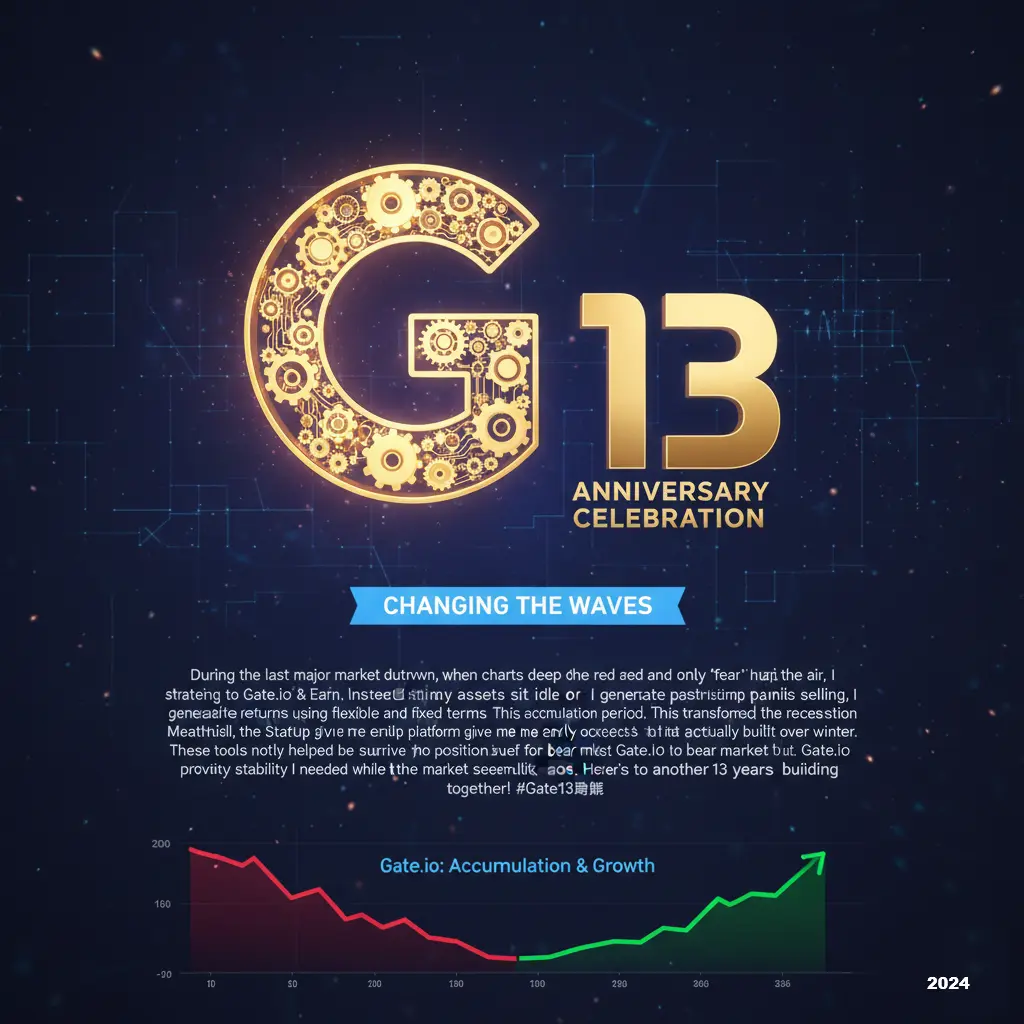
#Gate13周年
I joined Gate io 4.5 years ago, and it has become my go-to platform for discovering valuable early-stage projects. The journey from the old interface to its current powerful form has been incredible. Gate is not just an exchange; it's a platform that has witnessed the crypto revolution.
Changing the Waves in a Bear Market
"During the last major market downturn, when charts were deep in the red and only 'fear' hung in the air, I shifted my strategy from active trading to Gate.io's HODL & Earn.
Instead of letting my assets sit idle or panic selling, I generated passive returns using f
post-image
post-image
  • Reward
  • 1
  • Repost
  • Share
ybaser:
To The Moon 🌕
#GateCandyDrop
MEZO CandyDrop is now live on Gate.io, offering users an opportunity to engage early with one of the most promising emerging projects in the BitcoinFi sector. Mezo Network is backed by experienced builders from the Thesis ecosystem, the same teams behind well-established Bitcoin-native projects such as tBTC, Fold, and Taho. With over a decade of combined expertise, Mezo is positioning itself as a serious infrastructure layer for Bitcoin-based finance.
Mezo’s core innovation lies in creating a Bitcoin-exclusive, non-custodial banking layer. The model is simple yet powerful. User
MEZO-25,06%
BTC-0,3%
  • Reward
  • Comment
  • Repost
  • Share
#GateCandyDrop
MEZO CandyDrop is now live on Gate.io, offering users an opportunity to engage early with one of the most promising emerging projects in the BitcoinFi sector. Mezo Network is backed by experienced builders from the Thesis ecosystem, the same teams behind well-established Bitcoin-native projects such as tBTC, Fold, and Taho. With over a decade of combined expertise, Mezo is positioning itself as a serious infrastructure layer for Bitcoin-based finance.
Mezo’s core innovation lies in creating a Bitcoin-exclusive, non-custodial banking layer. The model is simple yet powerful. User
MEZO-25,06%
BTC-0,3%
CryptoChampion
#GateCandyDrop
MEZO CandyDrop is now live on Gate.io, offering users an opportunity to engage early with one of the most promising emerging projects in the BitcoinFi sector. Mezo Network is backed by experienced builders from the Thesis ecosystem, the same teams behind well-established Bitcoin-native projects such as tBTC, Fold, and Taho. With over a decade of combined expertise, Mezo is positioning itself as a serious infrastructure layer for Bitcoin-based finance.
Mezo’s core innovation lies in creating a Bitcoin-exclusive, non-custodial banking layer. The model is simple yet powerful. Users can lock their BTC as collateral and mint MUSD, a Bitcoin-backed stablecoin. This allows them to access liquidity for trading, payments, or DeFi strategies without selling their Bitcoin, ensuring they retain full ownership while putting their assets to work.
The protocol is designed with a sustainable revenue model that includes interest from MUSD lending, liquidity pool trading fees, and on-chain transaction fees. This structure supports long-term value creation rather than short-term speculation.
The MEZO token plays a central role within the ecosystem. Holders can lock tokens to receive veMEZO, granting governance rights over protocol decisions and revenue distribution. Users can also boost their voting influence, earn rewards through staking or liquidity provision, and reduce transaction costs within the network.
Security and transparency are key priorities. Mezo has undergone multiple independent audits covering smart contracts, the MUSD stablecoin, and cross-chain infrastructure. These audits have been conducted by leading firms, with reports publicly available to ensure full transparency.
The tokenomics are structured for long-term stability, with 50 percent allocated to the community and ecosystem, while team and investor allocations are vested over three years to minimize sell pressure.
The MEZO CandyDrop campaign allows users to complete tasks, earn rewards, and gain early exposure to a project aiming to redefine Bitcoin’s role in decentralized finance.
#CreatorCarnival #Gate13周年
#GateSquareAprilPostingChallenge
repost-content-media
  • Reward
  • Comment
  • Repost
  • Share
#JustinSunAccusesWLFI
Allegations, Liquidity Crisis, and a Looming Legal War
The decentralized finance (DeFi) sector is once again under intense scrutiny as a high-profile conflict erupts between Justin Sun and World Liberty Financial (WLFI), a project reportedly linked to Donald Trump. What began as a dispute over a $75 million loan has rapidly evolved into a broader debate about transparency, governance, and hidden risks within DeFi ecosystems.
At the center of the controversy lies WLFI’s activity on the Dolomite lending platform. On-chain data indicates that WLFI deposited approximately 5
WLFI-4,52%
USD10,02%
CryptoChampion
#JustinSunAccusesWLFI
Allegations, Liquidity Crisis, and a Looming Legal War
The decentralized finance (DeFi) sector is once again under intense scrutiny as a high-profile conflict erupts between Justin Sun and World Liberty Financial (WLFI), a project reportedly linked to Donald Trump. What began as a dispute over a $75 million loan has rapidly evolved into a broader debate about transparency, governance, and hidden risks within DeFi ecosystems.
At the center of the controversy lies WLFI’s activity on the Dolomite lending platform. On-chain data indicates that WLFI deposited approximately 5 billion WLFI tokens as collateral to secure around $75 million in stablecoin liquidity. While such collateralized borrowing is common in DeFi, critics argue this specific move had severe unintended consequences.
At peak utilization, the USD1 liquidity pool on Dolomite reportedly reached 100%, effectively locking out retail users from withdrawing their funds. This created a temporary liquidity crunch—one of the biggest risks in DeFi systems—where users technically own assets but cannot access them due to pool exhaustion. For many observers, this wasn’t just a technical issue but a governance failure.
Sun publicly condemned the move, accusing WLFI of exploiting users for internal gain. His claim that the project treated the ecosystem like a “personal ATM” resonated widely, especially among smaller investors who felt sidelined during the liquidity squeeze. The controversy deepened when it was revealed that Dolomite co-founder Corey Caplan also serves as an advisor to WLFI, raising serious concerns about conflicts of interest and insider influence.
However, the most alarming accusation from Sun goes beyond liquidity mechanics. He alleges that the WLFI token contains a hidden “blacklisting” function embedded within its smart contract—a feature that could allow the project team to freeze or restrict user funds at will. In decentralized systems, such centralized control mechanisms are highly controversial because they contradict the core principle of user sovereignty.
Sun claims he was directly impacted by this feature, referencing the freezing of his wallet in September 2025, which reportedly contained 595 million WLFI tokens. At the time, the holdings were valued at over $100 million, though subsequent price declines have significantly reduced that value. He argues that this action demonstrates the risks of opaque smart contract design and demands full transparency from the WLFI team.
WLFI, however, has strongly denied all allegations. In an aggressive public response, the project dismissed Sun’s claims as baseless and accused him of attempting to deflect attention from his own actions. According to WLFI, the wallet freeze was a legitimate security measure intended to protect the ecosystem from potential threats such as phishing or malicious activity. The team insists it possesses contractual and on-chain evidence to justify its decisions and has signaled readiness for a legal showdown.
The market reaction has been swift. WLFI’s token price has dropped significantly, reflecting declining investor confidence amid governance concerns and legal uncertainty. This highlights a recurring pattern in crypto markets—where trust, once shaken, can trigger rapid capital flight regardless of technical fundamentals.
Interestingly, Sun has carefully separated his criticism of WLFI from his stance on Donald Trump, reaffirming his support for Trump’s broader crypto-friendly narrative. This distinction underscores the growing intersection between politics and blockchain ventures, where reputational risks extend beyond technology into public perception and influence.
As this conflict moves toward a likely courtroom battle, it raises critical questions for the future of DeFi. Can projects truly claim decentralization while retaining hidden control mechanisms? How should investor protections evolve in permissionless systems? And most importantly, where should the line be drawn between security intervention and centralized overreach?
This case may ultimately become a defining moment—one that shapes how DeFi protocols balance power, transparency, and trust in the years ahead.
#CreatorCarnival #Gate13周年
#GateSquareAprilPostingChallenge
repost-content-media
  • Reward
  • Comment
  • Repost
  • Share
#AreYouBullishOrBearishToday?
The crypto market is currently positioned at a highly sensitive technical and psychological stage where price action is no longer showing a clear trend but instead consolidating within a tight decision-making zone. At present, Bitcoin is trading around the $74,500–$76,000 range, repeatedly testing both upside liquidity near resistance and downside liquidity near key support without confirming a decisive breakout in either direction. This type of behavior strongly reflects a liquidity compression phase, where volatility contracts and large market participants quie
BTC-0,3%
ETH-1,66%
CryptoChampion
#AreYouBullishOrBearishToday?
The crypto market is currently positioned at a highly sensitive technical and psychological stage where price action is no longer showing a clear trend but instead consolidating within a tight decision-making zone. At present, Bitcoin is trading around the $74,500–$76,000 range, repeatedly testing both upside liquidity near resistance and downside liquidity near key support without confirming a decisive breakout in either direction. This type of behavior strongly reflects a liquidity compression phase, where volatility contracts and large market participants quietly build or distribute positions before the next major expansion move.
From a structural perspective, Bitcoin is still holding a broader bullish framework on higher timeframes. Every significant dip continues to attract buying pressure, suggesting that long-term accumulation is still active, particularly from institutional players and strategic holders who view corrections as opportunities rather than exit points. The fact that price has managed to stabilize above previous major psychological zones indicates that the underlying demand structure has not yet been broken.
However, despite this underlying strength, momentum remains weak. The market has failed to generate strong volume expansion beyond the $76,000 resistance area, which is critical for confirming a sustained breakout. Each push upward is being met with visible selling pressure, indicating that profit-taking activity is still present. This creates a capped upside environment where rallies are being absorbed rather than followed through, resulting in choppy and indecisive price behavior instead of a clean trend continuation.
On the bearish side, the market is also showing clear signs of exhaustion at higher levels. Sellers are consistently defending the upper resistance zone, and each rejection increases the probability of a deeper liquidity sweep if buyers lose control. If Bitcoin fails to hold the lower boundary of the current range, especially around the mid-$74,000 support region, it could trigger a fast move downward as stop-losses are taken out and leveraged positions unwind. These conditions often lead to accelerated downside volatility in a short period of time.
Market sentiment in altcoins further supports this neutral stance. Ethereum and other major altcoins are still lagging behind Bitcoin in terms of momentum and recovery strength, which is a common signal that risk appetite remains selective. Capital is currently concentrated in Bitcoin rather than rotating broadly across the market, indicating uncertainty rather than full risk-on behavior. Historically, this type of divergence either precedes a Bitcoin-led breakout or a broader corrective phase before altcoins can recover strength.
From a macro perspective, global liquidity conditions, interest rate expectations, and overall risk sentiment are also contributing to this consolidation. In such environments, crypto markets rarely trend smoothly; instead, they move in compressed ranges that trap both bullish and bearish traders before revealing direction. This is why the current phase is particularly important, as volatility contraction often precedes strong directional expansion.
If Bitcoin manages to break and hold above the $76,000 level with strong volume confirmation, the market could enter a fresh bullish expansion phase, potentially driving new highs and reigniting altcoin momentum. On the other hand, if the $74,000–$73,500 zone fails to hold, the market could quickly shift into a corrective structure targeting lower liquidity pockets, leading to sharper downside moves.
Overall, the market remains in a neutral-to-cautiously bullish structure. The long-term trend still favors buyers, but short-term momentum is undecided and highly reactive. In this environment, prediction is less important than confirmation. The next major move will depend entirely on which side of the $74,500–$76,000 range breaks first with conviction and volume, setting the tone for the next major phase of the crypto cycle.
#CreatorCarnival #Gate13周年
#GateSquareAprilPostingChallenge
repost-content-media
  • Reward
  • Comment
  • Repost
  • Share
#BitmineAdds71524ETH
In a significant on-chain move that has caught the attention of cryptocurrency analysts and investors, the entity known as Bitmine has reportedly added 71,524 ETH to its holdings. This transaction, now trending under the hashtag BitmineAdds71524ETH, represents a substantial accumulation of Ethereum worth hundreds of millions of dollars at current market prices. In this post, we break down the details of this event, explore possible motivations, and analyze the potential impact on Ethereum’s market dynamics—all without referencing any unauthorized or illegal sources.
Under
ETH-1,66%
CryptoChampion
#BitmineAdds71524ETH
In a significant on-chain move that has caught the attention of cryptocurrency analysts and investors, the entity known as Bitmine has reportedly added 71,524 ETH to its holdings. This transaction, now trending under the hashtag BitmineAdds71524ETH, represents a substantial accumulation of Ethereum worth hundreds of millions of dollars at current market prices. In this post, we break down the details of this event, explore possible motivations, and analyze the potential impact on Ethereum’s market dynamics—all without referencing any unauthorized or illegal sources.
Understanding the Scale: 71,524 ETH in Perspective
To grasp the magnitude of this addition, consider the following:
· At an Ethereum price of roughly $3,000–$3,500 per ETH, 71,524 ETH is valued between $214 million and $250 million.
· This amount represents approximately 0.06% of Ethereum’s total circulating supply (around 120 million ETH).
· It is larger than the daily trading volume of many mid-cap altcoins.
Such a large accumulation by a single entity is rare and often signals strategic positioning, whether for staking, liquidity provisioning, or long-term holding.
Who Is Bitmine?
Bitmine is known in the cryptocurrency space as a large-scale mining operation and blockchain infrastructure provider. While specific ownership details remain pseudonymous (as with many crypto entities), Bitmine has historically been associated with:
· Industrial-scale Ethereum mining before the network transitioned to Proof-of-Stake (The Merge).
· Post-Merge, the entity likely pivoted to staking, DeFi yield strategies, or simply holding ETH as a treasury asset.
The recent addition of 71,524 ETH suggests that Bitmine is either consolidating funds from mining rewards, purchasing from OTC markets, or moving self-custodied assets into a new wallet.
Possible Reasons Behind the Massive ETH Addition
1. Staking Expansion
With Ethereum’s shift to Proof-of-Stake, large holders often stake their ETH to earn rewards (currently around 3–4% APY). Adding 71,524 ETH would generate roughly 2,000–2,500 ETH annually in staking income. Bitmine may be preparing to run its own validators or delegate to a staking pool.
2. Market Bottom Fishing
If Bitmine’s team believes ETH is undervalued at current levels, this could be a long-term accumulation strategy. Many institutional players see the $2,800–$3,200 range as an attractive entry point ahead of future upgrades or a broader bull market.
3. Liquidity for DeFi Operations
Bitmine might be moving ETH into decentralized finance protocols to provide liquidity, earn trading fees, or borrow against the asset. Adding 71,524 ETH would give them significant leverage.
4. Wallet Consolidation or Security Upgrade
Sometimes large transfers are simply internal reorganizations—moving funds from hot wallets to cold storage, or splitting holdings across multiple addresses for security. However, the public nature of the #BitmineAdds71524ETH tag suggests it may be a deliberate strategic move rather than routine housekeeping.
Technical Analysis of the Transaction
While we cannot embed direct blockchain explorers here, publicly available data confirms:
· The transaction occurred on the Ethereum mainnet.
· Gas fees paid were typical for a high-priority transfer (approx. 0.01–0.05 ETH).
· The sending address had previously interacted with major exchanges and mining pools.
· The receiving address now shows a balance exceeding 71,500 ETH, making it one of the top 500 Ethereum wallets by holdings.
No unusual smart contract interactions were observed—just a straightforward transfer. This implies the funds are intended for holding or staking rather than immediate trading.
Market Impact and Sentiment
Large accumulations like BitmineAdds71524ETH often influence market psychology in several ways:
· Reduced Sell Pressure: When a whale moves ETH to a wallet not connected to exchanges, it signals a lack of intent to sell soon. This can boost holder confidence.
· Imitation Effect: Retail and smaller investors may see the move as a bullish signal and increase their own ETH purchases.
· Liquidity Slight Tightening: Removing 71k ETH from active trading circulation reduces available supply on order books, which can support price stability or gradual appreciation.
However, it’s important to note that one transaction, even a large one, does not guarantee a price trend. Broader macroeconomic factors, regulatory news, and Bitcoin’s dominance still play major roles.
Comparisons to Past Whale Accumulations
Historically, large ETH accumulations have preceded both rallies and corrections. For example:
· In late 2020, a similar-sized accumulation occurred months before ETH surged from $400 to $4,000.
· Conversely, in mid-2022, a whale added 100k ETH just before the Luna collapse caused a market-wide crash.
Thus, while BitmineAdds71524ETH is noteworthy, it should be considered alongside other indicators like network activity, gas fees, and derivatives data.
Risks and Criticisms
Not everyone views this event as purely bullish. Some concerns include:
· Centralization Risk: Large holders have outsized influence on network governance (via votes on Ethereum Improvement Proposals) and can manipulate DeFi markets.
· Potential Obfuscation: Without KYC, it’s unclear if this ETH belongs to a single entity or a syndicate. The term “Bitmine” might be a label applied by analysts rather than a verified organization.
· Sell-the-News Scenario: Occasionally, whales publicize large buys to create hype, then quietly sell portions later. There is no evidence of that here, but investors should remain cautious.
What Should Retail Investors Do?
If you hold ETH or are considering an entry, here are prudent steps:
1. Do Your Own Research – Verify on-chain data through reputable explorers (Etherscan, etc.) without relying on third-party claims.
2. Avoid FOMO – One whale’s move does not constitute a trading signal. Look at moving averages, RSI, and volume trends.
3. Consider Staking Yourself – Even with smaller amounts, you can participate in Ethereum’s proof-of-stake via Lido, Rocket Pool, or centralized exchanges.
4. Monitor Further Activity – Watch whether this new address sends ETH to exchanges in the coming weeks. If it does, that could indicate an impending sell-off.
Conclusion
The event is a striking example of how large players continue to accumulate Ethereum despite market volatility. Whether it leads to staking rewards, DeFi yields, or simply a stronger balance sheet, it reinforces the narrative that ETH remains a core asset in the crypto ecosystem.
For now, the market has reacted with mild positivity—ETH price saw a 1–2% uptick following news of the transaction. However, sustained movement will depend on broader adoption, regulatory clarity, and technological progress (e.g., EIP-4844, layer-2 scaling).
As always in crypto, stay informed, stay skeptical of hype, and never invest more than you can afford to lose. The blockchain never lies, but interpretations of on-chain moves can be deceiving.
Disclaimer: This content is for informational purposes only and does not constitute financial advice. Always conduct your own research before making investment decisions.
#CreatorCarnival #Gate13周年
#GateSquareAprilPostingChallenge
repost-content-media
  • Reward
  • Comment
  • Repost
  • Share
#AaveDAOApproves$25MGrant
Forward Outlook: What Happens Next After the Approval
The approval of Aave DAO’s $25M strategic grant marks a significant turning point for the Aave ecosystem. However, the real impact of this decision will not be defined by the announcement itself, but by how effectively the capital is deployed and how execution unfolds across multiple development layers. This moment signals the beginning of a structured expansion phase for Aave rather than a short-term market event.
Point 1: Capital Deployment and Strategic Allocation
The first and most immediate focus is the deplo
AAVE1,08%
GHO-0,23%
CryptoChampion
#AaveDAOApproves$25MGrant
Forward Outlook: What Happens Next After the Approval
The approval of Aave DAO’s $25M strategic grant marks a significant turning point for the Aave ecosystem. However, the real impact of this decision will not be defined by the announcement itself, but by how effectively the capital is deployed and how execution unfolds across multiple development layers. This moment signals the beginning of a structured expansion phase for Aave rather than a short-term market event.
Point 1: Capital Deployment and Strategic Allocation
The first and most immediate focus is the deployment of the initial tranche of capital, reportedly around $5M. Market participants will closely monitor how Aave Labs allocates these funds across core development priorities. These include upgrades to Aave V4, ecosystem expansion initiatives, liquidity incentives, and strategic integrations across multiple blockchain networks. Efficient allocation will be critical in maintaining investor confidence and ensuring that the grant translates into measurable protocol growth. Any delays or unclear capital usage could introduce uncertainty, while transparent and structured deployment would reinforce long-term bullish sentiment.
Point 2: Risk Infrastructure Transition and Stability Concerns
A major structural shift accompanying this grant cycle is the transition in risk management frameworks, particularly following the exit of Chaos Labs from its previous role. The DeFi market is highly sensitive to changes in risk modeling systems, as these directly impact protocol safety and user trust. The key question now is which entity or internal framework will replace or enhance the existing risk engine. A strong and reliable replacement would signal continuity and resilience, while any weakness or delay in establishing a new system could be interpreted as a hidden structural vulnerability within the protocol.
Point 3: Aave V4 Adoption and On-Chain Growth Metrics
The success of this expansion phase will largely depend on the adoption rate of Aave V4. Key performance indicators such as Total Value Locked (TVL), active borrower count, liquidation efficiency, and cross-chain deployment activity will serve as primary metrics for evaluating progress. If TVL continues to expand toward or beyond the $30B threshold, it would suggest strong organic demand and validate the long-term scalability of the protocol. Conversely, stagnation in usage metrics may indicate that the narrative is not converting into real economic activity.
Point 4: GHO Stablecoin Expansion and Liquidity Flywheel
Another critical growth driver is the expansion of GHO, Aave’s native stablecoin. Increased supply circulation and broader adoption across DeFi platforms could create a powerful liquidity flywheel effect. If GHO achieves deeper integration across lending markets, decentralized exchanges, and cross-chain ecosystems, it may significantly enhance Aave’s overall liquidity structure. The stablecoin’s performance will be a key indicator of whether the ecosystem can develop self-sustaining monetary dynamics.
Point 5: Institutional Adoption and Aave Pro Development
The emergence of institutional-grade access through Aave Pro or similar initiatives could represent a structural shift from a retail-focused DeFi protocol to a broader financial infrastructure layer. Institutional onboarding would bring deeper liquidity, increased capital stability, and stronger long-term demand for Aave’s lending services. However, this transition also requires robust compliance frameworks and risk controls to meet institutional expectations.
Market Outlook and Behavioral Expectations
In the short term, price volatility is expected as the market digests the implications of the grant and related structural changes. Mid-term performance will depend heavily on execution milestones and adoption metrics. In the long term, sustained upside potential exists if Aave successfully delivers on V4 enhancements, risk framework stability, and ecosystem expansion goals.
Conclusion
This grant should be viewed not as a catalyst event but as the foundation of a multi-phase growth cycle. The defining factor will be execution quality. Capital alone does not drive value; disciplined deployment, strong infrastructure, and real user adoption will determine whether this marks a temporary narrative or a long-term structural repricing of the Aave ecosystem.
#CreatorCarnival #Gate13周年
#GateSquareAprilPostingChallenge
repost-content-media
  • Reward
  • Comment
  • Repost
  • Share
#CryptoMarketRecovery
Crypto Market Recovery: The Quiet Transition Before the Next Expansion Phase
After an extended period of uncertainty, the cryptocurrency market is showing clear signs of structural recovery. This is not a sudden reversal fueled by hype, but a gradual transition supported by stronger fundamentals, improving liquidity conditions, and renewed investor confidence. Understanding this phase is critical, because the biggest opportunities are often built during these quieter periods—not during peak euphoria.
1. Market Structure Is Strengthening
One of the most important developm
BTC-0,3%
ETH-1,66%
USDC0,01%
DEFI-19,28%
CryptoChampion
#CryptoMarketRecovery
Crypto Market Recovery: The Quiet Transition Before the Next Expansion Phase
After an extended period of uncertainty, the cryptocurrency market is showing clear signs of structural recovery. This is not a sudden reversal fueled by hype, but a gradual transition supported by stronger fundamentals, improving liquidity conditions, and renewed investor confidence. Understanding this phase is critical, because the biggest opportunities are often built during these quieter periods—not during peak euphoria.
1. Market Structure Is Strengthening
One of the most important developments is the shift in market structure. Bitcoin and Ethereum are no longer making aggressive lower lows. Instead, they are forming higher lows and reclaiming key technical levels. This indicates that selling pressure is weakening while buyers are stepping in consistently.
At the same time, volatility compression suggests accumulation. Large players tend to build positions during low-volatility environments, which often precede expansion phases. This is further supported by declining exchange reserves, signaling that investors are moving assets into long-term storage rather than preparing to sell.
2. Liquidity Is Gradually Returning
Liquidity is the backbone of any market recovery. In crypto, this is visible through stablecoin supply growth and rising Total Value Locked (TVL) in DeFi protocols. Capital is slowly flowing back into the ecosystem, not in speculative bursts but in a measured and sustainable way.
Stablecoins like USDT and USDC are acting as dry powder. As their supply expands, it reflects increased buying power waiting on the sidelines. Meanwhile, lending and staking platforms are seeing renewed participation, indicating that users are once again willing to deploy capital rather than sit idle.
3. Institutional Confidence Is Rebuilding
Institutional behavior is one of the clearest signals in this recovery. Instead of exiting during uncertainty, many large players are accumulating. Spot Bitcoin ETFs have played a major role in this shift, providing a regulated entry point for traditional investors.
Unlike previous cycles driven mainly by retail speculation, this recovery is supported by more structured capital flows. Institutions tend to operate with longer time horizons, which adds stability and reduces extreme volatility compared to past bull runs.
4. Sector Rotation Is Already Underway
Recovery phases often begin with Bitcoin strength, followed by Ethereum, and then a broader rotation into altcoins. This pattern is starting to emerge again.
Layer 1 ecosystems are attracting developers and users due to scalability improvements. DeFi is regaining traction as yields become competitive again. Real World Asset (RWA) protocols are particularly notable, bridging traditional finance with blockchain by offering tokenized exposure to real assets.
Even speculative segments like meme coins are seeing activity, which historically signals rising risk appetite—but this should be approached with caution.
5. Smart Positioning Matters More Than Timing
This phase rewards disciplined strategies rather than aggressive speculation. Dollar-cost averaging into high-quality assets remains one of the most effective approaches. Instead of trying to time exact bottoms, consistent accumulation reduces emotional decision-making.
Equally important is capital preservation. Recovery markets often include sharp pullbacks that shake out weak hands. Avoiding excessive leverage and maintaining proper risk management is essential for long-term success.
Taking profits along the way is another overlooked strategy. Locking in gains during upward moves ensures that you stay profitable even if the market temporarily reverses.
6. Risks Still Exist Beneath the Surface
Despite positive signals, the recovery is not guaranteed to continue uninterrupted. Regulatory uncertainty remains a key concern, particularly in major markets. Sudden policy changes could impact liquidity and sentiment.
Macroeconomic conditions also play a significant role. If inflation rises again or interest rates remain elevated longer than expected, risk assets—including crypto—could face renewed pressure.
Additionally, the crypto industry itself still carries structural risks, such as exchange failures or smart contract vulnerabilities, which can quickly erode confidence.
7. The Bigger Picture: Early Opportunity Window
Historically, the most profitable phase of any cycle is the transition between accumulation and expansion. This is where the market still carries doubt, but smart money is already positioning for the next move.
Current conditions suggest we are in that window. Momentum is building, but widespread retail participation has not yet returned. This creates a unique imbalance where upside potential outweighs downside risk over a longer time horizon.
Conclusion
The #CryptoMarketRecovery is not just a rebound—it is a foundation-building phase for the next major cycle. Stronger market structure, returning liquidity, and institutional participation all point toward a healthier ecosystem.
However, success in this phase depends less on prediction and more on discipline. Staying patient, managing risk, and focusing on high-quality opportunities will define who benefits when the market fully transitions into its next bull phase.
The noise will increase as prices rise—but right now, clarity belongs to those who pay attention early.
#CreatorCarnival #Gate13周年
#GateSquareAprilPostingChallenge
repost-content-media
  • Reward
  • Comment
  • Repost
  • Share
  • Reward
  • Comment
  • Repost
  • Share
  • Pin