GateClaw is an AI agent workstation designed for the Web3 ecosystem. By integrating AI models, modular Skills, and crypto trading infrastructure, it allows intelligent agents to perform data analysis, automated trading, and on-chain monitoring within a unified environment. Unlike traditional AI tools that mainly focus on information processing, GateClaw emphasizes the execution capabilities of AI agents, enabling them to run automated processes in real market environments.
In Web3 trading and data analysis scenarios, AI agents often need to access market data, on-chain information, and trading systems simultaneously. GateClaw connects Gate MCP, AI Skills, and the Gate for AI capability framework to provide a complete operating environment for AI agents. Within this environment, agents can perform the full workflow from data collection and strategy analysis to trade execution. This architecture allows AI agents to evolve from auxiliary analytical tools into key components of Web3 automation systems.
As AI adoption in crypto markets continues to grow, AI agent workstations are becoming important platforms connecting AI models with trading infrastructure. GateClaw simplifies the development of automated trading and intelligent analytics systems through visual deployment tools and modular capability design, making it easier for developers and technical teams to build automated Web3 applications.
The Role of GateClaw as an AI Agent Workstation
Within the Web3 AI agent ecosystem, Gateclaw provides a stable operating environment that allows AI models to connect with crypto market infrastructure and execute automated tasks. In traditional AI applications, large language models are primarily used for text generation or information analysis. GateClaw extends this functionality by enabling AI agents to directly participate in Web3 automation processes.
Within this architecture, GateClaw acts as the operational platform for AI Agents. It integrates AI models, market data interfaces, on-chain information, and trading execution capabilities into a unified system. By bringing these components together, GateClaw allows different modules to operate collaboratively within the same environment. As a result, AI Agents can perform multiple processes such as market research, strategy generation, and automated task execution within a single framework.
As Web3 automation systems evolve, AI agent workstations are gradually becoming important infrastructure in digital asset markets. GateClaw allows AI technologies to interact more directly with crypto market operations.
Visual Deployment and Operating Environment
Traditional AI agent systems often require complex deployment procedures such as configuring server environments, installing dependencies, and running command-line operations. These steps can create barriers for users without technical backgrounds. GateClaw simplifies this process by providing a visual interface that allows users to configure and launch AI agents through graphical controls.
Within the GateClaw environment, users can connect AI models, configure Skills modules, and manage automated tasks through an intuitive interface without manually building complex runtime environments. The visual interface reduces the technical barrier while making system management more transparent. For example, users can monitor Agent status, review task execution logs, and track resource usage directly through the dashboard.
Through this design, GateClaw provides a stable and manageable environment for AI agents, allowing different system components to work together within a unified architecture and improving the efficiency of automated systems.
Core Capability Structure of GateClaw
The core functionality of GateClaw is built on two key components: AI Skills and MCP tool interfaces. These components form the capability framework that enables AI agents to execute tasks within the Web3 ecosystem. In addition, GateClaw connects to Gate for AI infrastructure, allowing AI agents to access real market environments.
| Capability Module |
Primary Role |
Function Within an AI Agent |
AI Skills / Modular Functional Capabilities |
| Capability Module |
Modular functional capabilities |
Provide market analysis, strategy execution, and data processing functions |
Market analysis, strategy execution, data processing |
| Gate MCP |
Tool interface protocol |
Connects market data feeds, trading systems, and on-chain data |
Integration of market feeds, trading execution, on-chain data access |
| Gate for AI |
AI infrastructure layer |
Provides real market trading capabilities and data resources |
Real-time trading execution, live market data access |
| GateClaw Workstation |
AI Agent operating environment |
Manages Agents, Skills, and automated tasks |
Agent orchestration, skill management, task automation |
Through this multi-layer architecture, AI agents can retrieve data, generate strategies, and execute operations within a single system, creating a complete automation workflow.
AI Skills Capability System
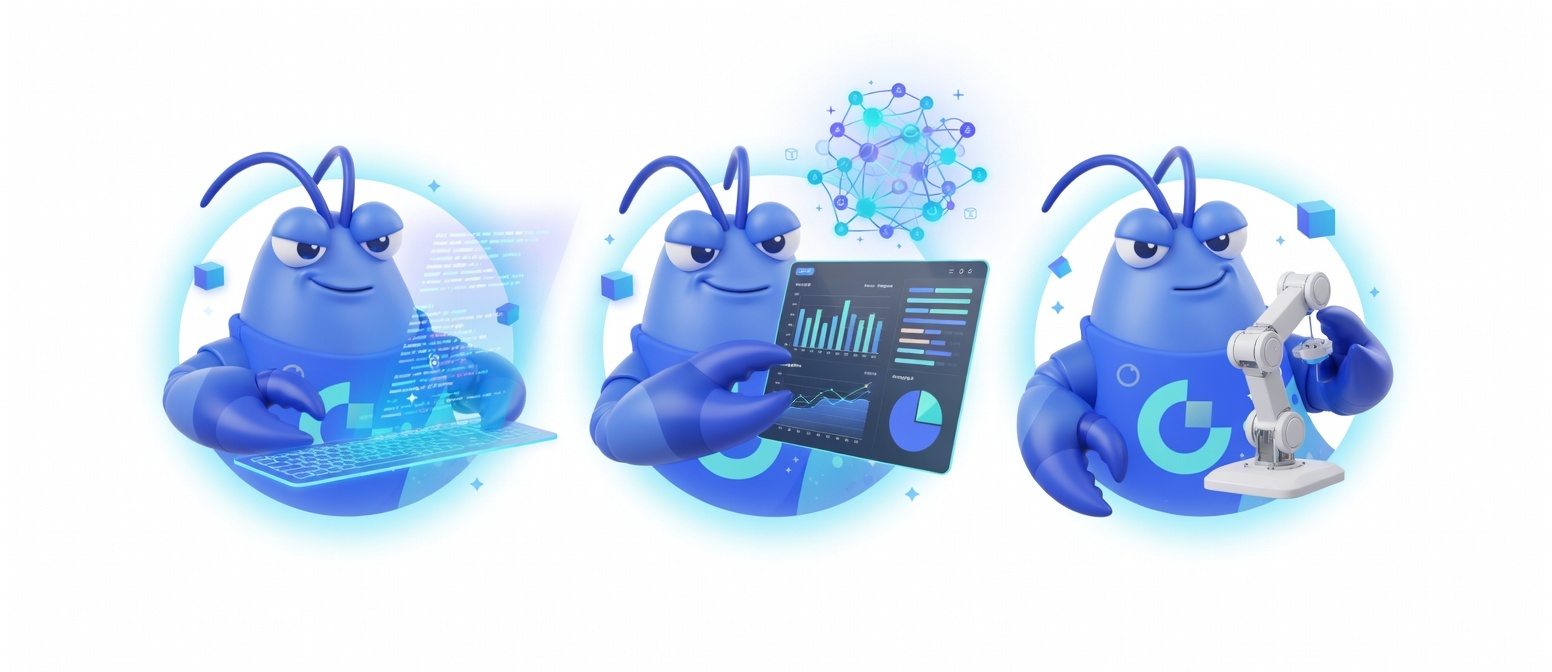
AI Skills are a central component of the GateClaw capability framework. Each Skill module represents a specific executable function, such as market data analysis, trading strategy generation, or on-chain information queries. By combining different Skills, AI agents can perform complex automated tasks based on specific objectives.
Gate Skills Hub provides a centralized management environment for these modules, allowing AI agents to combine different Skills dynamically. For example, in a trading scenario, an AI agent may first use data analysis Skills to obtain market information, then apply strategy modules to generate trading decisions, and finally execute trading actions.
This modular capability design makes the automation system more flexible and provides developers with opportunities to extend functionality.
MCP (Model Context Protocol) is the interface protocol used by GateClaw to connect AI agents with external systems. Through MCP, AI agents can access market data APIs, trading execution interfaces, and blockchain data services.
In practical applications, MCP mainly provides foundational capabilities such as querying market prices, submitting trading orders, or retrieving on-chain information. These functions form the core tool layer for automated AI agent systems.
When MCP is combined with Skills modules, AI agents can not only access data but also apply analytical and decision-making strategies, enabling a complete automated execution workflow.
Security and Permission Control Mechanisms
Because AI agents may be involved in asset management and trading execution, system security plays an important role in the design of GateClaw. To protect user assets and system environments, GateClaw incorporates multiple security layers within its architecture.
First, API keys and sensitive credentials are managed through encryption mechanisms to prevent unauthorized access. Second, AI agents typically operate within isolated sandbox environments, ensuring that their actions remain within predefined permission boundaries.
Additionally, plugins and Skills modules integrated into the system undergo security review processes to reduce potential risks. These mechanisms allow the platform to support automation while maintaining stable and secure system operations.
Automated Trading and Web3 Application Capabilities
By connecting AI models, Skills modules, and trading infrastructure, GateClaw allows AI agents to perform a range of automated tasks within Web3 environments. One of the most common use cases is automated trading in crypto markets.
In trading scenarios, AI agents can continuously collect market data and on-chain information, analyze market trends, and execute trading operations based on predefined strategy models. Because GateClaw integrates with the Gate for AI capability framework, AI agents can access real trading environments, allowing strategies to operate under realistic market conditions.
Beyond automated trading, AI agents can also support on-chain data monitoring, market research, and digital asset management. For example, systems can track capital flows and trigger strategies when specific market signals appear.
As AI agent technology continues to evolve, these automated systems are increasingly becoming key infrastructure within the Web3 ecosystem.
Conclusion
GateClaw integrates AI models, Skills modules, Gate MCP, and Gate for AI infrastructure to provide AI agents with a complete Web3 operating environment. Within this framework, intelligent agents can perform market analysis, automated trading, and on-chain data monitoring tasks.
Through visual deployment tools, modular capability systems, and multi-layer security mechanisms, GateClaw lowers the barrier for building AI-driven automation systems while improving system stability and scalability. As AI applications continue to expand in digital asset markets, platforms like GateClaw are becoming important bridges connecting AI technologies with Web3 trading infrastructure.
FAQs
- What Are the Core Functions of GateClaw
GateClaw provides an automated Web3 operating environment for AI agents. It allows intelligent agents to connect with market data, on-chain information, and trading systems in order to perform analysis and automated tasks.
- What Role Do AI Skills Play in GateClaw
AI Skills are modular capability units that provide AI agents with functions such as data analysis, strategy execution, and task automation. These modules allow complex workflows to be implemented through flexible combinations.
- What Is the Purpose of Gate MCP
Gate MCP is the interface protocol that connects AI agents with external systems. It enables agents to access market data, trading interfaces, and blockchain information services.
- Does GateClaw Support Automated Trading
Yes. GateClaw integrates Skills modules and the Gate for AI capability framework to connect AI agents with real market environments, allowing automated trading based on predefined strategies.
- Do Users Need Programming Skills to Use GateClaw
Not necessarily. GateClaw provides a graphical deployment interface that allows users to run AI agents without complex programming. Developers can also extend functionality through APIs if needed.