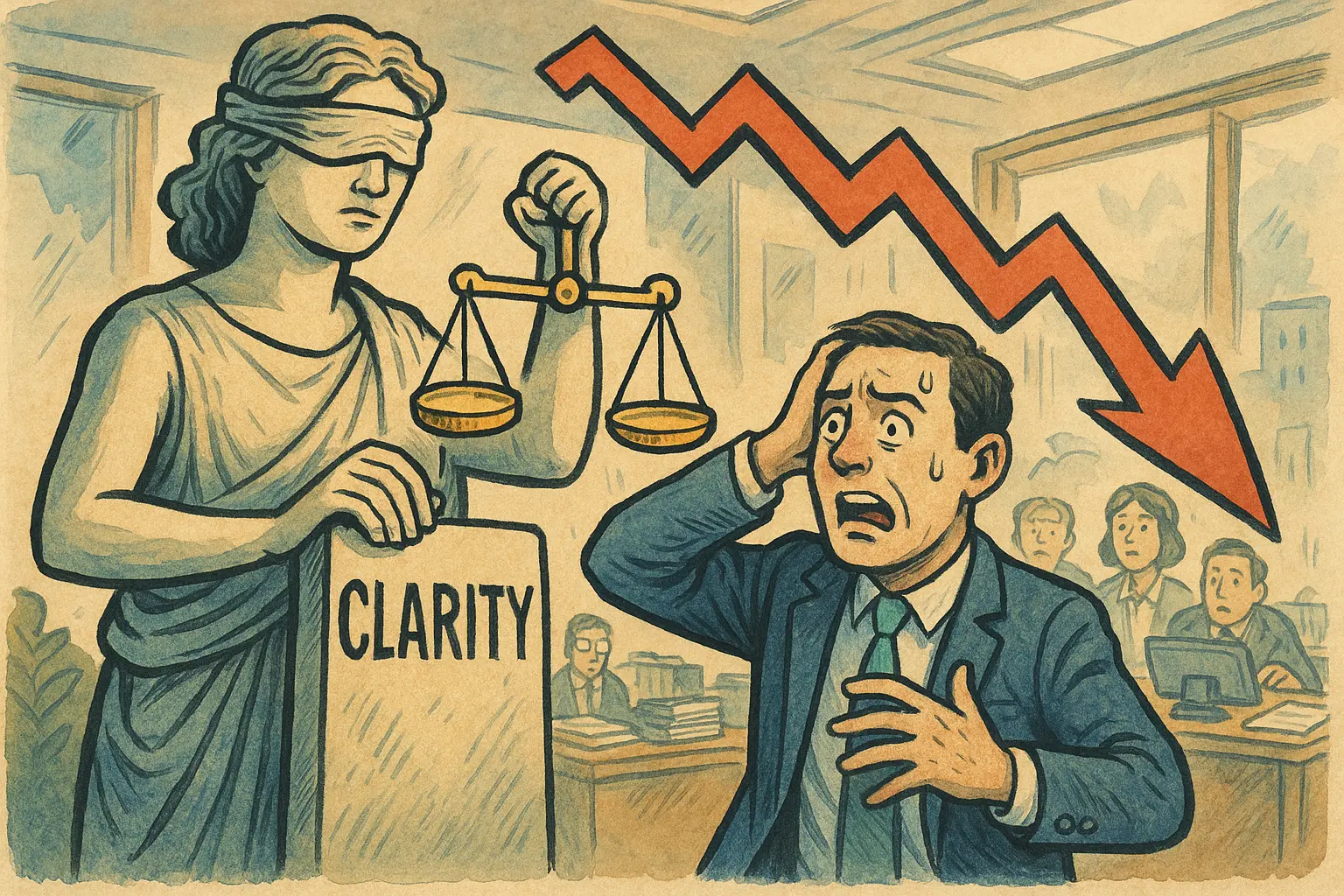
Stablecoin issuer Circle (NYSE: CRCL) stock price dropped nearly 20% in a single day, attracting significant market attention. The latest draft of the U.S. Congress’s “CLARITY Act” is a major trigger. According to former Fox Business Channel reporter Eleanor Terrett, the draft proposes to prohibit stablecoin issuers from offering any form of passive income to users and restrict all designs that are economically or functionally equivalent to bank deposit interest.
Core Regulatory Logic of the CLARITY Act Draft
The draft targets the mechanism by which stablecoin issuers redistribute reserve asset earnings to users. The regulatory direction reflects the long-term demands of the banking industry: if stablecoins can offer returns similar to deposit interest, they will directly compete with traditional deposit services, thereby affecting the overall capital flow structure of the financial system.
The bill is still in the draft and congressional negotiation stage, and the provisions have not been finalized. The current draft indicates that passive income directly linked to “coin balances” may be restricted, but rewards related to trading activity or liquidity provision may have exemptions. The bill currently applies only to domestic U.S. operators; foreign markets and decentralized finance (DeFi) are not within its scope.
Structural Pressures Facing Circle’s Business Model
While USDC does not pay interest directly to holders, Circle’s core profit model and revenue mechanisms are highly interconnected:
Reserve Asset Allocation: Circle invests USDC reserves in short-term U.S. Treasury bonds to earn interest income.
Profit Sharing Mechanism: Part of the interest is shared with Coinbase according to the agreement, which is then used to incentivize platform users.
Potential Blocking Risks: If the “pass-through” of earnings is cut off by the bill, USDC’s ability to attract funds will be directly impacted.
It is noteworthy that before this decline, CRCL’s stock price had risen from about $50 in February to over $130, a gain of more than 170%. Under high valuation conditions, negative policy news often significantly amplifies market corrections, leading to an overreaction.
Market Reaction and Subsequent Impact on Competition Landscape
Analysts generally believe that the sharp decline in CRCL’s stock price includes an element of overreaction. The USDC circulation volume continues to grow at a double-digit annual rate, and basic demand has not disappeared. The market is mainly re-pricing the policy uncertainty risk.
In terms of competition, Tether (USDT) recently announced that it has commissioned four major accounting firms to conduct a comprehensive audit. If increased transparency successfully builds institutional trust, it may attract some funds away from USDC, adding pressure on Circle’s market share. If the earnings restrictions only apply within the U.S., offshore stablecoin issuers or those with mechanisms that enjoy relative competitive advantages may benefit.
Frequently Asked Questions
What specific impact does the CLARITY Act draft have on Circle’s business model?
The draft proposes to restrict stablecoin issuers from offering any passive income linked to coin balances. Circle’s interest income from reserves and its profit-sharing arrangement with Coinbase may fall within these restrictions, directly squeezing its core profit structure.
Does the sharp drop in CRCL’s stock price reflect a deterioration in business fundamentals?
Most analysts believe the decline includes an element of overreaction. USDC’s circulation continues to grow, and Circle’s business has not fundamentally deteriorated. The main factors are the re-pricing of policy uncertainty and technical correction after a gain of over 170% in CRCL’s stock price.
What is the current legislative progress of the CLARITY Act?
The CLARITY Act is still in the draft negotiation stage, and the provisions have not been finalized. The profit-related clauses still have room for negotiation. The bill is not legally binding until officially passed, and the final wording remains to be seen.
Aviso legal: La información de esta página puede proceder de terceros y no representa los puntos de vista ni las opiniones de Gate. El contenido que aparece en esta página es solo para fines informativos y no constituye ningún tipo de asesoramiento financiero, de inversión o legal. Gate no garantiza la exactitud ni la integridad de la información y no se hace responsable de ninguna pérdida derivada del uso de esta información. Las inversiones en activos virtuales conllevan riesgos elevados y están sujetas a una volatilidad significativa de los precios. Podrías perder todo el capital invertido. Asegúrate de entender completamente los riesgos asociados y toma decisiones prudentes de acuerdo con tu situación financiera y tu tolerancia al riesgo. Para obtener más información, consulta el
Aviso legal.
Artículos relacionados
RedotPay integra Sui y USDC-Sui, ampliando los pagos a más de 100 países
RedotPay ahora admite SUI y USDC-Sui en la red Sui, lo que permite pagos globales más rápidos para 130M comercios y 7M clientes, con transacciones transfronterizas escalables que conectan cripto y comercio.
Resumen: RedotPay ha añadido soporte para SUI y USDC-Sui en la red Sui, lo que permite un procesamiento de pagos fluido y pagos globales dentro de su ecosistema. Al atender a más de 130 millones de comercios en más de 100 países y a cerca de 7 millones de clientes, la plataforma busca ofrecer pagos transfronterizos más rápidos y escalables, además de un acceso financiero habilitado por blockchain más amplio. Al integrar SUI y USDC-Sui, RedotPay pretende simplificar el envío y la recepción de pagos en todo el mundo, garantizando al mismo tiempo transacciones seguras y eficientes que conectan activos digitales con el comercio del mundo real.
GateNewshace5h
Ballena deposita $2M USDC en Hyperliquid y compra 50,080 HYPE con un promedio de $39.94
Mensaje de Gate News, 22 de abril — Según Onchain Lens, una ballena depositó 2 millones de USDC en Hyperliquid y compró 50,080 HYPE a un precio promedio de $39.94 por token.
GateNewshace8h
El tesoro del Protocolo Volo fue atacado y perdió 3,5 millones, y se confirmó que el TVL restante está a salvo
La comunidad de Sui confirma, mediante una declaración publicada por Volo en la plataforma X, que se produjo una vulnerabilidad de seguridad, lo que llevó al robo de aproximadamente 3.5 millones de dólares en activos de tres bóvedas específicas, relacionadas con WBTC, XAUm y USDC. Volo indicó que, tras detectar el ataque, notificó de inmediato a la Fundación Sui y a los socios del ecosistema, congelando todas las bóvedas para evitar pérdidas adicionales; Volo se compromete a asumir la totalidad de las pérdidas, sin permitir que los usuarios asuman ninguna responsabilidad.
MarketWhisperhace11h
El BIS advierte que las stablecoins denominadas en dólares como USDT y USDC suponen un riesgo para la estabilidad financiera
Mensaje de Gate News, 21 de abril — El Banco de Pagos Internacionales (BIS) ha reiterado sus preocupaciones sobre las stablecoins, y su director gerente Pablo Hernandez de Cos advirtió que las stablecoins denominadas en dólares, como USDT y USDC, son fundamentalmente más riesgosas de lo que comúnmente se percibe.
Cos indicó que
GateNews04-21 09:41


