


Futures
Access hundreds of perpetual contracts
TradFi
Gold
One platform for global traditional assets
Options
Hot
Trade European-style vanilla options
Unified Account
Maximize your capital efficiency
Demo Trading
Introduction to Futures Trading
Learn the basics of futures trading
Futures Events
Join events to earn rewards
Demo Trading
Use virtual funds to practice risk-free trading
Launch
CandyDrop
Collect candies to earn airdrops
Launchpool
Quick staking, earn potential new tokens
HODLer Airdrop
Hold GT and get massive airdrops for free
Launchpad
Be early to the next big token project
Alpha Points
Trade on-chain assets and earn airdrops
Futures Points
Earn futures points and claim airdrop rewards


More



Promising Cryptocurrencies: Performance Analysis and Outlook for 2026
The cryptocurrency market has continued to evolve since the end of 2024, and now in 2026, it is possible to assess how the most promising cryptocurrencies have actually performed. For investors who considered diversifying their portfolios at that time, this analysis provides a valuable retrospective on investment decisions. Let’s review five of the most significant promising cryptocurrencies, examining their actual performance, technologies, and current prospects.
Bitcoin (BTC): The Market Leader Asset
Bitcoin remains the absolute benchmark in the digital asset universe. With a current price of $71.63K (March 2026), BTC has solidified its position as a store of value and inflation hedge. Although it did not reach the $100,000 mark forecasted for 2024, Bitcoin set a new all-time high at $126.08K, demonstrating ongoing strength in the market.
Features that keep Bitcoin relevant:
Bitcoin’s trajectory since 2024 has validated the long-term thesis for many investors, despite short-term fluctuations.
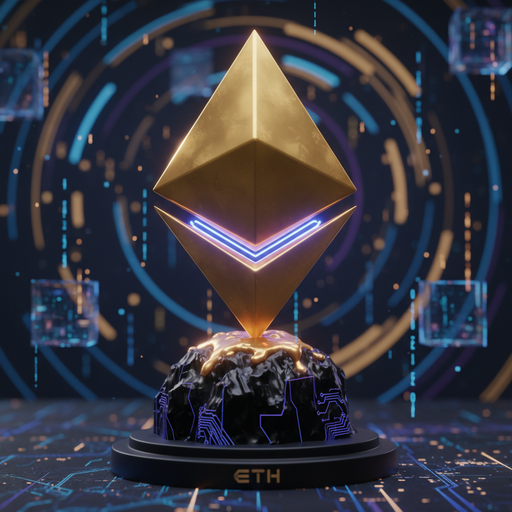
Ethereum (ETH): The Web3 Platform Base
Ethereum maintains its position as the second-largest cryptocurrency, with a current price of $2.11K (March 2026). The historical ATH of $4.95K is more than twice the current price, indicating ongoing opportunities for optimistic network participants.
Why Ethereum continues to be a promising cryptocurrency:
Corporate adoption that was anticipated in 2024 has effectively materialized, with established companies integrating Ethereum technologies into their services.
Solana (SOL): Dynamic Performance
With a current price of $88.45 (March 2026), Solana shows an interesting recovery trajectory. The ATH of $293.31 still seems distant, but the coin maintains support through its active ecosystem of developers and NFT projects.
Solana’s competitive edge:
Although the predicted $200 price for late 2024 did not materialize, the network has established itself as a significant alternative to Ethereum.
Polkadot (DOT): Building Interoperability
Polkadot is currently trading at $1.42 (March 2026), far from its ATH of $54.98. Gavin Wood’s vision of interconnecting blockchains continues to develop, albeit at a slower pace than initially expected.
Polkadot’s value proposition:
The $50 forecast for 2024 did not come true, but the underlying technology remains structurally relevant.
Chainlink (LINK): Decentralized Oracles
Chainlink’s current price is $9.25 (March 2026), well below its ATH of $52.70. The decentralized oracle network has solidified its position as essential for DeFi, enabling smart contracts to access reliable, verified external data.
Continued importance of Chainlink:
The project remains relevant despite not reaching the $100 mark expected earlier.
Reflections on Market Performance
Analyzing these promising cryptocurrencies, it’s clear that their actual price trajectories differ significantly from the 2024 predictions. Bitcoin and Ethereum hit new all-time highs, validating long-term theses, while Solana, Polkadot, and Chainlink continue to recover.
The key takeaway is that promising cryptocurrencies gain value through technological adoption, real utility, and ecosystem development—not just short-term speculation. The most solid investments in this dynamic market follow narratives grounded in technical innovation, scalability, and increasing integration with traditional systems.
Diversification remains essential for market participants, as they monitor technological developments and adjust positions accordingly as the cryptocurrency ecosystem continues its transformation.