


Futures
Access hundreds of perpetual contracts
TradFi
Gold
One platform for global traditional assets
Options
Hot
Trade European-style vanilla options
Unified Account
Maximize your capital efficiency
Demo Trading
Introduction to Futures Trading
Learn the basics of futures trading
Futures Events
Join events to earn rewards
Demo Trading
Use virtual funds to practice risk-free trading
Launch
CandyDrop
Collect candies to earn airdrops
Launchpool
Quick staking, earn potential new tokens
HODLer Airdrop
Hold GT and get massive airdrops for free
Launchpad
Be early to the next big token project
Alpha Points
Trade on-chain assets and earn airdrops
Futures Points
Earn futures points and claim airdrop rewards


More

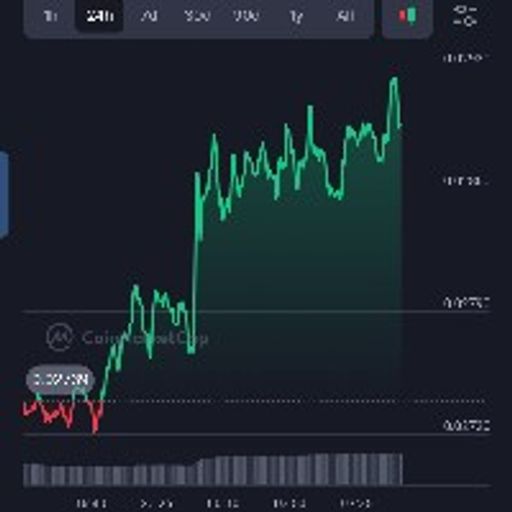



#比特币站上七万美元 Bitcoin broke through the $72,500 level on Friday and continued its upward trend, demonstrating a clear decoupling from traditional risk assets despite escalating geopolitical tensions, declines in Asian stock markets, and a drop in S&P 500 futures.
Previous buying activity pushed the price out of the consolidation zone below $70,000, leading to a breakout above $72,000. Ethereum followed suit with a pullback, reaching an intraday high close to $2,157. Major altcoins such as XRP, Solana, and BNB also recorded gains at key levels.
Analysts believe that Bitcoin’s recent surge is due to its resilience following the Israel-U.S. strikes on Iran. Although concerns about the Strait of Hormuz closing pushed oil prices higher and increased inflation risks, on-chain data shows that whales have been accumulating at lower price levels.
The crypto market has largely absorbed the initial shock of the Iran conflict, with analysts noting that Bitcoin is experiencing a new phase of decoupling from broader risk sentiment. As this momentum builds, Bitcoin is heading toward a two-week high.
Recent price movement overview: a low of $63,000 on February 28 → a high above $74,000 on March 4 → a decline to $65,000 after four consecutive bearish candles → followed by a sustained rally, with a potential fifth bullish candle today possibly breaking through $73,000 and opening the $75,000–$78,000 range. The next resistance level is the 100-day simple moving average at approximately $81,162.
Why might Bitcoin experience a sharp decline?
Downside risks still exist, mainly due to geopolitical uncertainties and global oil price pressures. Analysts warn that rising oil prices reinforce inflation risks, leading to higher yields and a stronger dollar, which suppress risk appetite. Meanwhile, expectations for immediate Fed rate cuts have sharply diminished. Glassnode on X pointed out: “The $62,000–$72,000 range forms an accumulation zone, but relative to the strength of the previous phase that drove sustained growth, there has been a moderation.
Confidence is growing, but the foundation for a mid-term breakout remains weak.”
Investors might opt to take profits. The first support level on the downside is the psychological $70,000 mark, with stronger support near $66,250, close to previous lows.
Market lesson: despite ongoing oil price pressures and continued Middle East conflicts creating macroeconomic stress, this Bitcoin correction indicates a shift in crypto from “risk asset follower” to “independent resilient asset,” especially after whale accumulation and leverage liquidations, with limited downside potential. If geopolitical risks ease or oil prices decline, a break above $73,000 could open new upside space; otherwise, if oil prices rebound or inflation data worsens, short-term downside risks will increase.
Looking ahead to 2026, the crypto market will continue testing “macroeconomic resilience”: Bitcoin is no longer just a stock follower but increasingly resembles a “vitality chart of global liquidity and safe-haven expectations.”
In summary: amid oil price panic, Bitcoin did not fall but instead rose to $72,500—this “decoupling myth” may be the strongest proof of crypto’s resilience after the Iran crisis: the worst-case scenarios are partially priced in, and the next major move will depend on a breakthrough at $73,000 and the Federal Reserve’s policy path!