

Trade
Basic
Futures
Futures
Hundreds of contracts settled in USDT or BTC
TradFi
Gold
Trade global traditional assets with USDT in one place
Options
Hot
Trade European-style vanilla options
Unified Account
Maximize your capital efficiency
Demo Trading
Futures Kickoff
Get prepared for your futures trading
Futures Events
Participate in events to win generous rewards
Demo Trading
Use virtual funds to experience risk-free trading
Earn
Launch
CandyDrop
Collect candies to earn airdrops
Launchpool
Quick staking, earn potential new tokens
HODLer Airdrop
Hold GT and get massive airdrops for free
Launchpad
Be early to the next big token project
Alpha Points
Trade on-chain assets and enjoy airdrop rewards!
Futures Points
Earn futures points and claim airdrop rewards
Investment
Simple Earn
Earn interests with idle tokens
Auto-Invest
Auto-invest on a regular basis
Dual Investment
Buy low and sell high to take profits from price fluctuations
Soft Staking
Earn rewards with flexible staking
Crypto Loan
0 Fees
Pledge one crypto to borrow another
Lending Center
One-stop lending hub
VIP Wealth Hub
Customized wealth management empowers your assets growth
Private Wealth Management
Customized asset management to grow your digital assets
Quant Fund
Top asset management team helps you profit without hassle
Staking
Stake cryptos to earn in PoS products
Smart Leverage
New
No forced liquidation before maturity, worry-free leveraged gains
GUSD Minting
Use USDT/USDC to mint GUSD for treasury-level yields

More



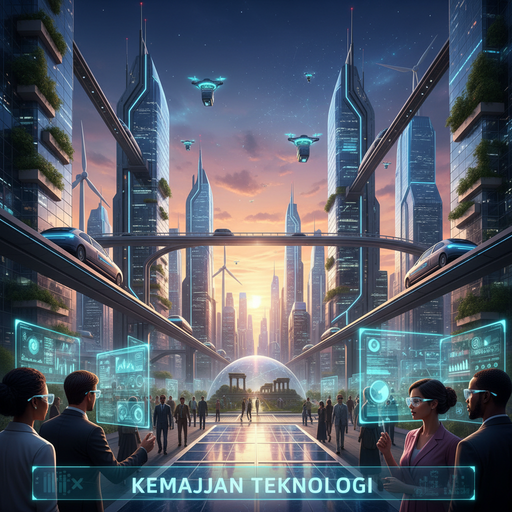
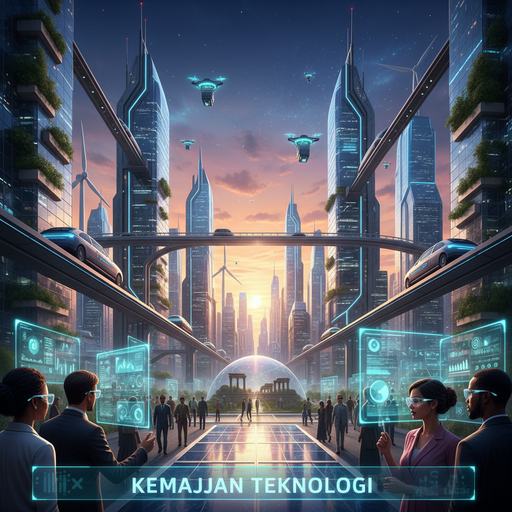


Operating Systems Under Pressure: How AI Infrastructure and Strategic Tech Are Reshaping Investment Opportunities
The investment landscape is undergoing a fundamental shift. The winners aren’t always the companies with the flashiest products or largest consumer bases—they’re increasingly the firms that control the underlying operating layers that power entire ecosystems. From AI data center infrastructure to point-of-sale systems in restaurants, to critical supply chains for rare earth materials, owning the “operating system” is proving to be an exemplary strategy for both companies and investors looking to capture outsized returns.
This structural transformation reveals itself across three compelling market segments worth close examination: the massive capital commitments flowing into AI infrastructure, the quiet efficiency revolution happening in restaurant technology, and the geopolitical dimension of rare earth mineral production. Each tells a similar story about competitive advantage and the power of controlling essential layers.
The Exemplary Case of Nvidia’s CoreWeave Investment and AI Infrastructure Consolidation
Nvidia’s recent $2 billion investment in CoreWeave represents far more than a simple capital deployment—it exemplifies the emerging pattern of dominant platforms investing in their ecosystem partners. By acquiring a significant stake in the AI infrastructure provider at approximately $87 per share, Nvidia simultaneously deepened its strategic position and demonstrated confidence in the long-term demand for AI computing capacity.
The investment operates on multiple levels. CoreWeave builds and operates data centers specifically optimized for AI workloads, which naturally require Nvidia’s GPUs and supporting infrastructure. Nvidia had already committed to purchasing unsold data center capacity from CoreWeave over the coming years, creating an existing commercial relationship. The new equity stake strengthens these ties considerably.
However, the deal reveals underlying market pressures that merit investor scrutiny. CoreWeave faces significant liquidity challenges and debt obligations—the kind of pressures that strain infrastructure companies during cyclical downturns. Nvidia’s investment can simultaneously represent both a strategic ecosystem play and a capital infusion to stabilize a critical partner. The key distinction matters for investors trying to assess whether Nvidia is making sound long-term investments or propping up struggling ventures that lack independent viability.
From Nvidia’s perspective, the calculus appears sound. The company is projected to generate approximately $100 billion in free cash flow annually this year, with projections suggesting that number could reach $300 billion by 2029-2030. In this context, a $2 billion investment becomes immaterial relative to the company’s capital generation capacity. More importantly, Nvidia needs proof points. The company must demonstrate to hyperscalers, sovereign governments, and academic research institutions that Nvidia’s “AI factories”—its vision of complete, integrated AI computing environments requiring regular hardware refreshes—represent the gold standard for AI infrastructure.
The real question for investors concerns whether Nvidia could eventually over-invest in this emerging ecosystem. The company has experienced cyclical demand pressures before—during previous cryptocurrency mining booms and gaming cycles. The semiconductor industry’s history suggests that capturing market cycles requires disciplined capital deployment. Yet Nvidia also has substantial financial flexibility to absorb mistakes. If the investment in CoreWeave proves suboptimal, the company’s cash generation capacity provides considerable margin for error.
Restaurant Technology: The Overlooked Operating System Revolution
While AI infrastructure captures headlines, a quieter but equally significant transformation is reshaping the restaurant industry. As consumer foot traffic has declined and labor costs have risen, restaurant operators face an existential pressure to improve operational efficiency. The response has been systematic integration of technology across every dimension of restaurant operations—from inventory management to order fulfillment to customer loyalty programs.
Companies like Toast (TOST) exemplify the operating system approach in restaurant technology. Toast provides point-of-sale systems that serve as the front-end customer interface while connecting to sophisticated back-end systems that give restaurants deep visibility into operations. The company’s recent quarterly results validate the stickiness of this platform: locations increased 23% year-over-year while annualized recurring revenue grew 30%, indicating that existing customers are expanding their usage of Toast’s tools.
The question for investors becomes: should you invest in the technology providers themselves, or in the restaurants deploying superior technology? The answer depends on competitive dynamics. Many restaurant-focused automation companies remain privately held, limiting investment options. But certain public restaurant operators have emerged as exemplary technology implementers.
Cava (CAVA) operates two massive distribution kitchens fully integrated with proprietary supply chain software that monitors ingredient flows in real-time. This technology advantage directly translates to superior operating margins compared to peers like Sweetgreen. Wingstop (WING) has architected its entire business model around digital-first efficiency. The company maintains minimal physical space locations and has optimized its systems to seamlessly integrate with third-party platforms like Uber Eats, GrubHub, and DoorDash without sacrificing margins—a feat that separates genuine efficiency from mere cost-cutting.
The competitive moat in restaurant technology ultimately derives from execution quality and operational discipline rather than technology exclusivity. The restaurants that survive industry downturns combine three elements: great physical locations, excellent operations management, and rapid inventory turnover. Technology accelerates these fundamentals but cannot substitute for them. Investors should focus on companies that have demonstrated the discipline to integrate technology without becoming dependent on it.
Rare Earth Materials and the Geopolitical Operating System Layer
The U.S. Department of Commerce’s decision to invest $1.5 billion into USA Rare Earth (USAR), a domestic mining company, signals a broader shift in how governments approach industries deemed critical to national security. This represents a departure from historical American reluctance to directly invest in private enterprise, even when strategic considerations might justify such involvement.
The investment reflects clear geopolitical realities. Rare earth elements are essential components in everything from semiconductor manufacturing to military applications to renewable energy technology. Historically, supply chains for these materials have been dominated by foreign producers, creating vulnerability in critical supply chains. The U.S. government’s direct capital deployment attempts to address this structural weakness.
For investors, however, this government involvement does not fundamentally alter the economic characteristics of rare earth mining. These companies remain commodity producers—price takers in global markets with limited ability to influence pricing power. They survive or thrive based on production costs relative to global pricing, not on government support. The lithium market over the past three years provides an exemplary illustration: despite rising demand from electric vehicle adoption, lithium prices have experienced dramatic boom-bust cycles driven entirely by supply-demand dynamics and commodity pricing rather than structural policies.
The recent surge in USAR stock—up more than 100% over the past month—reflects classic FOMO-driven trading rather than fundamental valuation reassessment. Retail investors seeing headlines about government investment and geopolitical importance rush to participate, often at precisely the wrong moment. Experienced industry participants aware of commodity cycles typically use such rallies as exit opportunities.
For long-term investors, rare earth mineral plays present a specific risk profile. These companies require exceptional understanding of industry cycles, commodity pricing, and production costs. The optimal entry point typically comes during industry downturns when valuations are depressed, not during periods when every retail investor suddenly discovers the sector. Investors should prefer companies with diversified revenue streams or strategic partnerships that create non-commodity sources of value.
The Broader Pattern: Cyclical Demand Meets Secular Trend
Across all three sectors—AI infrastructure, restaurant technology, and rare earth materials—a common pattern emerges. Companies face fundamental secular trends (long-term growth tailwinds from AI adoption, technology integration improving restaurant economics, and genuine strategic need for domestic rare earth supplies) that intersect with cyclical business dynamics.
The companies that succeed are those that can survive cyclical downturns while positioning for secular gains. Nvidia’s capital deployment toward CoreWeave represents a bet that the company can maintain ecosystem leadership through both boom and bust cycles. Toast’s growing platform stickiness reflects the secular trend of restaurant technology integration. USA Rare Earth must navigate commodity cycles while serving genuine strategic demand.
For investors navigating this landscape, the operating system layer offers compelling opportunities—but only with disciplined analysis of both cyclical and secular factors. The companies capturing disproportionate value are those controlling essential infrastructure layers, but that same control requires the financial resources and strategic discipline to weather inevitable downturns. Understanding this balance separates exemplary long-term investments from speculative trading opportunities.