

Trade
Basic
Futures
Futures
Hundreds of contracts settled in USDT or BTC
TradFi
Gold
Trade global traditional assets with USDT in one place
Options
Hot
Trade European-style vanilla options
Unified Account
Maximize your capital efficiency
Demo Trading
Futures Kickoff
Get prepared for your futures trading
Futures Events
Participate in events to win generous rewards
Demo Trading
Use virtual funds to experience risk-free trading
Earn
Launch
CandyDrop
Collect candies to earn airdrops
Launchpool
Quick staking, earn potential new tokens
HODLer Airdrop
Hold GT and get massive airdrops for free
Launchpad
Be early to the next big token project
Alpha Points
Trade on-chain assets and enjoy airdrop rewards!
Futures Points
Earn futures points and claim airdrop rewards
Investment
Simple Earn
Earn interests with idle tokens
Auto-Invest
Auto-invest on a regular basis
Dual Investment
Buy low and sell high to take profits from price fluctuations
Soft Staking
Earn rewards with flexible staking
Crypto Loan
0 Fees
Pledge one crypto to borrow another
Lending Center
One-stop lending hub
VIP Wealth Hub
Customized wealth management empowers your assets growth
Private Wealth Management
Customized asset management to grow your digital assets
Quant Fund
Top asset management team helps you profit without hassle
Staking
Stake cryptos to earn in PoS products
Smart Leverage
New
No forced liquidation before maturity, worry-free leveraged gains
GUSD Minting
Use USDT/USDC to mint GUSD for treasury-level yields

More




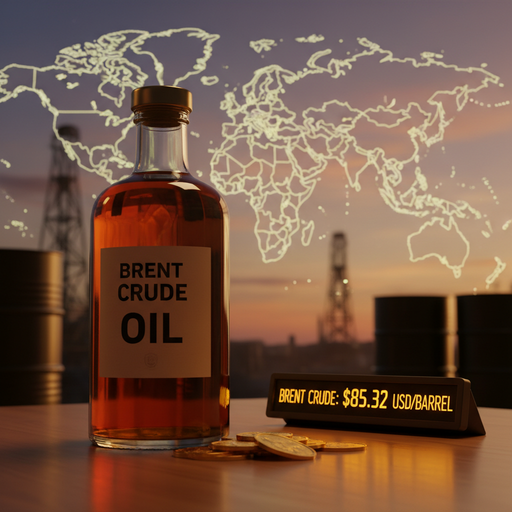

How Much Oil Is Left in the World? Understanding Global Reserves and Future Outlook
When we ask how much oil is left in the world, the answer depends largely on how we measure it. Oil remains one of Earth’s most valuable non-renewable resources, and while organic matter could theoretically become oil over millions of years, current human timescales make this essentially irrelevant. The real question is not whether oil exists, but rather how much we can economically extract and when our usable supplies might face constraints.
The Challenge of Measuring Proved Reserves
BP’s widely-cited 2014 assessment, released on World Energy Day, projected approximately 53 years of oil remaining based on 1.688 trillion barrels of proved reserves and then-current production rates. However, this estimate masks a fundamental complexity: proved reserves represent only the oil we know about and can profitably extract using existing technology—not the total oil actually present on the planet. Different countries employ varying methodologies to calculate proved reserves, creating inconsistencies in global assessments. The actual quantity of recoverable oil substantially exceeds proved reserve figures, meaning that technological breakthroughs could extend the world’s supply timeline considerably beyond current projections.
Previous predictions that the world would have exhausted its oil by now missed a crucial point: both production rates and proved reserves expanded consistently over recent decades. This pattern suggests that as demand continues and prices support investment, reserve definitions may shift to include resources that were previously considered uneconomical to recover.
Recent Major Discoveries Redefine Supply Potential
The U.S. Geological Survey’s 2017 announcement of a massive untapped deposit in Texas’s Wolfcamp shale formation illustrates how supply assessments can shift rapidly. This single discovery contains an estimated 20 billion barrels—exceeding the 12 billion barrels that Alaska’s Prudhoe Bay field (North America’s largest historically producing field) generated over 43 years of operation. The East Texas Field, the largest producing field in the lower 48 states, has yielded just over 7 billion barrels since the 1930s. Such discoveries underscore that global oil reserves extend far beyond what conventional thinking suggests.
Yet the discovery trajectory reveals a paradox: while major reserves are periodically located, conventional oil exploration investments have declined significantly. According to the International Energy Agency, investment in conventional oil discovery reached its lowest level in over 70 years, with resources sanctioned for development dropping to 4.7 billion barrels in 2016—a decline exceeding 30% year-over-year.
The Offshore Sector’s Strategic Importance
A particularly concerning trend involves the offshore sector, considered essential for future global supplies. Only 13% of conventionally sanctioned resources in 2016 were offshore projects, compared to a historical average of more than 40% over the previous 15 years. This dramatic shift reflects both the high costs of deep-water exploration and the economic pressures facing energy companies in a fluctuating market environment.
Technology as the Ultimate Variable
The real determinant of how much oil is left in the world accessible to humanity may ultimately rest on technological advancement. As extraction methods improve and become more cost-effective, previously marginal reserves transform into economically viable supply. Today’s technology cannot economically recover vast oil deposits that future innovations might unlock. The difference between proved reserves and total recoverable oil represents humanity’s potential buffer—if we develop the necessary extraction capabilities.
The future of global oil supply thus hinges not solely on how much raw material remains, but on our ability to access it efficiently and competitively against alternative energy sources. As the energy landscape evolves, answering how much oil is left depends increasingly on questions about economics, innovation, and energy transition priorities rather than simple geological measurements alone.