

Trade
Basic
Futures
Futures
Hundreds of contracts settled in USDT or BTC
Options
HOT
Trade European-style vanilla options
Unified Account
Maximize your capital efficiency
Demo Trading
Futures Kickoff
Get prepared for your futures trading
Futures Events
Participate in events to win generous rewards
Demo Trading
Use virtual funds to experience risk-free trading
Earn
Launch
CandyDrop
Collect candies to earn airdrops
Launchpool
Quick staking, earn potential new tokens
HODLer Airdrop
Hold GT and get massive airdrops for free
Launchpad
Be early to the next big token project
Alpha Points
NEW
Trade on-chain assets and enjoy airdrop rewards!
Futures Points
NEW
Earn futures points and claim airdrop rewards
Investment
Simple Earn
Earn interests with idle tokens
Auto-Invest
Auto-invest on a regular basis
Dual Investment
Buy low and sell high to take profits from price fluctuations
Soft Staking
Earn rewards with flexible staking
Crypto Loan
0 Fees
Pledge one crypto to borrow another
Lending Center
One-stop lending hub
VIP Wealth Hub
Customized wealth management empowers your assets growth
Private Wealth Management
Customized asset management to grow your digital assets
Quant Fund
Top asset management team helps you profit without hassle
Staking
Stake cryptos to earn in PoS products
Smart Leverage
NEW
No forced liquidation before maturity, worry-free leveraged gains
GUSD Minting
Use USDT/USDC to mint GUSD for treasury-level yields

More







Bank of Japan Launches Long-Term Plan to Reduce ETF Portfolio
Source: Coindoo Original Title: Bank of Japan Launches Long-Term Plan to Reduce ETF Portfolio Original Link: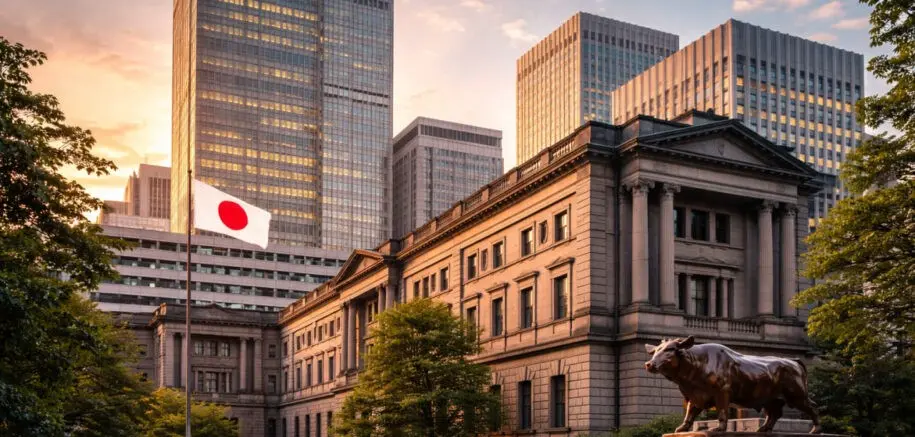
Japan’s central bank is preparing to unwind one of the most unconventional experiments in modern monetary policy, but it is doing so in a way that highlights just how deeply it became embedded in the country’s equity market.
Beginning next week, the Bank of Japan will start trimming its vast holdings of exchange-traded funds and real estate investment trusts. Rather than signaling a decisive retreat, the plan resembles a slow drip. Assets will be sold in small, steady amounts, a strategy officials believe will keep market reactions to a minimum.
Key Takeaways
At the current pace approved by policymakers, the exit is so gradual that it stretches beyond conventional timelines. Based on book-value calculations, fully reducing the ETF portfolio would take well over 100 years if the selling rate remains unchanged.
From emergency tool to massive portfolio
The scale of the BOJ’s holdings underscores why such caution is being exercised. As of late September, the market value of its ETF portfolio stood at roughly ¥83 trillion, or about $525 billion. With Japanese stocks pushing to new record highs this week, that figure has almost certainly increased.
Yet the central bank is anchoring its sales to book value, not market prices. Those holdings are carried at around ¥37.1 trillion, and the BOJ plans to sell approximately ¥330 billion worth per year – equivalent to just ¥27.5 billion a month. The result is a pace that prioritizes stability over speed.
Lessons from past exits
This is not the first time the BOJ has attempted a delicate withdrawal. In the early 2000s, it spent years selling shares acquired from struggling banks, completing the process without major market disruption. Officials involved in the current strategy have indicated that experience heavily influenced today’s approach, reinforcing the idea that discretion matters more than efficiency.
The bank has also built in flexibility. If markets experience extreme turbulence, similar to conditions seen during the 2008 global financial crisis, sales can be halted altogether.
Markets rise as policy shifts quietly
The timing is notable. Japanese equities have surged over the past three years, more than doubling in value, and the Nikkei 225 recently hit an all-time high. Optimism around continued fiscal stimulus under Prime Minister Sanae Takaichi has further supported sentiment, inflating the unrealized gains sitting on the BOJ’s balance sheet.
Despite those gains, Governor Kazuo Ueda and the policy board have resisted calls to accelerate the unwind. Their view is that sudden selling could undermine confidence, even if valuations appear stretched.
A quiet boost to public finances
Over time, the sales could provide a modest fiscal benefit. Proceeds from ETF disposals eventually flow back to the government through central bank remittances, offering incremental support as Japan maintains expansive fiscal policy while carrying the heaviest public debt load among advanced economies.
Still, any contribution will be gradual. The strategy is not about plugging budget gaps, but about reducing risk without destabilizing markets.
Closing a long chapter in monetary history
The BOJ first entered the ETF market in 2010 as part of its fight against deflation. Purchases expanded sharply after 2013, when ultra-loose monetary policy turned the central bank into one of Japan’s largest equity holders. That buying era officially ended in March 2024.
Now, the selling phase begins – not with urgency, but with patience. The plan reflects a central bank keenly aware that reversing extraordinary policies can be just as complex as launching them, especially when those policies reshaped an entire market.