Web3’s Bottleneck: The Cost of Irreversible Mistakes
The pace of Web3’s technological evolution has far outstripped most users’ ability to understand and prepare for its risks. For everyday users, the real barrier isn’t that DeFi isn’t powerful enough or that there aren’t enough applications. It’s that a single operational error often comes with no opportunity for correction.
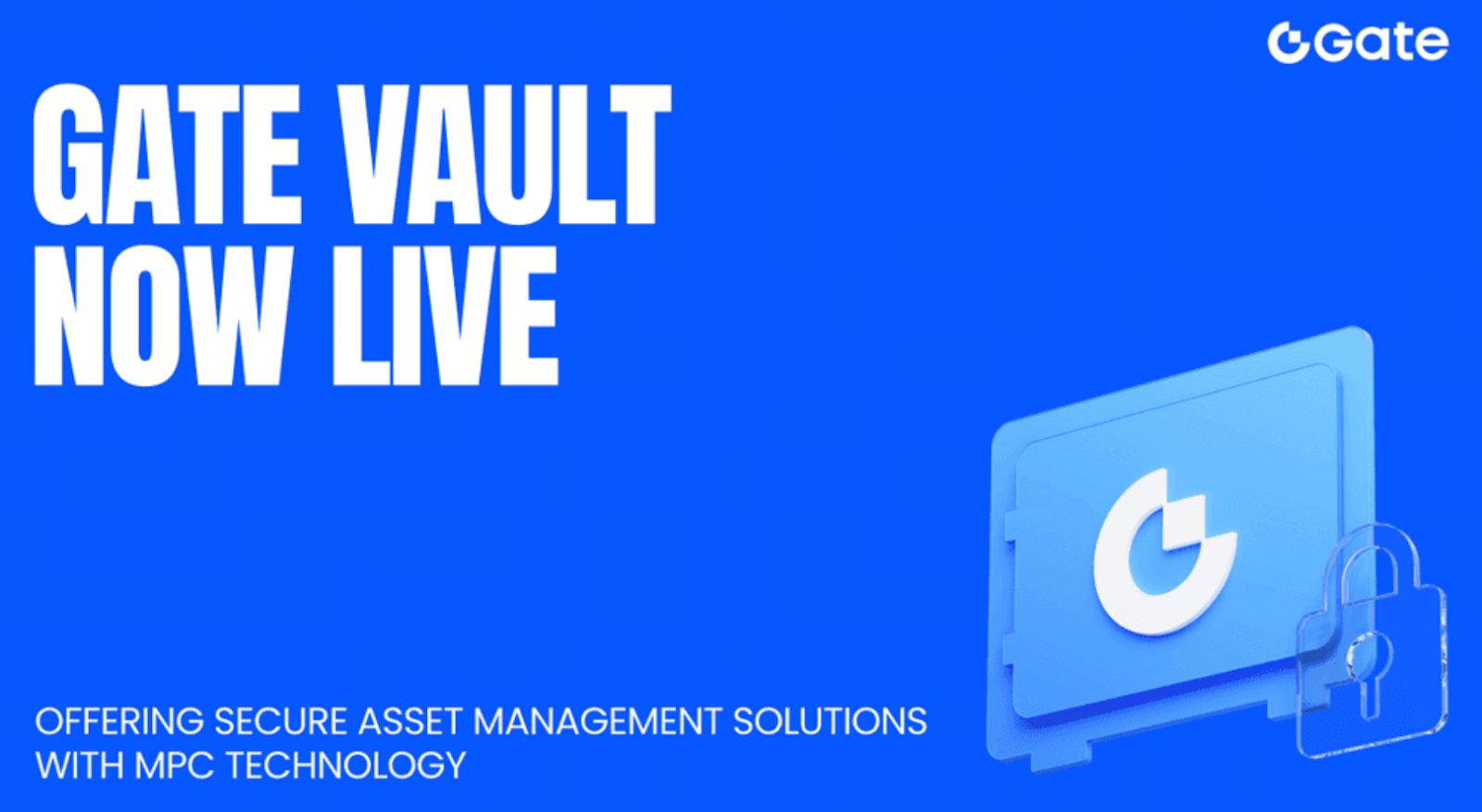
On-chain, losing your private key, misauthorizing access, or signing a phishing transaction often means your assets are instantly gone with no way to recover them. This “one mistake, permanent loss” experience has kept Web3 from becoming a trustworthy financial backbone for the general public. Gate Vault was created to address this very issue—not by demanding users become experts, but by making the system itself resilient to human error.
Decentralized Security: Rethinking Control
Traditional wallets concentrate all control in a single private key. While simple, this setup means risk is highly centralized—one weak link can compromise everything.
Gate Vault leverages an MPC (Multi-Party Computation) architecture to fundamentally redesign risk allocation. The full private key no longer exists in any one place. Instead, it’s split into three independent key shards, held separately by the user, the Gate platform, and a third-party security provider. This structure ensures that asset control never depends on a single point of failure but is based on collaboration, dramatically reducing the risk of irreversible loss from one error.
Security That Can’t Be Compromised by Any Single Party
Gate Vault’s core principle isn’t to convince users to trust one party over another—it’s to ensure that no single party can act alone on critical decisions.
All asset operations require a 2-of-3 multi-signature process, meaning at least two out of the three participants must approve any transaction. This ensures:
- The platform cannot unilaterally access user assets
- The third-party security provider cannot bypass the user’s intent
- The user always retains ultimate decision-making power
Asset security is no longer based on trust, but on clear, verifiable institutional safeguards.
The Real Threat: No Time to Respond
Most cybersecurity incidents cause permanent losses not because the attack is sophisticated, but because it happens too quickly for users to react.
Gate Vault treats reaction time as a core element of its security design. When the system detects suspicious activity, it automatically triggers a 48-hour security buffer. During this period, users can revoke authorizations, freeze assets, or halt transactions—keeping risk under control instead of allowing it to become instantly irreversible. This design transforms security from passive endurance into an interactive, correctable process.
Users Retain Ultimate Sovereignty
Gate Vault also plans for extreme scenarios. Even if the platform’s services are temporarily unavailable, users can follow official procedures and use third-party tools to recombine their key shards and regain full control of their assets.
This disaster recovery design prevents assets from being permanently locked in a single system. For long-term holders and high-net-worth users, it provides a vital foundational safeguard, making self-sovereignty not just a slogan but an actionable reality.
The Security Backbone of the Gate Web3 Ecosystem
Gate Vault isn’t just a standalone product—it’s the security core of the entire Gate Web3 ecosystem. Whether it’s Gate Layer, Gate Perp DEX, Gate Fun, Meme Go, or Gate PWM for high-net-worth users, every component is built on the same security logic.
This consistent security architecture prevents siloed approaches across products and ensures users enjoy the same level of asset protection in every scenario. Security capabilities can be replicated and scaled across the ecosystem.
Usage Requirements and Fee Structure at a Glance
Gate Vault’s usage rules are straightforward, making it easy for users to decide whether to enable the service:
- Transferring assets from Gate Vault back to a Gate account incurs a 0.1% maintenance fee (maximum $100)
- VIP 3 users and above enjoy free access
- More options for regular users will roll out over time
- The Gate App must be updated to version V7.23.6 or later
Activating the service before volatility or cybersecurity risks increase helps establish a robust protection framework in advance.
Gate Vault User Guide: https://www.gate.com/help/guide/functional_guidelines/47328/gate-vault-user-guide
Conclusion
Gate Vault represents more than just a security upgrade—it’s a sophisticated approach to Web3 asset management. By combining decentralized control, multi-party signatures, proactive risk buffers, and disaster recovery, it transforms asset management from “one error, total loss” to a system that is controllable, correctable, and built for the long term. In the unpredictable on-chain world, Gate Vault is more than an asset storage tool—it’s a security solution that empowers users with true sovereignty and lays a stable, trustworthy foundation for Web3’s broader adoption.