As the digital asset market grows, the pace of information production has surged exponentially. Price trends, on-chain data, community discussions, and macroeconomic news all emerge almost simultaneously across a variety of platforms and media channels. This intense flow of information gives participants access to an unprecedented array of sources, but it also makes it harder to discern which signals truly matter.
For many traders, the challenge has shifted from information scarcity to the need to rapidly filter and interpret critical signals. In periods of heightened volatility, relying solely on manual news checks, charts, and community updates makes it difficult to construct a timely and complete market picture. As a result, intelligent tools that organize and interpret information are increasingly in demand.
Integrating Dispersed Data into a Market Observation Framework
Traditional market analysis typically depends on a handful of basic indicators—such as price changes, trading volume, or capital flows. While these metrics reflect market outcomes, they often fall short in explaining the underlying drivers.
Gate AI is designed not just to aggregate more data, but to reorganize fragmented market information from diverse sources and establish meaningful connections between them. This enables users to quickly grasp the logic behind market events.
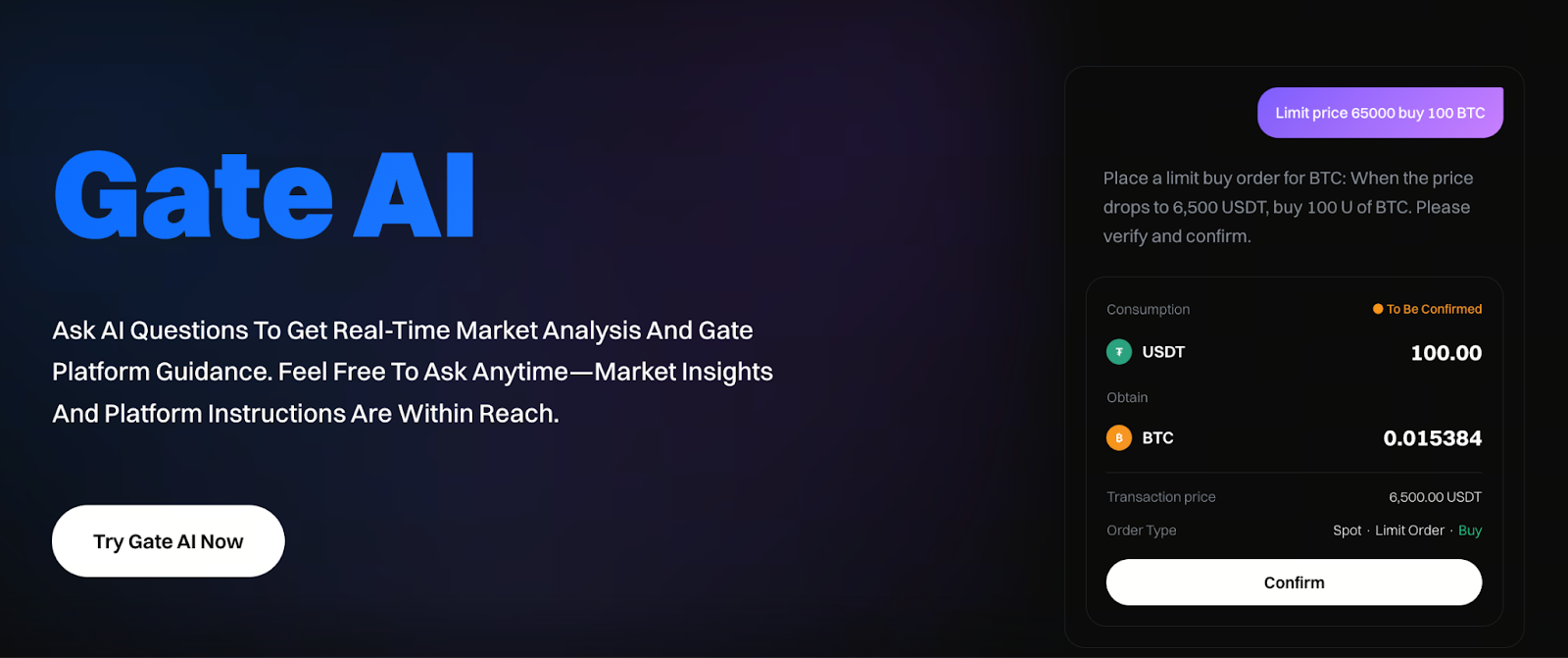
Through a conversational interface, users can directly ask market-related questions, such as:
- What factors have influenced a particular token’s recent price movements?
- Which industries or sectors are currently attracting market capital?
- Is there concentrated trading activity in a specific sector?
The system consolidates and summarizes signals from various sources, presenting them in a clear structure that makes market dynamics more accessible.
Making Market Changes More Than Just Numbers
For newcomers to crypto, price charts can be daunting and ambiguous. When an asset suddenly rises or falls, it’s difficult to immediately pinpoint the cause or assess whether the move is sustainable.
By systematically organizing information, Gate AI breaks down market volatility into multiple contributing factors, such as:
- Shifts in capital flow direction
- News related to specific projects or sectors
- Changes in market sentiment or investor confidence
This approach transforms price movements from isolated numbers into outcomes shaped by multiple market forces. When users understand these interconnections, they can base their investment decisions on rational analysis.
With the proliferation of generative AI, fast responses have become a hallmark of intelligent tools. Yet in financial markets, accuracy is often more important than speed. Analyses lacking reliable sources or proper verification can mislead investment decisions.
Gate AI therefore employs a conservative approach to information processing. When sources are insufficient or information remains uncertain, the system clearly flags these limitations rather than generating speculative content. While this may slow down some real-time analyses, it significantly improves overall information credibility.
In trading, verified information is typically more valuable than quick but unsubstantiated analysis.
Seamless Integration with the Trading Environment
Many market analysis tools require users to switch between platforms, but Gate AI is fully integrated into Gate’s market data and search systems. Users can ask questions directly via the conversational interface while viewing asset prices or browsing market information—without leaving the trading page. This integration creates a natural link between information comprehension and trading activity. As users monitor the market, they gain immediate access to contextual information, making analysis an integral part of the trading workflow rather than an extra step.
The Future Role of AI in Market Analysis
As AI technology advances, its role in financial markets is poised for significant growth. Future intelligent systems may move beyond information organization to deliver advanced analytical features, such as:
- Market risk alerts
- Cross-verification of multi-source data
- Analysis of community sentiment and market trends
In an information-saturated market, AI acts as a signal filter, helping traders identify what truly matters and reducing the noise that can cloud judgment.
Conclusion
In the fast-moving crypto market, information is no longer scarce; the real challenge is the ability to interpret it. When signals come from multiple sources and update rapidly, traders need more than raw data—they need tools that organize and clarify the relationships among data points. Through conversational engagement and information integration, Gate AI restructures fragmented market data into a clearer framework, enabling users to quickly understand the broader context. As information density continues to rise, intelligent tools that can efficiently filter and verify data will become essential in the trading environment.