ETF Inflows Surge in 2025: How Bitcoin, Gold, and Artificial Intelligence Became the Main Growth Drivers
What Is a Record-Breaking ETF Inflow?
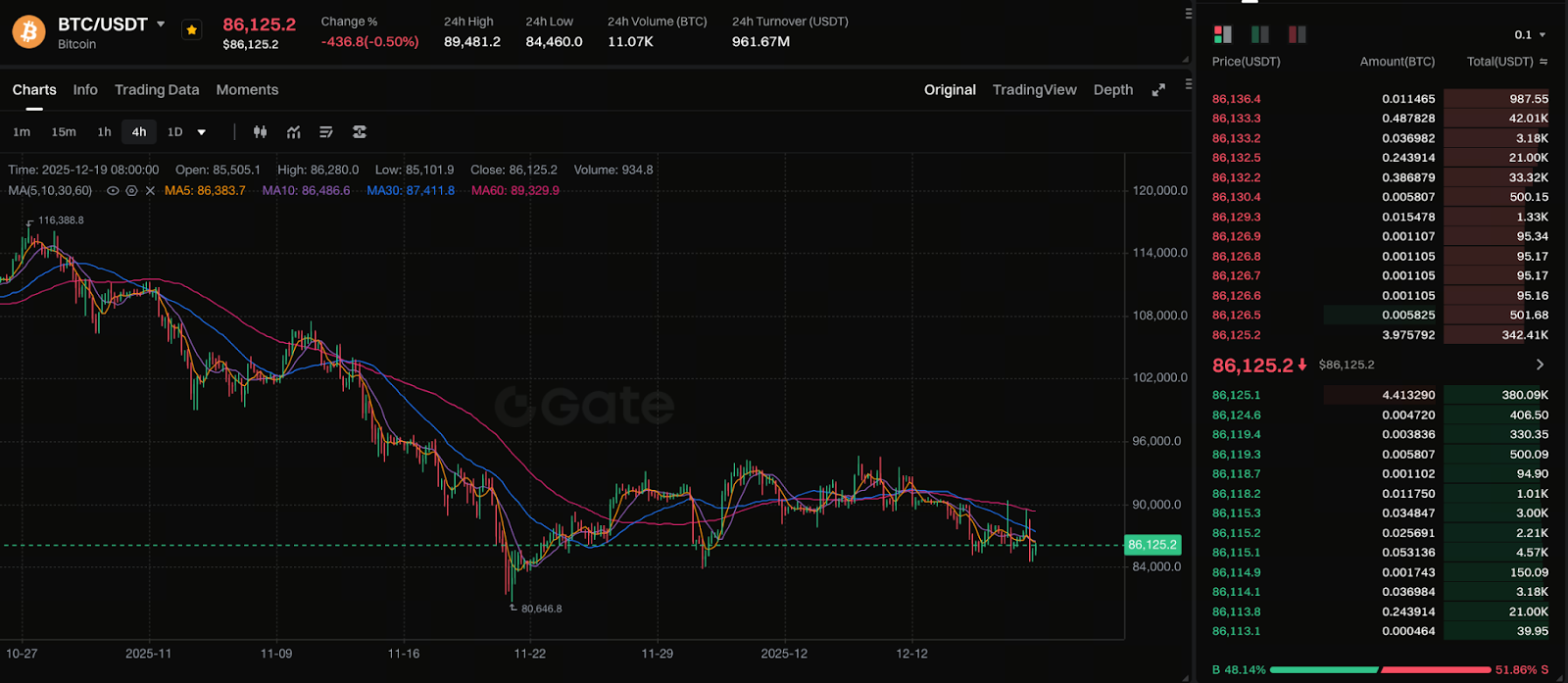
Image: https://www.gate.com/trade/BTC_USDT
As a pooled investment vehicle, an ETF (Exchange Traded Fund) is a key indicator of market hotspots and capital allocation trends through its inflow data. ETF inflows have been exceptionally strong in 2025. According to industry analysis, this year’s total ETF inflows have already surpassed most prior years, with Bitcoin, Gold, and Artificial Intelligence ETFs standing out as the top performers.
Bitcoin ETF: The Core Growth Engine and Price Correlation
In 2025, digital assets entered a new wave of institutional adoption, and Bitcoin ETFs have once again taken center stage for capital inflows. Data shows that US-listed Bitcoin ETFs have seen large net inflows at multiple points, continuing to attract significant capital even during periods of market volatility. For example, spot Bitcoin ETFs have posted multiple net inflow days, including a recent single-day net inflow of nearly $50 million, highlighting institutional confidence in the underlying asset.
These inflows show a clear relationship with BTC’s multi-month price performance. As institutional capital flows in, prices have remained near their highs despite volatility, underscoring how capital allocation supports both market sentiment and price trends.
Bitcoin ETFs attract substantial investment because they remove barriers for traditional institutions, such as custody and compliance costs, that come with direct crypto investment. Additionally, global macro uncertainty has led many investors to seek high-growth opportunities within risk asset allocations.
Gold ETF: Strong Capital Magnetism of a Classic Safe-Haven Asset
Gold ETFs, representing classic safe-haven assets, have also drawn significant inflows alongside digital assets. Amid global economic fluctuations, shifting monetary policy, and rising geopolitical risk, gold continues to attract capital. According to the latest World Gold Council report, Gold ETF holdings remained robust through the end of 2025. While the pace of inflows has slowed, total assets under management remain above historical averages for the same period.
Gold prices reached new all-time highs multiple times in 2025, further stoking investor interest in Gold ETFs. During periods of equity market volatility or heightened risk aversion, gold’s traditional safe-haven role stands out, making Gold ETFs a prime “safe harbor” for capital.
Artificial Intelligence ETF: New Capital Fueled by the Tech Wave
Another major ETF trend in 2025 is the rise of Artificial Intelligence ETFs. As generative AI and large-scale models gain adoption across finance, technology, healthcare, and more, capital is being reallocated toward AI-focused technology companies. While regional inflow amounts differ, AI ETFs on Nasdaq and other leading global exchanges are showing robust growth momentum.
Compared with traditional sector index ETFs, AI ETFs offer greater growth potential. This has attracted long-term capital and institutional funds, making technology themes a core driver behind record ETF inflows.
The Structural Logic Behind Surging ETF Inflows
While these three ETF types represent different asset classes, several underlying factors are driving record inflows in 2025:
- Heightened macroeconomic uncertainty is driving demand for both value-preserving and growth assets;
- Institutional investors are shifting to more efficient ETF products, reducing the compliance and operational costs of direct trading;
- Technological innovation is positioning AI ETFs as core vehicles for long-term capital growth;
- The digital asset market is maturing, making Bitcoin ETFs a new gateway for investment.
This cross-asset synergy means ETFs are no longer just single-purpose investment tools—they have become a critical platform for global capital seeking a balance of risk and return growth.
How Should Investors View These Trends?
For individual investors, understanding record ETF inflows is not about chasing performance. Instead, consider the following:
- Know your asset classes: Bitcoin and gold offer different risk-hedging and growth profiles;
- Watch liquidity and market sentiment: Inflows and price swings do not always move together;
- Take a long-term perspective and manage risk: Tech and digital asset ETFs are more volatile, making them better suited for long-term allocation and diversification.
In summary, the ETF inflow landscape in 2025 signals a profound shift in how global capital is allocated across diverse asset classes. This is not just a matter of increased capital—it’s a reflection of the emerging consensus on future economic structures and technology trends.
Share
Content
What Is a Record-Breaking ETF Inflow?
Bitcoin ETF: The Core Growth Engine and Price Correlation
Gold ETF: Strong Capital Magnetism of a Classic Safe-Haven Asset
Artificial Intelligence ETF: New Capital Fueled by the Tech Wave
The Structural Logic Behind Surging ETF Inflows
How Should Investors View These Trends?


Related Articles

2025 BTC Price Prediction: BTC Trend Forecast Based on Technical and Macroeconomic Data

Flare Crypto Explained: What Is Flare Network and Why It Matters in 2025

Pi Coin Transaction Guide: How to Transfer to Gate.com

How to Use a Crypto Whale Tracker: Top Tool Recommendation for 2025 to Follow Whale Moves

What is N2: An AI-Driven Layer 2 Solution