This comprehensive guide demystifies Bitcoin shorting for traders seeking to profit from price declines. Whether you're navigating bear markets or hedging bull market corrections, shorting enables directional flexibility beyond traditional buy-and-hold strategies. The guide covers fundamental concepts—long versus short positioning—and technical mechanics of borrowing, selling, and repurchasing Bitcoin. Learn when shorting makes strategic sense, understand asymmetric risks including unlimited losses and liquidation dangers, and explore advanced instruments like perpetual swaps, futures, and options on Gate. Master step-by-step execution processes, identify short opportunities using technical indicators like death crosses and RSI analysis, and implement proper risk management. While shorting amplifies profit potential in bearish conditions, it demands rigorous discipline and experience. Beginners should practice on demo accounts first, ensuring they grasp leverage mechanics, margin requirements, and position si
The Basics: What Do "Long" and "Short" Mean?
Bitcoin has experienced remarkable growth over the past decade. The limited supply, predictable issuance schedule, and growing global demand have enabled BTC to significantly outperform many traditional asset classes in the long term. However, this trend has never been linear. Every long-term upward phase has been accompanied by severe crashes, corrections, and extended bear markets.
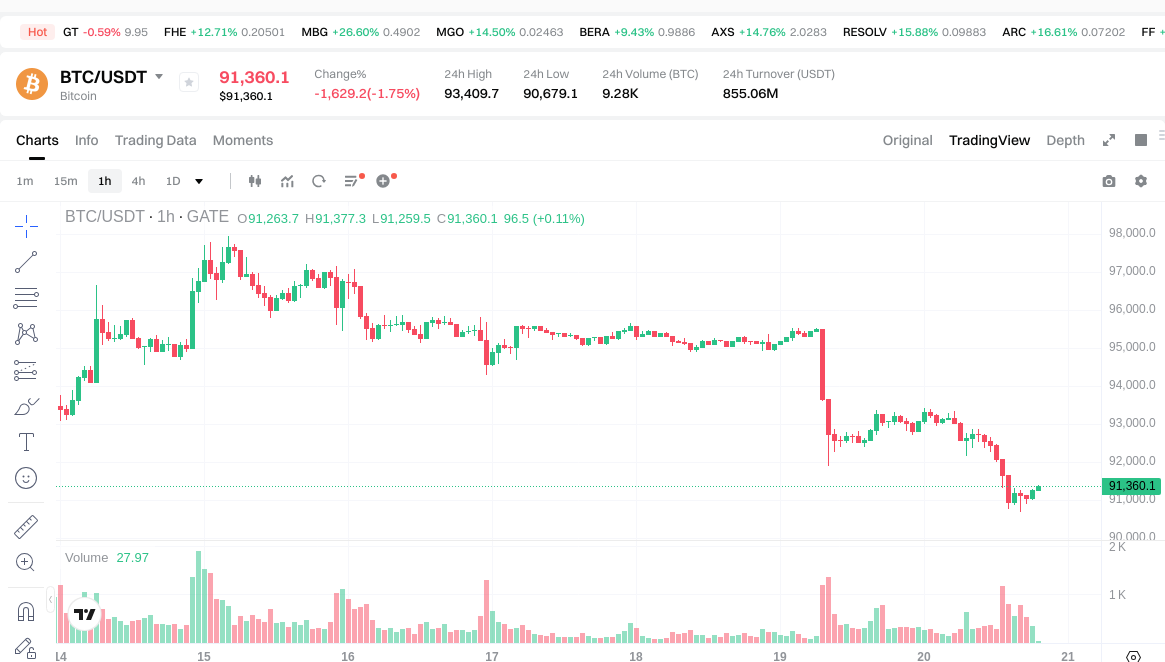
This is why many traders don't just focus on buying Bitcoin low and selling high later. The opposite direction—selling first and buying back cheaper later—is also an integral part of modern trading strategies. This is exactly what shorting Bitcoin is all about.
Traders use the terms "long" and "short" to express which direction they want to profit from in the market. Going long means you're betting that the price will rise. Going short means you're betting that the price will fall.
When you're long, you make money when the asset's price increases. When you're short, you make money when the price decreases. A classic long example is "buy low, sell high." When shorting, the principle is "sell high, buy low."
The process behind this may initially sound unusual, but it's an extremely important tool for traders—especially during phases when the market appears to be correcting or overheated.
How Short Selling Works Technically
When you short Bitcoin, you sell BTC that you don't actually own. Major exchanges make this possible by lending you the asset. The process is always the same:
- You open a short position, and the platform lends you BTC
- This BTC is immediately sold at the current market price
- You wait for the price to fall
- Then you buy back the same amount of BTC ("covering")
- You return the borrowed BTC
- The difference between the selling price and the repurchase price is your profit
A Simple Example
Suppose the market seems overheated and you expect a correction. You short 1 BTC at $35,000.
A week later, the price stands at $30,000. You buy back 1 BTC and close the position.
- Sale: $35,000
- Repurchase: $30,000
- Profit: $5,000
This principle makes shorting a powerful tool—especially when you can identify downward movements early. Understanding the mechanics of borrowing and returning assets is crucial for successful short selling. The exchange handles the technical complexity, but you need to understand the risk-reward dynamics involved.
When Does It Make Sense to Short Bitcoin?
Short selling is often described as an "advanced" trading strategy. This isn't because of the technical process, but because you're trading against Bitcoin's long-term market direction. There are typical situations where shorts can make sense:
In Bear Markets
When BTC falls over weeks or months, traders can regularly profit from downward movements. The year 2022 is an example: Bitcoin fell around 65%. Short traders could position themselves accordingly and capitalize on the sustained downward trend.
During Major Corrections in Bull Markets
Even in strong uptrends, there are always pullbacks—some severe, some brief. Experienced traders use technical analysis to identify these corrections. These temporary reversals within an overall uptrend can provide profitable shorting opportunities for those who can time them correctly.
When Indicators Clearly Show Downward Momentum
Several technical indicators can signal potential short opportunities:
- Trend breaks and pattern failures
- Chart patterns indicating reversal
- Overbought zones on momentum indicators
- Weak momentum despite price stability
- Declining trading volumes
In such moments, a short position can be more sensible than a long position. However, it's crucial to remember that technical analysis provides no guarantees. Short selling can quickly become expensive if you miscalculate the market direction or timing.
The Risks of Shorting Bitcoin
Short selling differs fundamentally from classic buy-and-hold strategies and comes with risks you absolutely need to know about.
Risk 1: Your Losses Are Theoretically Unlimited
When you buy BTC, you can lose at most what you invested. Bitcoin cannot fall below zero—your risk is limited.
With shorting, the opposite applies:
- Gains are limited (BTC can only fall 100%)
- Losses are theoretically unlimited because BTC can rise indefinitely
An example: You short 0.1 BTC at $35,000. Instead of falling, BTC rises to $65,000.
Your loss:
- Repurchase price: $6,500
- Sale proceeds: $3,500
- Loss: $3,000
If BTC continues to rise, your losses increase proportionally. This asymmetric risk profile makes position sizing and risk management absolutely critical when shorting.
Risk 2: Liquidations Due to Margin Shortage
A short is a borrowed position. As soon as your balance is no longer sufficient to cover potential losses, your position is automatically closed. In volatile markets like crypto, this can happen very quickly.
Liquidation events can occur during sudden price spikes, often triggered by positive news or short squeeze scenarios. Understanding your liquidation price and maintaining adequate margin is essential for avoiding forced closures at unfavorable prices.
Risk 3: Leverage Works Doubly Dangerously
Leverage amplifies gains just as much as losses—but with shorts, a small price increase can be enough to liquidate a leveraged short position within minutes.
Therefore: Leverage + Short = only for advanced traders. The combination of unlimited downside risk and leverage multiplication creates a particularly hazardous situation that requires constant monitoring and strict risk controls.
Experienced traders don't just use classic margin shorts. There are additional products that enable short scenarios—often with more flexibility and different risk profiles.
Margin and Leverage Trading
With margin trading, you use borrowed capital for larger positions. The higher the leverage, the faster gains or losses can occur. Margin trading allows you to control positions larger than your account balance, but this comes with increased liquidation risk.
Futures
Futures allow you to bet on future prices—long or short. They have fixed expiration dates and often high liquidity. Futures contracts are standardized agreements to buy or sell an asset at a predetermined price on a specific future date, making them popular for both speculation and hedging.
Options
Options give you the right, but not the obligation, to buy or sell an asset. Put options, for example, can be used for short scenarios. Options provide asymmetric risk profiles where your maximum loss is limited to the premium paid, making them attractive for directional bets with defined risk.
Perpetual Swaps
This feature is particularly popular because:
- No expiration date, allowing indefinite position holding
- Flexible leverage options
- Very liquid markets with tight spreads
- Funding rate mechanism that balances long and short interest
Shorts are therefore very easy to implement through perpetual swaps, which have become the preferred instrument for many crypto traders.
How to Short Bitcoin on Major Exchanges: Step by Step
Major cryptocurrency exchanges make it particularly easy to place shorts without you having to manage the technical process yourself. The platform automatically handles borrowing, selling, and returning.
Step 1: Go to the Trade Section
Click on Trade at the top of the website. You can use either the Unified Account or the Classic Account, depending on your platform's structure.
Step 2: Select BTC/USDT
In the asset selection at the top left, choose BTC/USDT as your trading pair.
Step 3: Choose a Product for Shorting
You can use:
- Perpetual Swaps for flexible, no-expiration positions
- Futures for time-specific contracts
- Options for defined-risk strategies
- Margin Trading for direct spot market shorts
All enable shorts, just with different mechanics and risk characteristics.
Step 4: Enter Your Order
You select:
- Order type (Market, Limit, Stop)
- Price (for limit orders)
- Leverage (1× means without leverage)
- Position size
Then click on Open Short. The order appears in your open orders until it's executed. Make sure to review all parameters carefully before confirming.
Step 5: Close the Position
Under "Positions," you can:
- Close completely to exit the entire position
- Close partially to reduce exposure
- Close all open positions at once
This ends the short position and realizes your profit or loss.
Chart Analysis: Examples of How Traders Identify Short Scenarios
Traders use various indicators to assess the probability of a downward movement and identify potential entry points for short positions.
Example 1: Death Cross (SMA 50 vs. SMA 200)
When the 50-day SMA falls below the 200-day SMA, it's often interpreted as a sign of a short-term trend break. Many traders see this as a reason to examine short scenarios. The death cross is a lagging indicator but can confirm momentum shifts when combined with other signals.
Example 2: RSI (Relative Strength Index)
The RSI shows whether BTC appears overbought or oversold:
- Above 70: overbought territory
- Below 30: oversold territory
- Around 50: neutral / unclear trend
When the RSI falls from an overbought zone downward, this can be understood as a short signal. Divergences between price and RSI can be particularly powerful indicators of potential reversals.
Example 3: Fibonacci Zones
Traders use support and resistance zones to:
- Define short entry points at key resistance levels
- Set take-profit targets at support levels
- Place stop-losses sensibly above resistance
If BTC, for example, bounces off a strong resistance zone, a short could be considered. Fibonacci retracement levels provide objective price targets based on historical price action.
An Example of a Short Setup
Imagine BTC is moving in a range between two Fibonacci levels. Traders might proceed as follows:
- BTC bounces at the 0.5 Fib level: possible short entry
- Target: 0.618 Fib level for profit-taking
- Stop-loss just above the resistance to limit risk
This creates a calculable risk/reward ratio. For instance, if the distance to your target is $2,000 and your stop-loss is $500 away, you have a 4:1 risk-reward ratio, which many traders consider favorable.
Conclusion: Should You Short Bitcoin?
Short selling is a powerful tool that enormously expands your trading flexibility. It allows you to:
- Generate profits in bear markets when most holders are losing value
- Hedge your long positions to protect against downside risk
- Trade profitably in volatile phases regardless of overall trend direction
But short selling has a dark side: Your risk is higher than with spot trades. The potential for unlimited losses and the complexity of margin management make it unsuitable for beginners.
If you:
- Are new to trading
- Aren't sure how risk management works
- Or volatility tends to intimidate you
Then you should first test shorts in a safe environment. Major exchanges offer demo accounts for this purpose.
Under Assets → Start Demo Trading, you can try out all functions 1:1—without risk. Practice with virtual funds until you fully understand the mechanics, develop a solid strategy, and can manage your emotions during both winning and losing trades. Only then should you consider risking real capital on short positions.
FAQ
What is Bitcoin shorting? How does it differ from going long?
Bitcoin shorting means profiting from price declines by borrowing and selling BTC, then buying back lower. Going long profits from price increases by buying and holding. Shorting is the inverse strategy, allowing gains in bear markets while long positions benefit in bull markets.
What are the main methods to short Bitcoin? (futures, margin lending, options, etc.)
Main Bitcoin shorting methods include: futures contracts for leveraged bets on price declines, margin lending to borrow and sell Bitcoin, options trading for directional exposure with defined risk, and inverse perpetual contracts offering continuous shorting opportunities with leverage.
What are the risks of Bitcoin shorting? How to manage risks?
Bitcoin shorting risks include liquidation from price surges, funding costs, and market volatility. Manage risks by setting stop-losses, using appropriate leverage ratios, monitoring positions regularly, and diversifying strategies. Proper position sizing and risk-reward ratios are essential for sustainable trading.
Major cryptocurrency exchanges and derivatives platforms offer Bitcoin shorting through futures, margin trading, and perpetual contracts. Popular options include centralized exchanges with advanced trading features and decentralized protocols. Users can access shorting via leverage trading pairs, allowing them to profit from price declines.
What is the profit logic of Bitcoin shorting? When should you short?
Bitcoin shorting profits when prices decline. You short by selling borrowed Bitcoin, then repurchasing at lower prices. Short when technical indicators show bearish signals, resistance breaks downward, or market sentiment turns negative. Timing depends on chart patterns and trading volume trends.
What basic knowledge and precautions should beginners understand when shorting Bitcoin?
Beginners should understand leverage mechanics, margin requirements, and liquidation risks. Learn order types, stop-loss placement, and position sizing. Monitor Bitcoin volatility and market trends. Start with small positions, use proper risk management, and understand funding rates. Practice with demo accounts before live trading to build confidence and experience.
* The information is not intended to be and does not constitute financial advice or any other recommendation of any sort offered or endorsed by Gate.