GateUser-5caa169c

vip
Age 0 Year
Peak Tier 0
No content yet
#GateSquareMayTradingShare
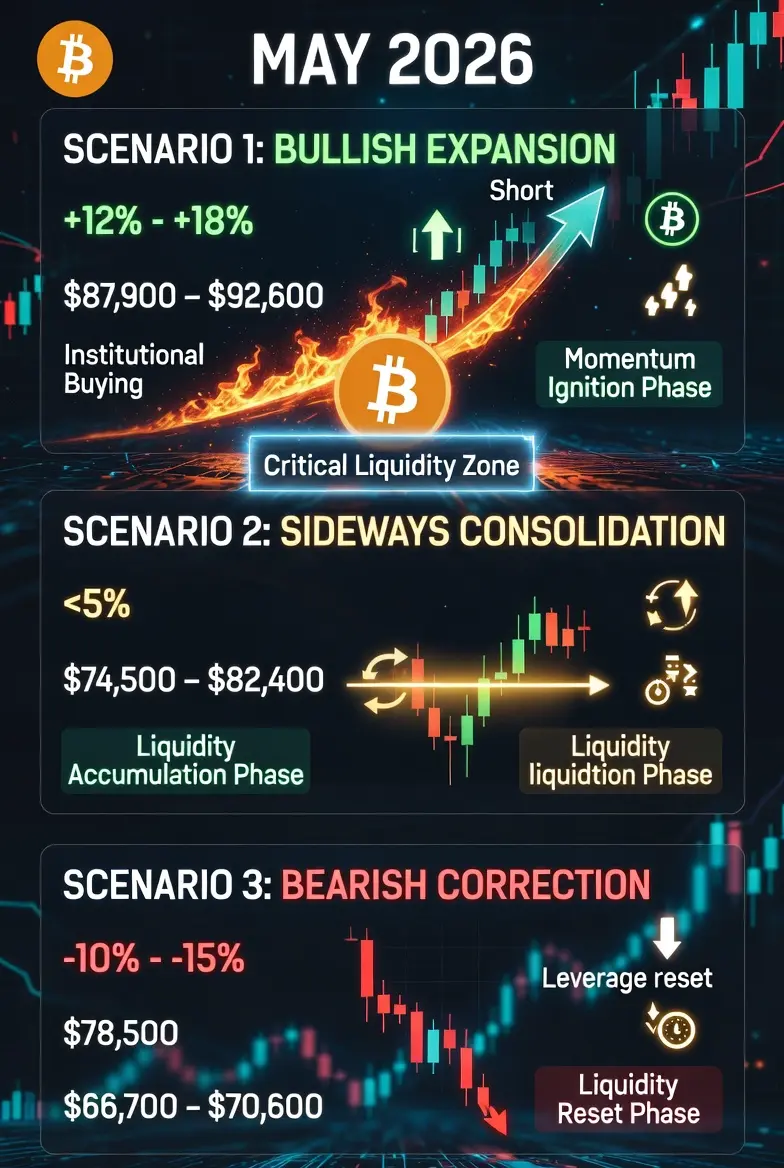
BITCOIN (BTC) NEXT MOVE — ADVANCED PROBABILITY MODEL (MAY 2026)
Current Price: $78,500 — A Critical Liquidity Zone Where Decisions Define Outcomes
This is not just another moment in the market where price randomly fluctuates and traders chase green candles or panic during red ones, this is a structurally important phase where Bitcoin is compressing within a high-stakes zone, and beneath this calm-looking price action, a complex battle is unfolding between institutional positioning, algorithmic execution, and retail psychology, and the outcome of this phase will def
BTC0.82%
MMT2.53%
HighAmbition
#GateSquareMayTradingShare
BITCOIN (BTC) NEXT MOVE — ADVANCED PROBABILITY MODEL (MAY 2026)
Current Price: $78,500 — A Critical Liquidity Zone Where Decisions Define Outcomes
This is not just another moment in the market where price randomly fluctuates and traders chase green candles or panic during red ones, this is a structurally important phase where Bitcoin is compressing within a high-stakes zone, and beneath this calm-looking price action, a complex battle is unfolding between institutional positioning, algorithmic execution, and retail psychology, and the outcome of this phase will define the next major directional move that can either reward prepared traders or completely wipe out those who are operating on emotions instead of structured thinking.
Most traders at this level are still stuck in a binary mindset, constantly asking whether Bitcoin will go up or down next, but that approach is fundamentally flawed because the market does not operate on certainty, it operates on probabilities, and the only way to stay consistently profitable in such an environment is to break the market into multiple scenarios, assign realistic percentage expectations, and prepare actionable strategies for each outcome instead of reacting late when the move has already happened
At the current $78,500 level, Bitcoin is sitting at a pivot zone where liquidity is building both above and below the price, meaning the market has incentives in both directions, which increases volatility potential and decreases predictability, and this is exactly why we shift from prediction to probability-based execution models.
SCENARIO 1: BULLISH EXPANSION (+12% to +18%) — MOMENTUM IGNITION PHASE
In this scenario, Bitcoin successfully defends its support structure and begins to attract aggressive buying pressure, not only from retail participants but more importantly from institutional flows that are quietly positioning themselves before a breakout becomes obvious to the majority, and once price starts pushing above key resistance zones, the market transitions from accumulation to expansion, triggering a chain reaction of momentum-driven buying and short liquidations.
From the current $78,500, a +12% to +18% move projects Bitcoin into the range of:
$87,900 → $92,600
This move is not just a simple upward trend, it is typically characterized by acceleration phases, where price moves faster as it rises due to the presence of liquidity clusters above resistance levels, and these clusters act like magnets, pulling price toward them as market makers exploit stop-loss orders and forced exits from short sellers.
However, one of the biggest misconceptions about bullish markets is that they are easy to trade, when in reality, they are filled with manipulative micro pullbacks, sudden volatility spikes, and fake breakdowns designed to remove weak hands before continuation, which means that traders without a clear plan often exit early and miss the majority of the move.
In this environment, patience and structure are more valuable than speed, and traders who scale into positions instead of chasing entries are the ones who extract the most value.
Bullish Strategic Insight:
If Bitcoin breaks above resistance with strong volume and holds above it, the probability of continuation toward $88K–$92K increases significantly, but success depends on disciplined execution rather than emotional reaction.
SCENARIO 2: SIDEWAYS CONSOLIDATION (±5%) — LIQUIDITY ACCUMULATION PHASE
This is the most deceptive phase of the market, where Bitcoin appears stable on the surface but is internally building the conditions necessary for a larger move, and during this time, price oscillates within a relatively tight range, creating multiple false signals that trap traders on both sides.
From $78,500, a ±5% range defines:
👉 Lower Range: ~$74,500
👉 Upper Range: ~$82,400
This phase is often misunderstood as “boring” or “inactive,” but in reality, it is one of the most strategically important zones, because it is where large players accumulate positions without significantly moving the market, while retail traders exhaust themselves through overtrading and inconsistent decision-making
The defining characteristics of this phase include:
Frequent fake breakouts above resistance followed by quick reversals
Sudden dips below support that recover rapidly
Lack of sustained momentum in either direction
Declining emotional conviction among traders
This environment punishes impatience and rewards precision, and traders who understand this phase shift their focus from aggressive trend trading to range-based strategies, smaller position sizes, and strict risk management.
Sideways Strategic Insight:
Bitcoin moving between $74K–$82K is not a signal of weakness, it is a preparation phase, and those who preserve capital here gain a significant advantage when the breakout eventually occurs.
SCENARIO 3: BEARISH CORRECTION (-10% to -15%) — LIQUIDITY RESET PHASE
If Bitcoin fails to maintain its current support structure and selling pressure intensifies, the market can enter a controlled corrective phase where price moves downward with purpose, targeting liquidity zones below and resetting the overall structure
From $78,500, a -10% to -15% move places Bitcoin in the range of:
$70,600 → $66,700
This phase is often perceived as a collapse by inexperienced traders, but in reality, it is a necessary market function, where excess leverage is removed, funding rates normalize, and long positions that were built without proper risk control are forced out of the system
The transition into this phase is typically confirmed by:
Strong breakdown below support with increased volume
Weak recovery attempts that fail to reclaim lost levels
Rapid shift in sentiment from optimism to fear
This is where the majority makes critical mistakes, either by panic selling near the bottom or attempting to catch reversals without confirmation, both of which result in losses, while experienced traders either capitalize on the downside with controlled risk or patiently wait for high-probability re-entry zones.
Bearish Strategic Insight:
A move toward $66K–$70K is not the end of Bitcoin’s structure, it is a recalibration phase that creates future opportunity for those who remain patient and calculated.
DEEP MARKET REALITY — UNDERSTAND THIS OR GET LEFT BEHIND
At $78,500, Bitcoin is not simply choosing a direction, it is building a decision environment, and traders who fail to adapt to this complexity will continue to operate with outdated thinking patterns that no longer work in modern markets.
The truth is harsh but clear:
👉 The market is engineered to exploit emotional behavior
👉 Liquidity exists where traders are most vulnerable
👉 Price moves toward pain, not comfort
And this is why probability-based thinking is not optional, it is essential.
repost-content-media
  • Reward
  • Comment
  • Repost
  • Share
#GateSquareMayTradingShare
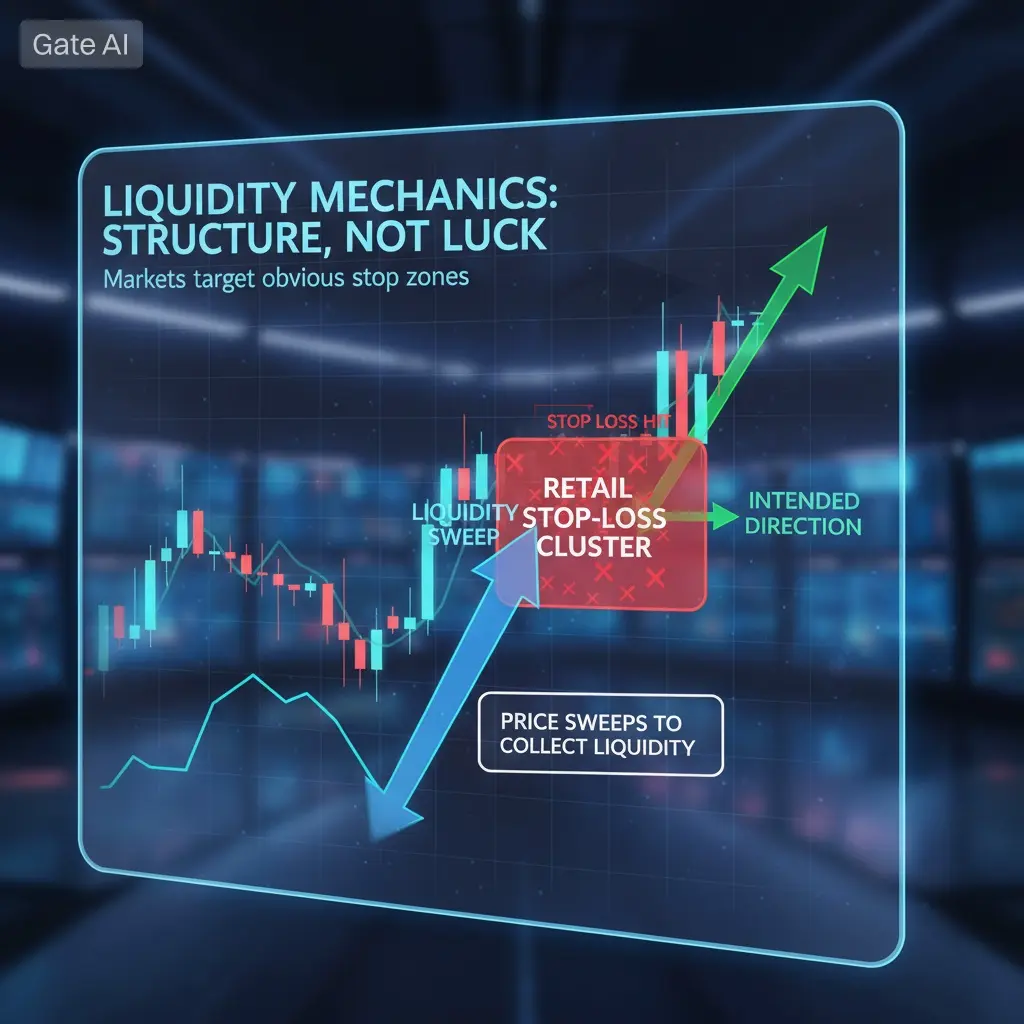
WHY YOUR STOP LOSS ALWAYS GETS HIT BEFORE THE MARKET MOVES IN YOUR DIRECTION
This is not bad luck. This is not randomness. This is engineered market structure, smart money psychology, and liquidity mechanics working in perfect harmony to extract value from predictable retail behavior.
In today’s Bitcoin market hovering around $78,500, we are in a classic consolidation zone where both bullish and bearish positions are heavily clustered. Price isn’t wandering aimlessly — it is deliberately probing liquidity pools on both sides before committing to the next major dir
BTC0.82%
HighAmbition
#GateSquareMayTradingShare
WHY YOUR STOP LOSS ALWAYS GETS HIT BEFORE THE MARKET MOVES IN YOUR DIRECTION
This is not bad luck. This is not randomness. This is engineered market structure, smart money psychology, and liquidity mechanics working in perfect harmony to extract value from predictable retail behavior.
In today’s Bitcoin market hovering around $78,500, we are in a classic consolidation zone where both bullish and bearish positions are heavily clustered. Price isn’t wandering aimlessly — it is deliberately probing liquidity pools on both sides before committing to the next major directional leg. Most traders lose here not because their analysis is wrong, but because they fail to understand that their stop loss is often the very fuel the market needs.
THE CORE TRUTH: STOP LOSSES = LIQUIDITY POOLS
Large institutions, whales, and market makers cannot enter or exit multi-million or billion-dollar positions without sufficient liquidity. They need opposing orders to absorb their size without massive slippage.
Where does this liquidity come from?
Retail stop losses
Panic sells/buys
Overleveraged liquidations
Late breakout entries
Emotional FOMO/FUD reactions
Your stop loss is not hidden. In aggregated order flow data, clustered stops appear as clear liquidity zones. Algorithms and smart money target these zones first because that’s where the easiest order execution happens.
Markets do not move toward “fair value” — they move toward liquidity. Once liquidity is swept (collected), the real directional move often begins.
THE CLASSIC STOP LOSS HUNT MECHANISM — STEP BY STEP
Retail identifies obvious level
Example: Support at $75,000 or Resistance at $80,000.
Predictable placement
Longs put stops 1-2% below support ($74,500–$74,800)
Shorts put stops above resistance
Breakout traders set buy-stops or limit orders at round numbers
The hunt phase
Price is driven toward the cluster with increasing speed. Volume spikes as liquidations cascade and fuel the move.
Liquidity collection
Stops are triggered → large block of orders executed → smart money enters/exits the opposite side.
Reversal & real move
Price reverses sharply. The original directional bias you expected now plays out — but without you in the trade.
This pattern repeats across timeframes: 15-minute wicks, daily fakeouts, and weekly liquidity sweeps.
UPWARD STOP HUNT (BULL TRAP / SHORT SQUEEZE LIQUIDATION)
Scenario at $78,500:
Resistance cluster at $80,000 (psychological round number)
Short sellers’ stops and retail breakout buy orders stacked above
Price raids $81,000–$82,500 on strong volume and green candles
Social media turns euphoric, FOMO buying accelerates
Short liquidations add rocket fuel
Then the trap:
Sharp rejection candle with long upper wick
Price collapses back below $78,500, often targeting the lower liquidity pool
Result:
Late longs trapped at highs
Shorts liquidated at worst possible moment
Smart money distributed into strength
DOWNWARD STOP HUNT (BEAR TRAP / LONG LIQUIDATION)
Opposite scenario:
Support at $75,000 breaks
Panic selling + long liquidations drive price to $74,000 or $72,000–$70,000 zone
Headlines scream “Bitcoin crash”
Weak hands capitulate
Then the reversal:
Aggressive buying appears from lower liquidity pool
Price sweeps lows, reverses, and climbs back through $78,500 toward $80K+
Result:
Cheap accumulation by smart money
Panic sellers miss the rebound
Bears who shorted the low get squeezed
WHY YOUR STOPS ARE “TOO OBVIOUS”
Retail behavior is highly correlated because:
Same YouTube channels, Twitter accounts, and TradingView setups
Same textbook support/resistance rules
Same risk management teachings (tight stops below/above candles)
Emotional clustering around round numbers ($70K, $75K, $80K, $100K)
This creates liquidity symmetry that institutions can map and exploit with high precision.
VOLUME + WICK STRUCTURE — THE TELLTALE SIGNS
During a hunt:
Explosive volume spike
Long wick (upper or lower)
Fast move into obvious level
Immediate reversal on decreasing volume
After liquidity sweep:
Volume dries up
Price consolidates or trends cleanly
Higher probability continuation
Many traders get stopped out, then watch the market move in their original direction with perfect structure — the classic “wrong twice” feeling.
PSYCHOLOGY: THE INVISIBLE FUEL
Greed → Late entries at breakouts
Fear → Premature exits at breakdowns
Hope → Holding through hunts
FOMO → Chasing wicks
Smart money doesn’t fight this psychology — they engineer it.
PROFESSIONAL APPROACH — HOW TO STOP FEEDING LIQUIDITY
Wait for the sweep: Enter after obvious liquidity has been taken, not before.
Wider invalidation: Use structural levels (higher timeframe swing points) instead of tight candle-based stops.
Avoid round numbers for stops — place them in less obvious zones.
Lower leverage in consolidation/uncertain zones.
Think in liquidity terms: Ask “Where will stops be clustered?” instead of “Where will price go?”
Multiple timeframe confirmation: Look for alignment across daily + 4H + 1H.
Position sizing: Risk less when liquidity hunts are probable.
Fakeout trading: Some advanced traders deliberately trade the manipulation phase.
CURRENT BTC LIQUIDITY MAP — MAY 2026 ($78,500)
Upper Liquidity Pool: $80,000 – $83,000+
(Short stops, breakout buys, FOMO targets)
Lower Liquidity Pool: $74,000 – $70,000
(Long stops, panic liquidation clusters, support breaks)
Most probable near-term behavior:
Sweep one side aggressively → trap participants → reverse and target the opposite pool → then expansion into the real trend.
THE HARDEST TRUTH
Your stop loss isn’t being hunted personally. It is simply part of a statistically predictable liquidity map that the market clears before its next major move.
The market is mechanical, not emotional.
If your placement is obvious, your exit was already priced in.
ULTIMATE POWER LINE:
“The market does not punish your stop loss — it collects what was always predictable. Master liquidity, or remain part of the liquidity.”
Trade less. Observe more. Think like the institutions, not like the crowd.
Once you internalize that price is the distraction and liquidity is the truth, your entire trading psychology shifts — and so do your results.
Stay disciplined.#GateSquare #CreatorCarnival #ContentMining
repost-content-media
  • Reward
  • Comment
  • Repost
  • Share
#OilBreaks110
Oil Breaks Key Psychological Zone Near $110 Narrative — (Current Context: ~$102.5)
Market Snapshot: Where Oil Stands Right Now
Crude oil (WTI/Brent narrative depending on contract) is currently trading around $102.5 per barrel, sitting in a highly sensitive geopolitical and macro-driven zone. Even before touching $110, the market is already reacting like it is in a “pre-shock” environment.
At this stage, oil is not just reacting to supply and demand — it is reacting to fear premiums, geopolitical risk, and liquidity expectations.
Why Oil Prices Are Rising (Key Drivers Explai
HighAmbition
#OilBreaks110
Oil Breaks Key Psychological Zone Near $110 Narrative — (Current Context: ~$102.5)
Market Snapshot: Where Oil Stands Right Now
Crude oil (WTI/Brent narrative depending on contract) is currently trading around $102.5 per barrel, sitting in a highly sensitive geopolitical and macro-driven zone. Even before touching $110, the market is already reacting like it is in a “pre-shock” environment.
At this stage, oil is not just reacting to supply and demand — it is reacting to fear premiums, geopolitical risk, and liquidity expectations.
Why Oil Prices Are Rising (Key Drivers Explained)
1. Geopolitical Risk Premium (Iran + Middle East Tension Factor)
One of the biggest drivers in recent moves is the Middle East geopolitical uncertainty, particularly surrounding Iran-related tensions and regional stability.
Markets typically price oil higher when:
There is uncertainty around Iranian exports
Regional military or diplomatic tensions increase
Shipping routes become risky
Even rumors of escalation can add a risk premium of $5–$15 per barrel instantly.
If there are signals of de-escalation or ceasefire-style stability, oil often pulls back sharply because that risk premium gets removed.
2. Strait of Hormuz — The Global Pressure Point
The Strait of Hormuz is one of the most critical oil chokepoints in the world.
Why it matters:
~20% of global oil supply passes through it
Any disruption = immediate global supply shock fears
Even partial risk perception increases price volatility
Current situation logic (market view):
If tensions rise → insurance costs for shipping increase → oil becomes more expensive
If stability improves → risk premium reduces → oil cools down
So traders always monitor this region as a global oil “pressure valve”.
3. Supply Constraints (OPEC+ Behavior)
Another key factor is controlled supply from major producers.
OPEC+ supply discipline keeps barrels limited
Production cuts or extensions tighten global supply
Inventories reduce → prices stabilize at higher levels
Even without geopolitical tension, restricted supply alone can keep oil elevated above $90–$100 zone.
4. US Dollar Strength & Interest Rate Expectations
Oil is priced in USD, so:
Strong dollar → oil becomes expensive for global buyers → demand pressure
Weak dollar → oil tends to rise
Also:
High interest rates → slower global growth → oil demand uncertainty
But sometimes inflation fear overrides demand weakness
So oil becomes a macro battlefield between inflation vs growth slowdown.
5. Inflation Feedback Loop
Higher oil prices directly increase inflation:
Fuel prices rise
Transport costs increase
Food and goods become expensive
Corporate margins get squeezed
This creates a secondary inflation wave, forcing central banks to stay hawkish longer.
Iran Situation: Escalation vs De-escalation Impact (Market Interpretation)
Markets are currently sensitive to two possible narratives:
If escalation increases:
Supply disruption fears rise
Strait of Hormuz risk premium expands
Oil can spike quickly toward $110–$120 zone
If de-escalation improves:
Risk premium disappears
Oil can retrace back toward $95–$98
Volatility reduces significantly
Important: Markets often react faster to fear than to stability.
Macro Impact on Global Markets
Stock Markets
Higher oil = higher inflation fears
Tech and growth stocks come under pressure
Energy stocks outperform
Crypto Markets (Bitcoin & Risk Assets)
Oil spikes indirectly affect crypto through:
Strong dollar environment → crypto pressure
Risk-off sentiment → liquidity reduces
Institutional caution increases
However, in some cases:
Inflation hedge narrative can support Bitcoin long-term
So impact is mixed but volatility-increasing.
Key Oil Price Scenarios
Bullish Scenario (Risk escalation continues)
Break above $105 confirmed
Momentum toward $110–$115
Extreme case: $120 if supply shock fears intensify
Neutral Scenario (current range)
$98–$105 consolidation
Market waits for geopolitical clarity
Bearish Scenario (de-escalation + demand weakness)
Drop below $100
Move toward $95–$92 zone
Relief in global risk premium
Trader Strategy Guide (Very Important)
1. Do NOT trade oil emotionally
Oil is a headline-driven market. One news update can reverse trend in minutes.
2. Trend Strategy (Breakout Trading)
If price holds above:
$105 → bullish continuation likely
Target: $110–$115
If rejected:
Fake breakout risk increases
Sell pressure can return quickly
3. Range Strategy (Best in uncertain geopolitics)
Buy near support: $98–$100
Sell near resistance: $105–$108
Keep tight stop-losses
4. Risk Management Rules
Never over-leverage oil trades
Use stop-loss always (volatility is extreme)
Avoid holding large positions during breaking news
Reduce position size during geopolitical uncertainty
5. Smart Trader Mindset
Professional traders focus on:
Liquidity shifts
News reaction speed
Risk premium expansion/contraction
Not just “direction”
Key Technical Psychological Levels
Strong support: $98
Mid support: $100
Resistance zone: $105
Major breakout zone: $110
Extreme bullish extension: $115–$120
Final Market Conclusion
Oil at $102.5 is not just a commodity price — it is a reflection of global tension, inflation fear, and supply security anxiety.
The market is currently in a risk-premium expansion phase, where geopolitical uncertainty (especially around Middle East dynamics and Strait of Hormuz risk perception) is adding upward pressure.
However, this rally is fragile:
Any de-escalation narrative can quickly unwind gains
Any escalation can trigger a sharp breakout toward $110+
In simple terms: Oil is not trending normally — it is reacting to global fear cycles and supply security concerns.
repost-content-media
  • Reward
  • Comment
  • Repost
  • Share
#OilBreaks110
Oil Breaks Key Psychological Zone Near $110 Narrative — (Current Context: ~$102.5)
Market Snapshot: Where Oil Stands Right Now
Crude oil (WTI/Brent narrative depending on contract) is currently trading around $102.5 per barrel, sitting in a highly sensitive geopolitical and macro-driven zone. Even before touching $110, the market is already reacting like it is in a “pre-shock” environment.
At this stage, oil is not just reacting to supply and demand — it is reacting to fear premiums, geopolitical risk, and liquidity expectations.
Why Oil Prices Are Rising (Key Drivers Explai
HighAmbition
#OilBreaks110
Oil Breaks Key Psychological Zone Near $110 Narrative — (Current Context: ~$102.5)
Market Snapshot: Where Oil Stands Right Now
Crude oil (WTI/Brent narrative depending on contract) is currently trading around $102.5 per barrel, sitting in a highly sensitive geopolitical and macro-driven zone. Even before touching $110, the market is already reacting like it is in a “pre-shock” environment.
At this stage, oil is not just reacting to supply and demand — it is reacting to fear premiums, geopolitical risk, and liquidity expectations.
Why Oil Prices Are Rising (Key Drivers Explained)
1. Geopolitical Risk Premium (Iran + Middle East Tension Factor)
One of the biggest drivers in recent moves is the Middle East geopolitical uncertainty, particularly surrounding Iran-related tensions and regional stability.
Markets typically price oil higher when:
There is uncertainty around Iranian exports
Regional military or diplomatic tensions increase
Shipping routes become risky
Even rumors of escalation can add a risk premium of $5–$15 per barrel instantly.
If there are signals of de-escalation or ceasefire-style stability, oil often pulls back sharply because that risk premium gets removed.
2. Strait of Hormuz — The Global Pressure Point
The Strait of Hormuz is one of the most critical oil chokepoints in the world.
Why it matters:
~20% of global oil supply passes through it
Any disruption = immediate global supply shock fears
Even partial risk perception increases price volatility
Current situation logic (market view):
If tensions rise → insurance costs for shipping increase → oil becomes more expensive
If stability improves → risk premium reduces → oil cools down
So traders always monitor this region as a global oil “pressure valve”.
3. Supply Constraints (OPEC+ Behavior)
Another key factor is controlled supply from major producers.
OPEC+ supply discipline keeps barrels limited
Production cuts or extensions tighten global supply
Inventories reduce → prices stabilize at higher levels
Even without geopolitical tension, restricted supply alone can keep oil elevated above $90–$100 zone.
4. US Dollar Strength & Interest Rate Expectations
Oil is priced in USD, so:
Strong dollar → oil becomes expensive for global buyers → demand pressure
Weak dollar → oil tends to rise
Also:
High interest rates → slower global growth → oil demand uncertainty
But sometimes inflation fear overrides demand weakness
So oil becomes a macro battlefield between inflation vs growth slowdown.
5. Inflation Feedback Loop
Higher oil prices directly increase inflation:
Fuel prices rise
Transport costs increase
Food and goods become expensive
Corporate margins get squeezed
This creates a secondary inflation wave, forcing central banks to stay hawkish longer.
Iran Situation: Escalation vs De-escalation Impact (Market Interpretation)
Markets are currently sensitive to two possible narratives:
If escalation increases:
Supply disruption fears rise
Strait of Hormuz risk premium expands
Oil can spike quickly toward $110–$120 zone
If de-escalation improves:
Risk premium disappears
Oil can retrace back toward $95–$98
Volatility reduces significantly
Important: Markets often react faster to fear than to stability.
Macro Impact on Global Markets
Stock Markets
Higher oil = higher inflation fears
Tech and growth stocks come under pressure
Energy stocks outperform
Crypto Markets (Bitcoin & Risk Assets)
Oil spikes indirectly affect crypto through:
Strong dollar environment → crypto pressure
Risk-off sentiment → liquidity reduces
Institutional caution increases
However, in some cases:
Inflation hedge narrative can support Bitcoin long-term
So impact is mixed but volatility-increasing.
Key Oil Price Scenarios
Bullish Scenario (Risk escalation continues)
Break above $105 confirmed
Momentum toward $110–$115
Extreme case: $120 if supply shock fears intensify
Neutral Scenario (current range)
$98–$105 consolidation
Market waits for geopolitical clarity
Bearish Scenario (de-escalation + demand weakness)
Drop below $100
Move toward $95–$92 zone
Relief in global risk premium
Trader Strategy Guide (Very Important)
1. Do NOT trade oil emotionally
Oil is a headline-driven market. One news update can reverse trend in minutes.
2. Trend Strategy (Breakout Trading)
If price holds above:
$105 → bullish continuation likely
Target: $110–$115
If rejected:
Fake breakout risk increases
Sell pressure can return quickly
3. Range Strategy (Best in uncertain geopolitics)
Buy near support: $98–$100
Sell near resistance: $105–$108
Keep tight stop-losses
4. Risk Management Rules
Never over-leverage oil trades
Use stop-loss always (volatility is extreme)
Avoid holding large positions during breaking news
Reduce position size during geopolitical uncertainty
5. Smart Trader Mindset
Professional traders focus on:
Liquidity shifts
News reaction speed
Risk premium expansion/contraction
Not just “direction”
Key Technical Psychological Levels
Strong support: $98
Mid support: $100
Resistance zone: $105
Major breakout zone: $110
Extreme bullish extension: $115–$120
Final Market Conclusion
Oil at $102.5 is not just a commodity price — it is a reflection of global tension, inflation fear, and supply security anxiety.
The market is currently in a risk-premium expansion phase, where geopolitical uncertainty (especially around Middle East dynamics and Strait of Hormuz risk perception) is adding upward pressure.
However, this rally is fragile:
Any de-escalation narrative can quickly unwind gains
Any escalation can trigger a sharp breakout toward $110+
In simple terms: Oil is not trending normally — it is reacting to global fear cycles and supply security concerns.
repost-content-media
  • Reward
  • Comment
  • Repost
  • Share
#WCTCTradingKingPK
The Silent Setup Before the Next Explosive Move
Market Overview and Current Positioning
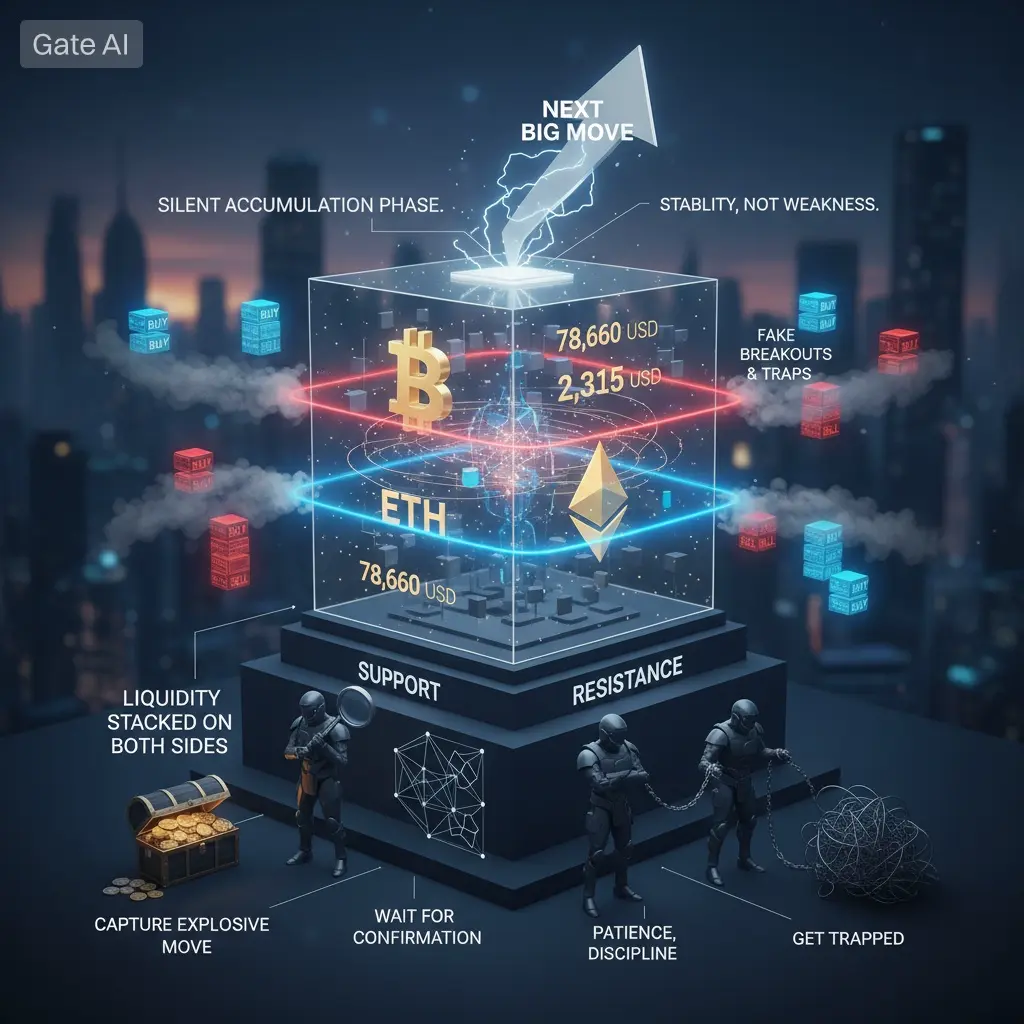
The market is currently in a critical phase where price action appears slow, but beneath the surface, a powerful setup is forming. Bitcoin is trading around 78,660, Ethereum is holding near 2,315, and Solana continues to maintain strength above the 80 region. This alignment across major assets reflects stability, not weakness. It shows that the market is holding structure while quietly preparing for its next directional move.
This phase is often ignored by most traders because volatility
BTC0.82%
ETH-0.25%
SOL2.97%
HighAmbition
#WCTCTradingKingPK
The Silent Setup Before the Next Explosive Move
Market Overview and Current Positioning
The market is currently in a critical phase where price action appears slow, but beneath the surface, a powerful setup is forming. Bitcoin is trading around 78,660, Ethereum is holding near 2,315, and Solana continues to maintain strength above the 80 region. This alignment across major assets reflects stability, not weakness. It shows that the market is holding structure while quietly preparing for its next directional move.
This phase is often ignored by most traders because volatility is low and there is no obvious trend. However, this is exactly where smart positioning happens. This is not the time to chase trades. This is the time to stay sharp, patient, and ready.
Market Structure and Compression Phase
The current structure is a textbook example of compression. Price is holding above key support levels while repeatedly testing resistance zones. This type of behavior indicates that sellers are losing strength while buyers are slowly building pressure.
Compression phases are extremely important because they act like a spring. The longer the market stays compressed, the stronger the eventual breakout tends to be. Bitcoin holding above its current range confirms that the trend is not broken. Ethereum stabilizing near 2.3K shows capital is still active, and Solana holding its level confirms that altcoins are not in a distribution phase.
This kind of alignment increases the probability that the next move will be expansion, but only after liquidity is fully built.
Liquidity Dynamics and Market Reality
The market does not move randomly. It moves toward liquidity. Right now, liquidity is positioned on both sides.
Above current Bitcoin price, there are breakout traders and short sellers whose stop losses can fuel an upward move. Below current levels, there are long positions with stop losses that can trigger a downside move.
This is why the market feels confusing. You see fake breakouts, sudden spikes, and quick reversals. These are not random moves. They are liquidity grabs designed to trap traders before the real move begins.
Understanding this gives you an edge. Instead of reacting emotionally, you start reading the intention behind price action.
Execution Strategy: Trade with Confirmation
A high-level trader does not predict blindly. The strategy is simple: react to confirmation.
If Bitcoin breaks above resistance with strength, the correct approach is to wait for a strong push, then a small pullback, and then continuation before entering. This confirms real momentum.
If the market drops below support, do not panic sell. Many breakdowns are traps. Let the move happen, watch for rejection, and only enter if the market shows signs of reversal.
If price stays within the current range, then the best approach is range trading. Buy near support, sell near resistance, and avoid overtrading. In this phase, capital protection is more important than aggressive gains.
Momentum and Volume Truth
Real moves are never weak. A true breakout comes with strong candles, increasing volume, and minimal rejection. If price moves slowly or without energy, it is usually a trap.
The same applies to downside moves. A sharp drop shows intent, while a slow decline shows uncertainty. Recognizing this difference helps you avoid low-quality trades and focus only on high-probability setups.
Intermarket Alignment
Bitcoin leads the market, but Ethereum and Solana confirm direction. When Bitcoin holds strong and Ethereum starts pushing higher, it signals hidden bullish momentum. If Solana follows, it confirms that risk appetite is increasing.
If Bitcoin weakens and altcoins drop faster, it shows a defensive market. Watching this relationship gives you early signals before the big move happens.
Psychology: The Real Battle
This phase is not testing your strategy. It is testing your discipline.
Most traders lose here because they: Overtrade out of boredom
Enter without confirmation
Exit due to fear
Professionals do the opposite. They wait, stay calm, and act only when the setup is clear. The ability to do nothing is a powerful skill in trading.
Risk Management
No setup is guaranteed. That is why risk management is everything. Define your risk before entering any trade. Keep losses small and controlled. Avoid overexposure in uncertain conditions.
In a compressed market, volatility can expand suddenly. Without proper risk control, one bad trade can wipe out multiple gains.
Final Insight
The market is building pressure. This phase will not last forever. When the move comes, it will be fast and aggressive.
Most traders will miss it because they will act too early or react emotionally. A small percentage will capture it because they stayed patient, waited for confirmation, and executed with precision.
This is not just a quiet market phase. This is the setup before the next big move. The opportunity will come, but only for those who are prepared, disciplined, and ready to act at the right moment.
repost-content-media
  • Reward
  • Comment
  • Repost
  • Share
#GateSquareMayTradingShare
The Market Before the Next Decision – Will Bitcoin Break 80K or Reject?
Current Market Structure and Price Context
Bitcoin is currently trading around 78,660, sitting very close to a critical psychological and technical level at 80,000. This zone is not just a round number, it represents a major liquidity and decision area where the market has to choose between continuation or rejection. Ethereum is holding near 2,315, confirming that the broader market is also in a consolidation state, waiting for Bitcoin’s direction
At this stage, the market is in a tight compress
BTC0.82%
ETH-0.25%
HighAmbition
#GateSquareMayTradingShare
The Market Before the Next Decision – Will Bitcoin Break 80K or Reject?
Current Market Structure and Price Context
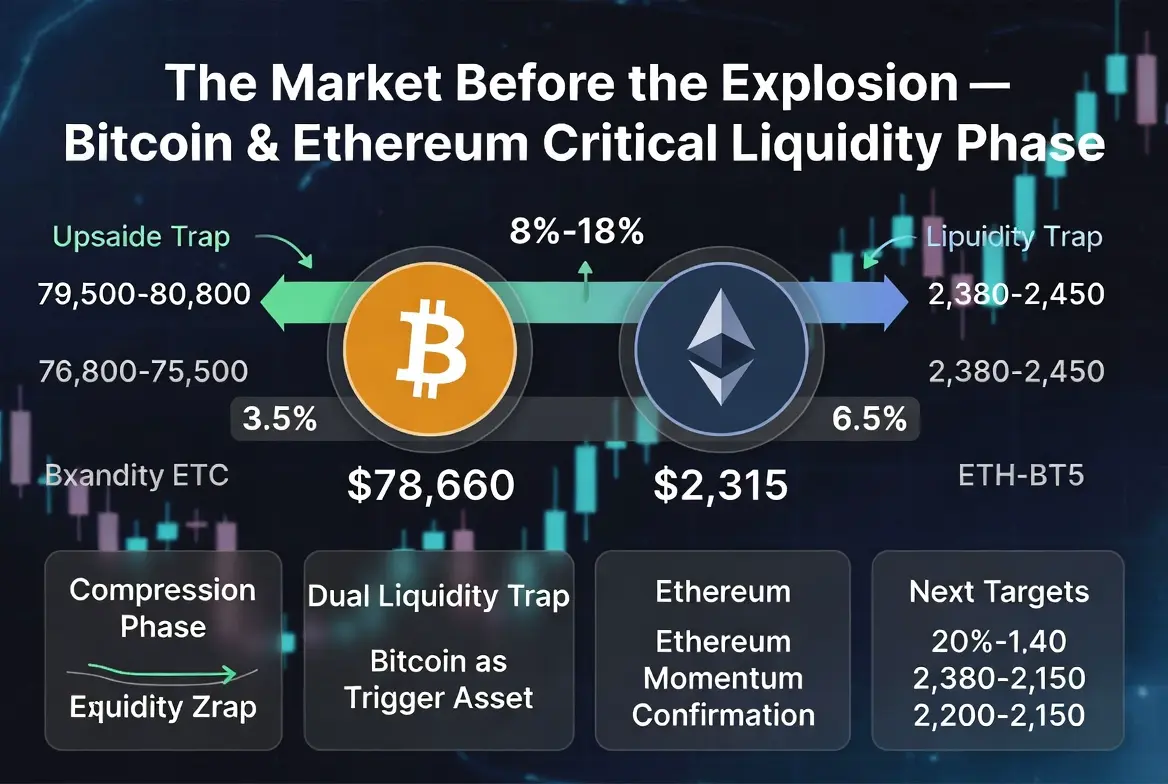
Bitcoin is currently trading around 78,660, sitting very close to a critical psychological and technical level at 80,000. This zone is not just a round number, it represents a major liquidity and decision area where the market has to choose between continuation or rejection. Ethereum is holding near 2,315, confirming that the broader market is also in a consolidation state, waiting for Bitcoin’s direction
At this stage, the market is in a tight compression phase where volatility has reduced and price is moving in a controlled structure. This means the next major move will likely be sharp, not gradual
Will Bitcoin Break 80K or Reject?
There are two clear possibilities, and both are valid depending on liquidity behavior and volume confirmation
Bullish Scenario – Break Above 80K
If Bitcoin successfully breaks and holds above 80,000 with strong volume, it would confirm a bullish continuation structure. This break is important because 80K is not just resistance, it is also a liquidity magnet where breakout traders and short positions are clustered.
A confirmed breakout above 80K could lead to a fast expansion move of approximately 3% to 8% initially, targeting levels around 82,500 to 86,000. If momentum continues, extended upside can even stretch further depending on market participation
However, the key condition here is confirmation. A weak breakout without volume or immediate rejection after crossing 80K would not be a valid signal.
Bearish Scenario – Rejection from 80K
If Bitcoin approaches 80,000 but fails to hold above it and shows rejection, then the market may enter a liquidity sweep phase. In this case, price could drop back into the 77,500 to 76,800 zone, representing a downside movement of approximately 2% to 4%
This scenario often happens when the market uses the 80K level to trap breakout buyers before reversing. These moves are fast and emotional, designed to trigger stop losses and collect liquidity before any real upward attempt
Sideways Scenario – Fake Breakouts and Range Expansion
There is also a third possibility where Bitcoin repeatedly tests the 80K level without breaking it properly. In this case, the market remains in a range between 77,000 and 80,000, creating fake breakouts on both sides.
This type of structure confuses most traders because it shows no clear direction. However, it is actually a liquidity-building phase where both sides of the market are being prepared for a stronger move later
Ethereum Confirmation Role
Ethereum at 2,315 is currently in a similar consolidation zone. If ETH starts showing strength above its resistance area while Bitcoin approaches 80K, it increases the probability of a bullish breakout
If Ethereum weakens while Bitcoin tests 80K, it increases the chance of rejection and downside correction.
Ethereum is acting as a confirmation signal, not the primary driver
Key Insight – What Really Matters at 80K
The real question is not whether Bitcoin touches 80K, but whether it sustains above it with strength
A clean breakout requires: Strong volume expansion
Minimal rejection
Follow-through momentum
Without these conditions, 80K becomes a rejection zone rather than a breakout trigger.
Final Market Understanding
Bitcoin at 78,660 is extremely close to a major decision point. The 80K level will act as a liquidity battlefield where the next directional move will be decided
A breakout above 80K can trigger 3% to 8% upside expansion, while rejection can lead to 2% to 4% downside correction before stabilization
Right now, the market is not giving certainty, it is building pressure. And in such conditions, patience and confirmation will decide the outcome, not prediction.
repost-content-media
  • Reward
  • Comment
  • Repost
  • Share
#BitcoinETFOptionLimitQuadruples
US Bitcoin ETF Option Limit Quadruples
Introduction: A Major Structural Shift in Bitcoin Markets
The quadrupling of Bitcoin ETF option position limits marks a significant transformation in the structure of regulated crypto markets. This change, especially impacting major spot Bitcoin ETFs like IBIT, is not a minor technical update but a deep expansion of institutional capacity.
It enables far larger use of Bitcoin ETF options for hedging, speculation, volatility trading, and structured strategies. In simple terms, it allows more capital to flow through Bitcoi
BTC0.82%
ETH-0.25%
HighAmbition
#BitcoinETFOptionLimitQuadruples
US Bitcoin ETF Option Limit Quadruples
Introduction: A Major Structural Shift in Bitcoin Markets
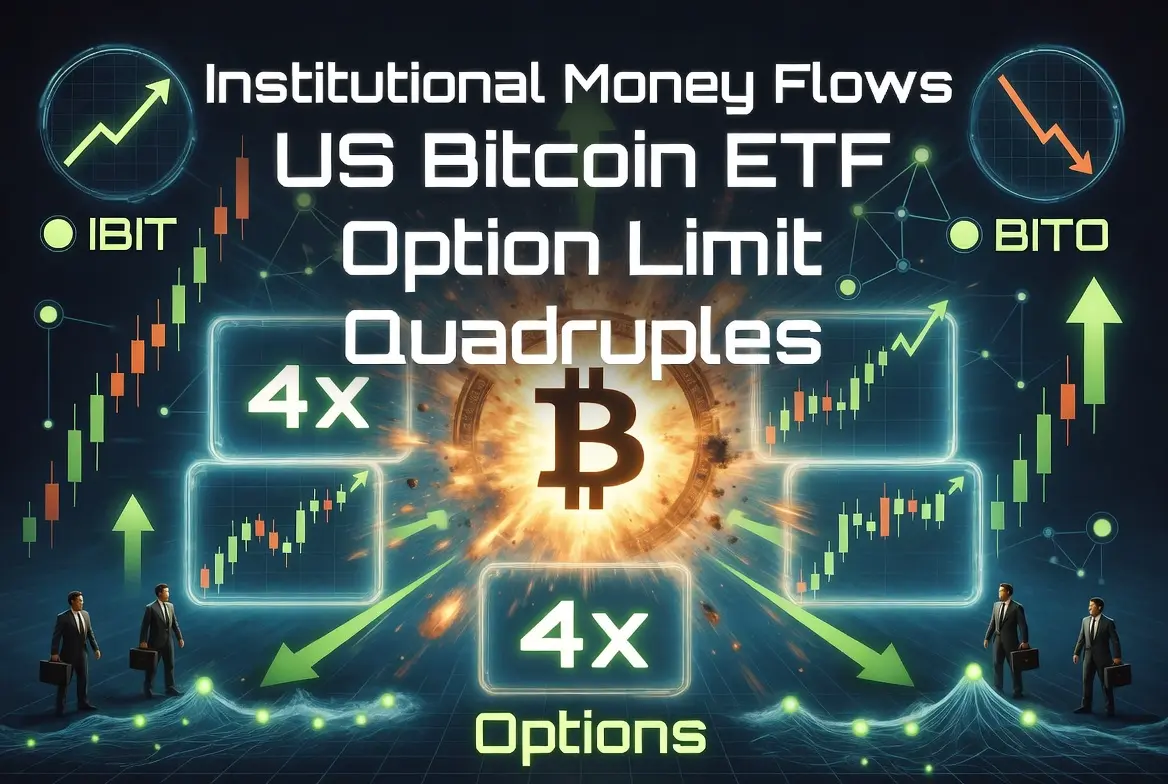
The quadrupling of Bitcoin ETF option position limits marks a significant transformation in the structure of regulated crypto markets. This change, especially impacting major spot Bitcoin ETFs like IBIT, is not a minor technical update but a deep expansion of institutional capacity.
It enables far larger use of Bitcoin ETF options for hedging, speculation, volatility trading, and structured strategies. In simple terms, it allows more capital to flow through Bitcoin-linked regulated derivatives, making the market deeper, more liquid, and more connected to traditional finance.
Current Market Conditions
Bitcoin is currently trading in a compressed range of $78,000 to $81,000, while Ethereum is moving between $2,250 and $2,450. This tight consolidation reflects a buildup of liquidity pressure, often seen before major expansion phases.
Such conditions become more sensitive when combined with increasing derivatives capacity, as institutional positioning begins to influence short-term price movements more strongly.
What Changed: ETF Options Limit Expansion
Position limits for Bitcoin ETF options have increased from approximately 250,000 contracts to 1,000,000 contracts per side, representing a 4x expansion in allowable exposure.
This significantly increases:
Institutional hedging capacity
Speculative trading volume
Market maker activity
Structured product development
In notional terms, this expands exposure potential into the $50B–$65B+ range, depending on Bitcoin price levels and volatility conditions.
Liquidity Impact and Market Depth
This change is expected to increase overall Bitcoin market liquidity by approximately:
10% to 25% in derivatives liquidity
8% to 18% in spot ETF liquidity improvement
15% to 30% increase in order book depth during active trading periods
As options activity increases, market makers hedge through spot ETF shares, creating stronger liquidity loops between derivatives and spot markets. This leads to tighter spreads and more efficient price discovery.
Institutional Flow Expansion
The higher limits allow large financial institutions to deploy more advanced strategies at scale, including:
Portfolio hedging using options structures
Volatility trading strategies
Covered call and yield enhancement products
Large-scale directional positioning
As a result, institutional Bitcoin ETF-related trading activity could increase by 15% to 40%, depending on market conditions and volatility cycles.
Volatility and Price Behavior Changes
With increased derivatives exposure, Bitcoin becomes more sensitive to positioning and hedging flows.
Expected price behavior:
Normal daily movement: 2% – 5%
Event-driven volatility: 5% – 12%
Extreme positioning phases: 10% – 15% intraday swings
Ethereum also sees spillover effects, typically ranging from 3% to 8% daily volatility, and higher during market stress or macro events.
This is driven by stronger gamma effects, where dealer hedging amplifies price movements.
Macro Sensitivity
Bitcoin is becoming more responsive to macroeconomic conditions:
A 0.25% move in U.S. yields can trigger 2% – 4% Bitcoin reactions
Dollar strength increases can cause 3% – 6% downside pressure
Inflation surprises may generate 4% – 8% volatility spikes
This shows Bitcoin increasingly behaving like a macro liquidity-sensitive asset rather than an isolated crypto instrument.
Price Scenario Outlook
Bullish Scenario (Liquidity Expansion Phase)
If ETF inflows and macro liquidity remain strong:
Bitcoin: $85,000 – $120,000+ (+10% to +50% upside potential)
Ethereum: $2,800 – $3,500+ (+15% to +40% upside potential)
Neutral Scenario (Range Expansion Phase)
If conditions remain balanced:
Bitcoin: $75,000 – $88,000 range (-3% to +12% range expansion)
Ethereum: $2,200 – $2,600 range
Bearish Scenario (Liquidity Stress)
If global liquidity tightens:
Bitcoin: $68,000 – $75,000 (-8% to -15% downside risk)
Ethereum: $1,900 – $2,200 (-10% to -18% risk range)
However, ETF-driven structural demand reduces the probability of deep sustained downturns compared to previous cycles.
Long-Term Structural Outlook
The expansion of ETF options capacity confirms Bitcoin’s transition into a fully institutional asset class.
Long-term projections:
Bitcoin cycle range: $90,000 – $130,000 base, with potential $140,000 – $180,000+ in strong liquidity cycles
Ethereum range: $3,000 – $4,500+ depending on market expansion
Altcoins: 20% – 150% selective upside during rotation phases
Market Structure Evolution
Bitcoin now operates in a dual-speed system:
Institutional Layer
Long-term flows
ETF accumulation
Macro-driven trends (10%–30% swings over weeks/months)
Derivatives Layer
Fast intraday volatility
Gamma-driven movements
Liquidity sweeps (2%–15% short-term swings)
This creates a more complex but deeper and more efficient market structure.
Final Conclusion
The quadrupling of Bitcoin ETF option limits is a major milestone in crypto market evolution. It expands liquidity, strengthens institutional participation, accelerates price discovery, and increases macro sensitivity.
Key impacts include:
Liquidity growth: +10% to +25%
Volatility expansion: +5% to +15% intraday spikes
Institutional activity: +15% to +40% growth potential
Faster price discovery: +20% to +30% improvement
Bitcoin is no longer just a speculative digital asset. It is evolving into a deep, institutionally integrated macro financial instrument, tightly connected to global liquidity cycles, ETF flows, and derivatives positioning.
The next major move from this consolidation phase is likely to be faster, sharper, and more liquidity-driven than previous cycles, marking a new era in Bitcoin market structure.
repost-content-media
  • Reward
  • Comment
  • Repost
  • Share
  • Pin