


Futures
Access hundreds of perpetual contracts
TradFi
Gold
One platform for global traditional assets
Options
Hot
Trade European-style vanilla options
Unified Account
Maximize your capital efficiency
Demo Trading
Introduction to Futures Trading
Learn the basics of futures trading
Futures Events
Join events to earn rewards
Demo Trading
Use virtual funds to practice risk-free trading
Launch
CandyDrop
Collect candies to earn airdrops
Launchpool
Quick staking, earn potential new tokens
HODLer Airdrop
Hold GT and get massive airdrops for free
Launchpad
Be early to the next big token project
Alpha Points
Trade on-chain assets and earn airdrops
Futures Points
Earn futures points and claim airdrop rewards


More





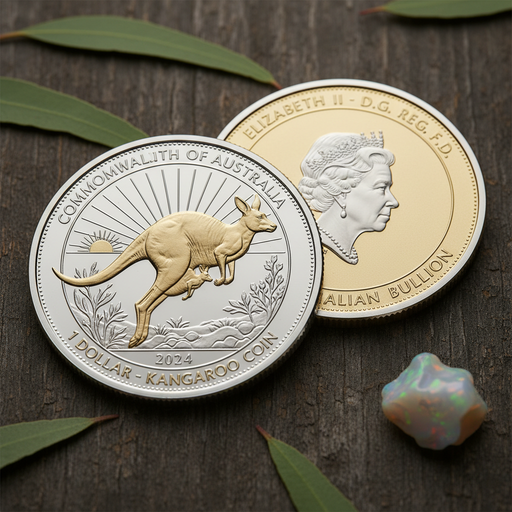
Gold prices "rollercoaster" reveal the diverse reactions: "Hermès of the gold world" attracts money, but some are losing so much they "cry"
The gold market is experiencing an unprecedented split. While international gold prices fluctuate at high levels, some jewelry brands see long lines outside their stores as consumers are willing to wait for hours to purchase gold jewelry priced well above the market price; other companies, however, find themselves in a predicament of plummeting performance and shrinking stores, even suffering huge losses due to mistakes in financial derivatives operations. In this wave of differentiation, brand positioning and risk management capabilities have become key factors determining survival.
The performance of Lao Pu Gold is nothing short of phenomenal. Known as the “Hermès of the gold industry,” this brand is expected to surpass 31.3 billion yuan in sales by 2025, with profits soaring 230% year-on-year to 4.868 billion yuan. Its secret to success lies in luxury branding of gold jewelry: maintaining a gross profit margin of over 37% through a “fixed price” strategy and opening all stores in top shopping malls such as SKP and Hang Lung, creating overlapping consumer scenarios with luxury brands like LV and Hermès. Data shows that the overlap rate of its consumers with the five major luxury brands reaches 82.4%. Last year, three price increases sparked a buying frenzy, with some products seeing price increases of over 50% still in high demand.
Traditional jewelers are also searching for breakthroughs. Chow Sang Sang is expected to double its net profit to 1.7 billion HKD in fiscal year 2025 thanks to the popularity of priced gold jewelry; Chao Hong Ji has seen its net profit grow by 125%-175% through youth-oriented strategies such as IP collaborations and cartoon beads, adding 163 new stores. These companies collectively attest to the upgrading trend of gold consumption—although the total demand for gold jewelry has decreased by 25%, the consumption amount has instead increased by 8%, with consumers more willing to pay for design premiums.
However, not all companies can share in this feast. Lao Feng Xiang is projected to see a 6.99% decline in revenue to 52.8 billion yuan in 2025, with net profit down by 9.99%, closing 499 franchise stores throughout the year; China National Gold’s net profit attributable to shareholders has halved to 286-368 million yuan, with its gold leasing business incurring a 1 billion yuan fair value change loss. More dramatically, Meng Jin Yuan, which hedged risks through Au(T+D) contracts and gold leasing, suffered a derivative loss of 1.01 billion yuan due to soaring gold prices, completely offsetting the revenue from hot-selling products.
The risks of cross-industry operations are also significant. Mingpai Jewelry’s investment in the photovoltaic sector led to an asset impairment provision of 170 million yuan, resulting in a shift from profit to loss in its annual report, with an expected loss of 280-380 million yuan; Cuihua Jewelry is expected to see profit growth in its main business but has been labeled ST due to 234 million yuan in debt from its lithium battery business. These cases expose the strategic confusion of traditional jewelers in their diversified transformation.
The industry reshuffle is accelerating. Chow Tai Fook plans to close 896 stores in fiscal year 2025 and is transforming by focusing on high-margin products and launching popular series like “Chuanfu” and “Forbidden City,” achieving a 15.26% year-on-year net profit growth in the second half of the year. Cai Bai Co., Ltd. has managed to control channels through a direct sales model, achieving a net profit growth of 47.43%-71.07% amid fluctuating gold prices. The ancient gold sector stands out, with the “Four Sisters of Ancient Gold” remaining popular after raising prices, confirming the strong resilience of niche markets.
Behind this differentiation is a fundamental shift in consumer logic. As Generation Z becomes the main force in gold consumption, they are no longer satisfied with traditional value preservation needs but view gold jewelry as a fashion accessory and social currency. Companies must redefine the value chain of gold—shifting from mere material suppliers to cultural symbol creators, moving from price competition to brand premium construction. Those companies that fail to adjust their strategies in a timely manner will ultimately pay the price in the industry reshuffle.