


Futures
Access hundreds of perpetual contracts
TradFi
Gold
One platform for global traditional assets
Options
Hot
Trade European-style vanilla options
Unified Account
Maximize your capital efficiency
Demo Trading
Introduction to Futures Trading
Learn the basics of futures trading
Futures Events
Join events to earn rewards
Demo Trading
Use virtual funds to practice risk-free trading
Launch
CandyDrop
Collect candies to earn airdrops
Launchpool
Quick staking, earn potential new tokens
HODLer Airdrop
Hold GT and get massive airdrops for free
Launchpad
Be early to the next big token project
Alpha Points
Trade on-chain assets and earn airdrops
Futures Points
Earn futures points and claim airdrop rewards


More






$700 Million Iran Betting Incident Pushes US to Tighten Prediction Market Rules
Wall Street favors platforms that can monetize attention, but once that attention is used on sensitive topics, Washington intervenes.
Article by: Andjela Radmilac
Translation: Saoirse, Foresight News
Polymarket and Kalshi are seeking funding by aiming for valuations comparable to top consumer fintech companies, while U.S. regulators are accelerating the development of new rules for such products. Reports indicate both companies are in early-stage funding negotiations, with valuations potentially reaching around $20 billion.
This wave of funding coincides with a political storm.
Iran-related contracts have transformed prediction markets from niche forecasting tools into controversial focal points involving insider information and war speculation. Reuters investigated trading markets on Polymarket related to the timing of Iran attacks and the potential removal of Khamenei, finding approximately $529 million invested in attack-timing contracts and about $150 million in contracts related to Khamenei; meanwhile, reports suggest six accounts made precise trades, earning a total profit of about $1.2 million.
Now, U.S. lawmakers are drafting relevant legislation, and the Commodity Futures Trading Commission (CFTC) has announced plans to advance new regulatory rules.
Wall Street believes that probability forecasting will become part of the information ecosystem; however, Washington is blocking this, fearing that such systems could, at the worst moments, benefit those who shouldn’t profit.
Why Wall Street is optimistic about prediction markets
Prediction markets can convert attention into trades, earn transaction fees, and generate real-time probability data, packaging it into information products.
It is this data product that has moved prediction markets out of the “gambling” category and into the realm of information tools similar to market data, polls, and financial terminals—because their output formats and market quotes are highly similar.
Mainstream media have begun collaborating with these platforms:
These collaborations have amplified the impact of scandals: once probability data is embedded in mainstream media, it influences public perceptions of event likelihood and urgency. This is also why regulators believe platforms must adhere to higher standards of fairness, monitoring, and settlement.
This explains why, despite political controversy over Iran-related trades, the valuations of these companies continue to rise.
Iran Events Make Prediction Markets a Washington Dilemma
The greatest advantage of prediction markets is early access to information. Iran-related contracts clearly indicate that these platforms touch on sensitive information that governments seek to control.
On March 2, bets on attack timing reached $529 million, and contracts related to Khamenei’s death and removal totaled about $150 million. Just hours before the attack on Iran’s high officials, six accounts suddenly funded trades, earning $1.2 million through these contracts.
As conflicts escalate, numerous reports have highlighted large numbers of newly registered accounts precisely betting on Iran-related events. Such reports have brought platforms like Polymarket directly into the scope of government regulation and law enforcement.
The core issues these platforms face now are trust and fairness.
For prediction markets to operate, users must believe that rules are stable, outcomes are consistently judged, and there is no insider bias. When the trading involves military actions, trust issues escalate into political issues—because the motivation for early trading could be to leak sensitive or even classified information.
This is also why policy responses are rapidly intensifying.
Congressional representatives Mike Levin and Chris Murphy are drafting legislation aimed at regulating prediction markets. Congress will directly define which event contracts can be legally traded.
Additionally, CFTC Chair Michael Selig stated that the agency has submitted a pre-rulemaking notice to the White House Office of Management and Budget, signaling upcoming regulatory frameworks for prediction markets that could impact contract design, monitoring, and enforcement.
Washington faces a clear choice:
The following data reveal why this conflict is difficult to resolve: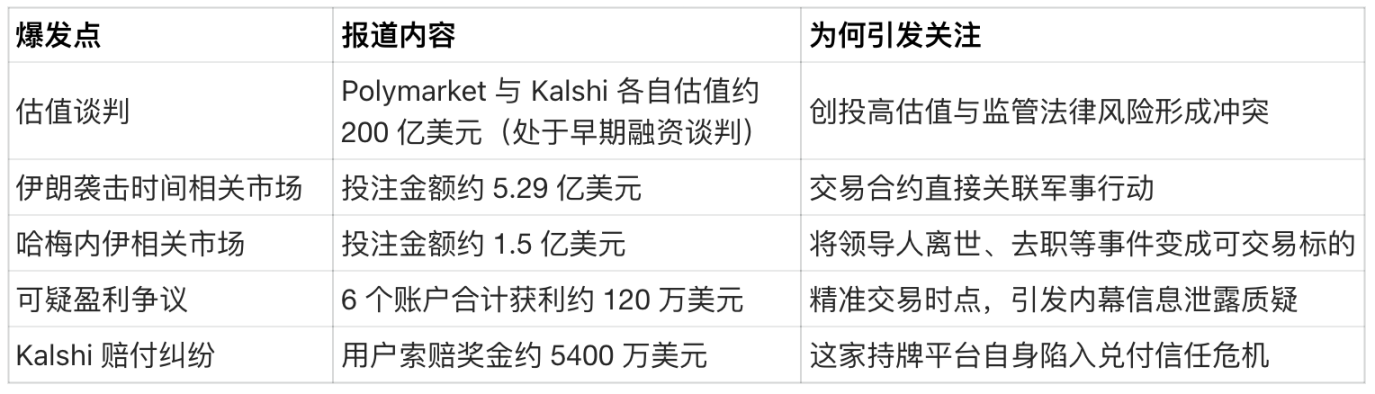
Kalshi’s own disputes also illustrate that regulation alone cannot fully resolve trust issues.
On March 5, Kalshi faced a class-action lawsuit, with users accusing the platform of refusing to pay approximately $54 million in winnings—bets that Iran’s top leader would be removed before March 1. The plaintiffs claimed that after the attack on Iran’s leadership, the platform temporarily activated an “death-related exception clause” to deny payout.
Kalshi responded that its rules regarding leadership death bets had been clear all along, and that it had refunded fees and compensated users, with no losses incurred.
This exemplifies the current dilemma faced by investors and policymakers.
Investors want the industry to grow and become more mainstream, with probability forecast data integrated into the broader information ecosystem based on sound reasoning.
Users, on the other hand, want platform rules to be stable and trustworthy, especially when event outcomes are controversial and emotionally charged.
Regulators aim to prevent sensitive national actions from becoming tradable products, avoiding situations where “access to confidential intelligence yields the best trading profits.” Because once these prices influence public opinion and information environments, the associated risks can evolve into governance challenges.