

Trade
Trading Type
Spot
Trade crypto freely
Pre-Market
Trade new tokens before they are officially listed
Margin
Magnify your profit with leverage
Convert & Block Trading
0 Fees
Trade any size with no fees and no slippage
Alpha
Points
Get promising tokens in streamlined on-chain trading
Leveraged Tokens
Get exposure to leveraged positions simply
Futures
Futures
Hundreds of contracts settled in USDT or BTC
Options
HOT
Trade European-style vanilla options
Unified Account
Maximize your capital efficiency
Demo Trading
Futures Kickoff
Get prepared for your futures trading
Futures Events
Participate in events to win generous rewards
Demo Trading
Use virtual funds to experience risk-free trading
Earn
Launch
CandyDrop
Collect candies to earn airdrops
Launchpool
Quick staking, earn potential new tokens
HODLer Airdrop
Hold GT and get massive airdrops for free
Launchpad
Be early to the next big token project
Alpha Points
NEW
Trade on-chain assets and enjoy airdrop rewards!
Futures Points
NEW
Earn futures points and claim airdrop rewards
Investment
Simple Earn
Earn interests with idle tokens
Auto-Invest
Auto-invest on a regular basis
Dual Investment
Buy low and sell high to take profits from price fluctuations
Soft Staking
Earn rewards with flexible staking
Crypto Loan
0 Fees
Pledge one crypto to borrow another
Lending Center
One-stop lending hub
VIP Wealth Hub
Customized wealth management empowers your assets growth
Private Wealth Management
Customized asset management to grow your digital assets
Quant Fund
Top asset management team helps you profit without hassle
Staking
Stake cryptos to earn in PoS products
Smart Leverage
NEW
No forced liquidation before maturity, worry-free leveraged gains
GUSD Minting
Use USDT/USDC to mint GUSD for treasury-level yields


More
Promotions
Activity Center
Join activities and win big cash prizes and exclusive merch
Referral
20 USDT
Earn 40% commission or up to 500 USDT rewards
Announcements
Announcements of new listings, activities, upgrades, etc
Gate Blog
Crypto industry articles
VIP Services
Huge fee discounts
Proof of Reserves
Gate promises 100% proof of reserves

Trending Topics
View More6.59K Popularity
160.17K Popularity
30.63K Popularity
81.33K Popularity
2.53K Popularity
Hot Gate Fun
View More- MC:$3.62KHolders:20.09%
- MC:$3.57KHolders:10.00%
- MC:$3.55KHolders:10.00%
- MC:$3.56KHolders:10.00%
- MC:$3.61KHolders:20.04%




Pin
New Version, Worth Being Seen! #GateAPPRefreshExperience
🎁 Gate APP has been updated to the latest version v8.0.5. Share your authentic experience on Gate Square for a chance to win Gate-exclusive Christmas gift boxes and position experience vouchers.
How to Participate:
1. Download and update the Gate APP to version v8.0.5
2. Publish a post on Gate Square and include the hashtag: #GateAPPRefreshExperience
3. Share your real experience with the new version, such as:
Key new features and optimizations
App smoothness and UI/UX changes
Improvements in trading or market data experience
Your fa🎉 Share Your 2025 Year-End Summary & Win $10,000 Sharing Rewards!
Reflect on your year with Gate and share your report on Square for a chance to win $10,000!
👇 How to Join:
1️⃣ Click to check your Year-End Summary: https://www.gate.com/competition/your-year-in-review-2025
2️⃣ After viewing, share it on social media or Gate Square using the "Share" button
3️⃣ Invite friends to like, comment, and share. More interactions, higher chances of winning!
🎁 Generous Prizes:
1️⃣ Daily Lucky Winner: 1 winner per day gets $30 GT, a branded hoodie, and a Gate × Red Bull tumbler
2️⃣ Lucky Share Draw: 10🎨 Gate AI Creation Contest | One Sentence, Draw Your 2026
On Gate Square, anyone can be a visual creator — truly zero barriers to entry.
With just one sentence, generate an image and bring your vision of 2026 to life.
Create and post your work using Gate Square AI Creation for a chance to win the Gate Year of the Horse New Year Gift Box.
📅 Duration
Dec 17, 2025, 10:00 – Jan 3, 2026, 18:00 UTC
🎯 How to Join
1. Go to Gate Square → Create Post → AI Creation
2. Enter one sentence to generate your image
3. Post with #GateAICreation
🏆 Rewards
5 winners: Gate Year of the Horse New Year
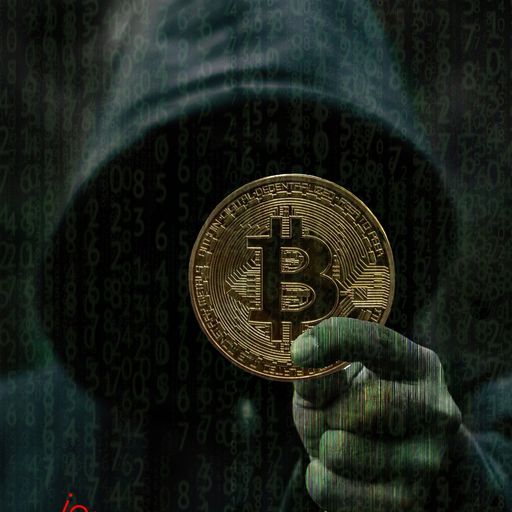
The security situation of digital assets in 2025 has shown a strange contrast: fewer security incidents, but the total losses have surged by 46%, reaching a staggering $2.935 billion. What does this reflect? Simply put—hackers are no longer casting wide nets; they are targeting specific victims and launching precision strikes of nuclear-grade accuracy.
DeFi remains the hardest-hit area. 126 incidents account for 63% of the total, with losses reaching $649 million. Liquidity mining sounds lucrative, but your principal may actually be serving as a hacker’s ATM. What’s hidden behind a "seemingly reasonable" return rate?
Even more heartbreaking data comes from exchanges. Only 12 incidents occurred throughout the year, but losses totaled $1.809 billion. A leading exchange was hacked for $1.46 billion in a single incident, accounting for half of the year's total losses. No matter how large a centralized platform is, once it’s compromised, it’s like the sky falling. The so-called "security" is just paper tiger in the eyes of hackers.
The situation in the ETH ecosystem is even more alarming. The entire ecosystem lost $254 million, far ahead of other chains. Why? It’s very practical—on-chain assets have the highest value, making them the top target for hackers. When a tree grows tall, it attracts the wind; this principle also applies in the crypto market.
But an even more terrifying trend has emerged. Generative AI has become a new tool for hackers. The "official notifications" you receive may not be genuine, the influencer’s trading signals could be AI-generated, and even customer service calls might not be from real people. The cost of AI forging voices, faces, and handwriting is plummeting, but the realism is skyrocketing. Difficult to defend against, this is the current situation.
How to survive? Here are some hard tips:
Don’t blindly trust any platform. No matter how big the exchange or popular the DeFi protocol, it’s not an absolute safe vault. Distribute your funds across multiple places; never put all your eggs in one basket.
Private keys are paramount. If you can control your private keys yourself, don’t store them on exchanges. Seed phrases must be stored offline physically—written on paper and kept securely. Screenshots? Cloud storage? None of these are safe.
Be wary of overly perfect opportunities and services. Ask yourself: could this be AI-generated? For any transfer or authorization operation, verify repeatedly through multiple official channels.
Be extremely cautious with smart contract approvals. Regularly review and revoke unnecessary permissions—this is fundamental to preventing DeFi vulnerabilities.
The bull market is here, and everyone’s eager to jump in. But hackers are working even harder. Remember this logic: to survive in the crypto market, security is 1, and the zeros after it are the rest. Without that 1, even the most zeros will vanish instantly.
Risk awareness is your strongest card in bull and bear cycles. It’s not just about making money, but also about protecting what you have.