

Trade
Trading Type
Spot
Trade crypto freely
Pre-Market
Trade new tokens before they are officially listed
Margin
Magnify your profit with leverage
Convert & Block Trading
0 Fees
Trade any size with no fees and no slippage
Alpha
Points
Get promising tokens in streamlined on-chain trading
Leveraged Tokens
Get exposure to leveraged positions simply
Futures
Futures
Hundreds of contracts settled in USDT or BTC
Options
HOT
Trade European-style vanilla options
Unified Account
Maximize your capital efficiency
Demo Trading
Futures Kickoff
Get prepared for your futures trading
Futures Events
Participate in events to win generous rewards
Demo Trading
Use virtual funds to experience risk-free trading
Earn
Launch
CandyDrop
Collect candies to earn airdrops
Launchpool
Quick staking, earn potential new tokens
HODLer Airdrop
Hold GT and get massive airdrops for free
Launchpad
Be early to the next big token project
Alpha Points
NEW
Trade on-chain assets and enjoy airdrop rewards!
Futures Points
NEW
Earn futures points and claim airdrop rewards
Investment
Simple Earn
Earn interests with idle tokens
Auto-Invest
Auto-invest on a regular basis
Dual Investment
Buy low and sell high to take profits from price fluctuations
Soft Staking
Earn rewards with flexible staking
Crypto Loan
0 Fees
Pledge one crypto to borrow another
Lending Center
One-stop lending hub
VIP Wealth Hub
Customized wealth management empowers your assets growth
Private Wealth Management
Customized asset management to grow your digital assets
Quant Fund
Top asset management team helps you profit without hassle
Staking
Stake cryptos to earn in PoS products
BTC Staking
HOT
Stake BTC and earn 10% APR
GUSD Minting
Use USDT/USDC to mint GUSD for treasury-level yields


More
Promotions
Activity Center
Join activities and win big cash prizes and exclusive merch
Referral
20 USDT
Earn 40% commission or up to 500 USDT rewards
Announcements
Announcements of new listings, activities, upgrades, etc
Gate Blog
Crypto industry articles
VIP Services
Huge fee discounts
Proof of Reserves
Gate promises 100% proof of reserves

Trending Topics
View More229.81K Popularity
69.44K Popularity
39.24K Popularity
878 Popularity
14.11K Popularity
Hot Gate Fun
View More- MC:$3.53KHolders:10.00%
- MC:$3.53KHolders:10.00%
- MC:$3.59KHolders:20.04%
- MC:$3.53KHolders:10.00%
- MC:$3.53KHolders:10.00%





Pin
🎉 Share Your 2025 Year-End Summary & Win $10,000 Sharing Rewards!
Reflect on your year with Gate and share your report on Square for a chance to win $10,000!
👇 How to Join:
1️⃣ Click to check your Year-End Summary: https://www.gate.com/competition/your-year-in-review-2025
2️⃣ After viewing, share it on social media or Gate Square using the "Share" button
3️⃣ Invite friends to like, comment, and share. More interactions, higher chances of winning!
🎁 Generous Prizes:
1️⃣ Daily Lucky Winner: 1 winner per day gets $30 GT, a branded hoodie, and a Gate × Red Bull tumbler
2️⃣ Lucky Share Draw: 10🔥 Gate Square Event | #PostToWinLaunchpadKDK 🔥
KDK | The latest Gate Launchpad spotlight token
Before: stake USDT to join
Now 👉 just post for a chance to win KDK!
🎁 Gate Square exclusive: 2,000 KDK total rewards up for grabs
🚀 Launchpad star project — big potential ahead 👀
📅 Event Duration
Dec 19, 04:00 – Dec 30, 16:00 (UTC)
📌 How to Join
Post on Gate Square (text, images, analysis, or opinions)
Content should relate to KDK price predictions at launch, project insights, or your understanding of the Gate Launchpad mechanism
Add one hashtag: #发帖赢Launchpad新币KDK 或 #PostToWinLaunchpadKDK
�🎨 Gate AI Creation Contest | One Sentence, Draw Your 2026
On Gate Square, anyone can be a visual creator — truly zero barriers to entry.
With just one sentence, generate an image and bring your vision of 2026 to life.
Create and post your work using Gate Square AI Creation for a chance to win the Gate Year of the Horse New Year Gift Box.
📅 Duration
Dec 17, 2025, 10:00 – Jan 3, 2026, 18:00 UTC
🎯 How to Join
1. Go to Gate Square → Create Post → AI Creation
2. Enter one sentence to generate your image
3. Post with #GateAICreation
🏆 Rewards
5 winners: Gate Year of the Horse New Year
Web3 game collapse... The myth of 'digital asset ownership' has been shattered
Source: TokenPost Original Title: Web3 Gaming Collapse… The Myth of ‘Digital Asset Ownership’ Crumbled Original Link: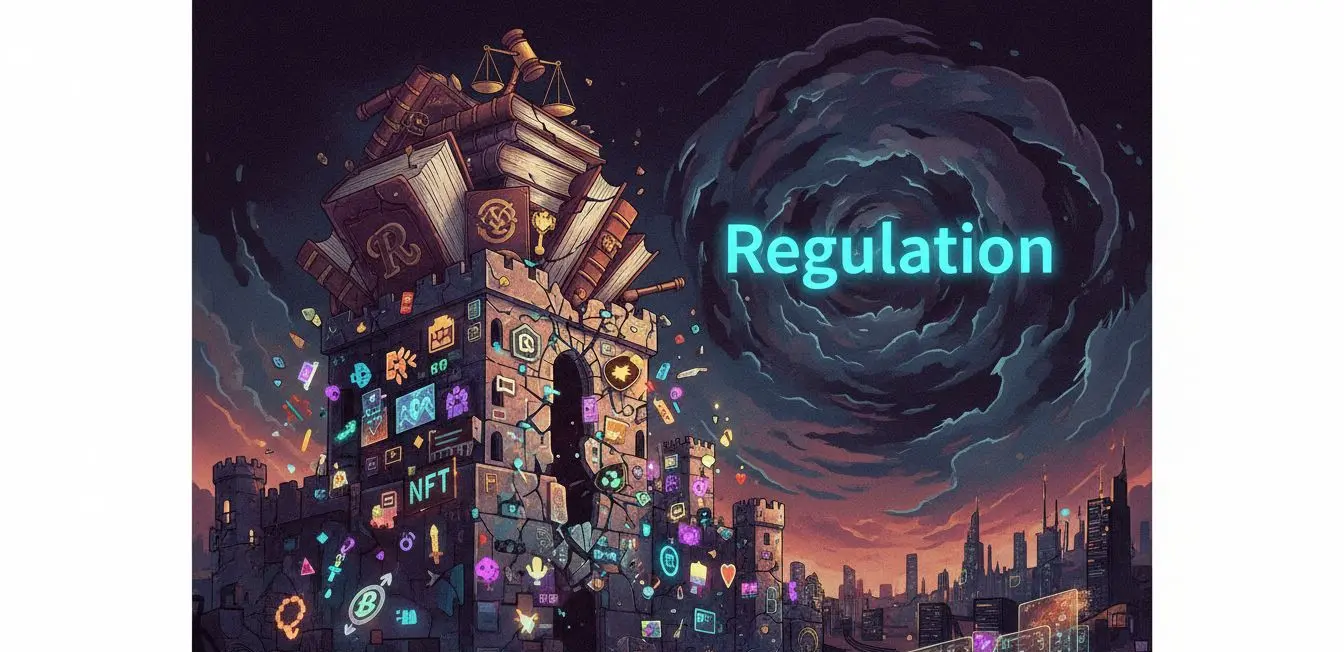
Was ‘Digital Ownership’ an Illusion… The Shadow of Web3 Gaming’s Downfall
The Web3 gaming industry experienced a massive collapse in 2025, revealing that the once-promised ‘digital asset ownership’ was fundamentally a fiction. The core issue was not merely the lack of technological capability or ambition from game companies, but regulatory legal barriers.
When the Game Ends, the Assets Disappear
Web3 games have claimed to issue NFTs and tokens via blockchain, allowing users to own them. However, in reality, the opposite has occurred. According to blockchain analysis platforms, 8% of active Web3 games closed their doors in the second quarter of 2025 alone. This is due to venture funding dropping by 93% compared to the previous year and market saturation.
During this process, major Web3 titles such as ‘Tatsumeeko,’ ‘Nyan Heroes,’ ‘Blast Royale,’ and ‘Rumble Kong League,’ linked to NBA star Stephen Curry, ceased services. Even the MMORPG ‘Ember Sword,’ which raised approximately $200 million (about 28.88 billion KRW), suddenly shut down, causing the value of related tokens and NFTs to evaporate overnight.
Notably, the virtual asset NYAN from ‘Nyan Heroes’ plummeted over 40% in a single day, and its market cap dropped 99% from its peak, exposing the fragile nature of digital asset ownership.
Web3 Games Facing Regulatory Barriers
When Web3 game platforms directly upload assets to the blockchain, issue NFTs, and freely trade tokens, they are no longer just games but are considered ‘financial services.’ This means they fall under the jurisdiction of global regulators such as the US Financial Crimes Enforcement Network (FinCEN) and the European Union’s Markets in Crypto-Assets (MiCA) regulation.
Magnus Soderberg, CEO of Trilloris Games, warned, “The level of regulatory compliance in the Web3 gaming market is currently very low,” and many developers are ignoring or unaware of legal requirements.
If subject to regulation, they must meet complex and costly requirements such as user identity verification (KYC), anti-money laundering (AML), asset custody, and transaction record reporting. Especially in Europe, obtaining licenses and securing remittance licenses in each US state can cost at least $10 million to $15 million (about 144.4 billion to 216.6 billion KRW).
Games Avoiding Regulations, Losing Trust in the Process
Small and medium-sized game studios with limited funds often abandon regulatory compliance, operate tokens only within the game, or rely on basic blockchain functions to launch their games. However, this approach raises issues such as unfair token flows like insider allocations or dumping, and fragmented economic systems.
Soderberg pointed out, “Avoiding regulation doesn’t save costs. Instead, it risks losing player trust and asset value all at once.”
The Alternative: ‘Outsourcing Regulatory Compliance Infrastructure’
Is there a way for developers to focus on creation while satisfying regulatory requirements? Soderberg proposes ‘compliance services’ as a solution. Instead of directly functioning as financial institutions, game companies can delegate KYC, AML, and token economy design to external certified services, reducing legal burdens.
These services automatically enforce wallet verification, transaction limits, and regional access restrictions at the smart contract level. As a result, players can enjoy the game without feeling the impact of regulation, and developers can meet all legal requirements in advance. He emphasized, “The most ideal structure is one where regulation is integrated into the game without compromising the player experience.”
Web3 Gaming’s Next Survival Condition: ‘Legality’
The recent collapse of Web3 games clearly demonstrates how fragile digital ownership without regulation is. To protect both investment and user trust, the era has come where ‘legality’ becomes as important as ‘technology’ in competitiveness.
( Market Interpretation
The 2025 Web3 gaming collapse has highlighted the fiction of digital asset ownership and the issues of regulatory gaps. Survival now depends on compliance with regulations.
) Strategic Points
( Terminology